

Porsche Maintenance Costs: A Complete Guide by Model
Porsches cost more to maintain than a typical car. That’s not a scare tactic; it’s the reality of owning a machine engineered to the tolerances it is. The more relevant question isn’t whether maintenance costs money. It’s how much, for which model, and how to ensure you’re not overpaying.
This guide covers the full picture: service intervals, model-by-model cost ranges, what drives costs up, what drives costs down, and what you can realistically save by choosing the right shop. Whether you’re a first-time Porsche owner or you’ve been maintaining one for years, consider this your definitive reference.
How Porsche Service Intervals Work
Regular, Intermediate, and Major Service Explained
Regular Service: Every 10,000 miles or 1 year
The baseline visit. Oil and filter change, tire rotation, and a multi-point safety inspection. For GT models with naturally aspirated high-revving engines, Porsche recommends shortening this interval to every 6,000 miles or annually.
Intermediate Service: Every 20,000 miles or 2 years
Everything from the regular service, plus cabin air filter replacement, brake fluid flush, and a deeper inspection of the suspension, steering, and drivetrain.
Major Service: Every 30,000–40,000 miles or 3–4 years
The comprehensive visit. Spark plug replacement (where applicable), transmission fluid, engine coolant change, air filter replacement, and a full inspection of wear items including hoses, motor mounts, and suspension bushings.
Taycan and Macan EV: Every 20,000 miles or 2 years
Battery-electric models follow a longer interval since they skip engine oil and spark plugs entirely. The service focuses on brake fluid, cabin filters, cooling system checks, high-voltage cable inspections, and software updates.
Porsche Maintenance Costs by Model
The numbers below reflect real-world market ranges for U.S. owners. Independent Porsche specialists like HOUSE Automotive consistently run 20–30% below dealer pricing on the same services, using the same genuine OEM parts.
Porsche 911 (992, 991, 997, 996)
The 911 is one of the more manageable Porsches to maintain on an annual basis. Owners typically see annual maintenance costs averaging around $1,072 per year, with routine years on the lower end and major service years pushing higher.
| Service | Market Range (Independent) | Market Range (Dealer) |
|---|---|---|
| Annual oil service | $200–$350 | $300–$450 |
| Brake fluid flush | $150–$250 | $250–$400 |
| Major service (40K) | $1,500–$3,000 | $2,500–$4,500 |
| Brake pads + rotors (axle) | $500–$1,200 | $1,367–$2,460 |
| Spark plugs | $400–$600 | $600–$800 |
| Annual average (all-in) | $1,500–$2,500 | $2,500–$3,500 |
Note on 996 and early 997 owners: If you’re running a 996 or 997.1, the IMS bearing is a critical item to address proactively. IMS replacement runs $1,500–$3,000 in parts and labor, far less than the engine rebuild it prevents. This is ideally paired with a clutch service to share the labor.
Full Service Intervals: For a deeper dive on 911-specific maintenance by generation, see the comprehensive 911 maintenance guide.
Porsche 911 GT Models (GT3, GT3 RS, GT2 RS, GT2)
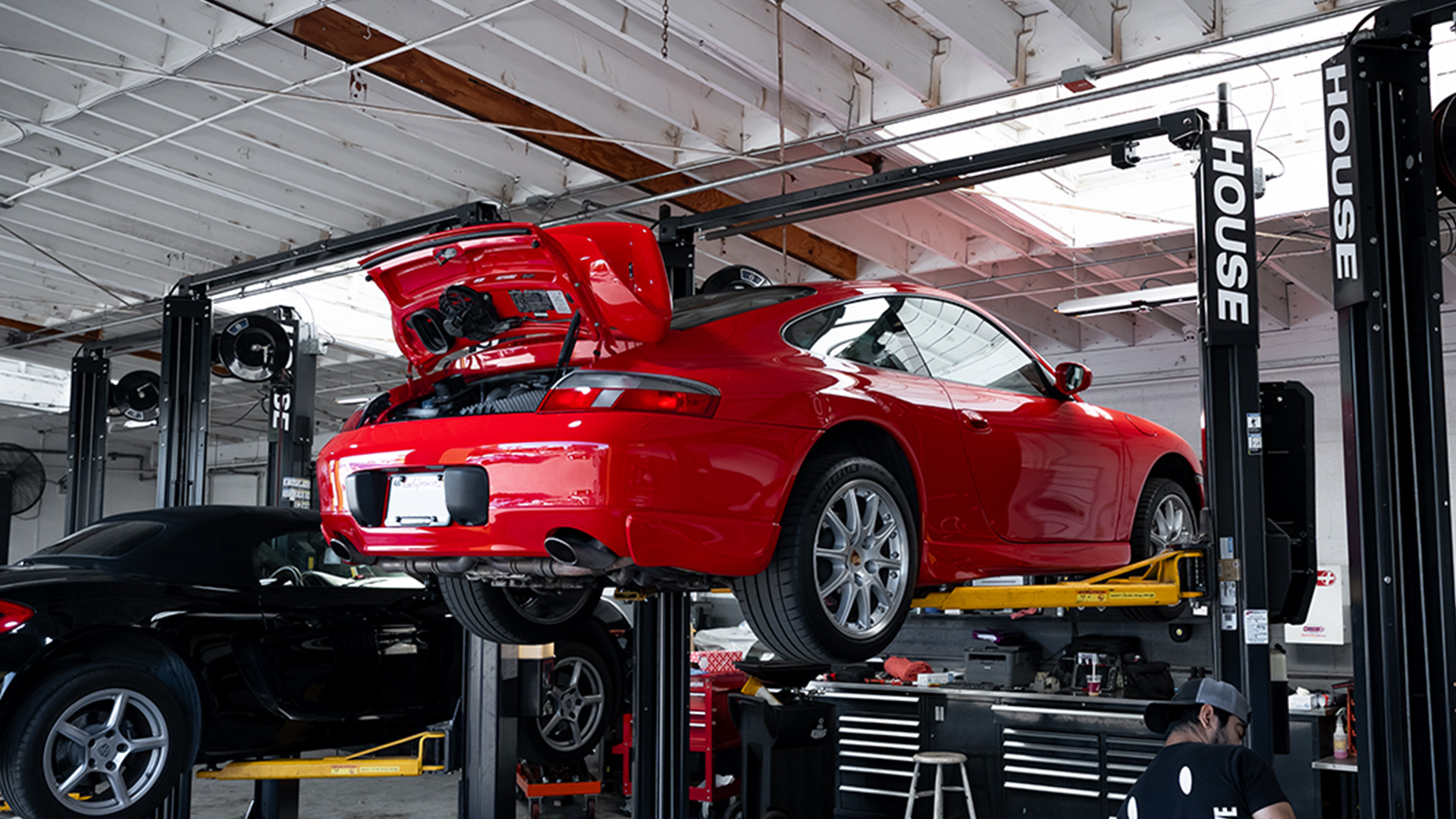
GT models carry a premium maintenance cost that reflects their purpose. These cars are built for high-revving, high-load use and the naturally aspirated flat-six in the GT3 family demands more frequent oil changes and closer inspection intervals than a standard 911.
| Service | Market Range (Independent) | Market Range (Dealer) |
|---|---|---|
| Annual oil service | $300–$450 | $450–$650 |
| Track prep (fluids, alignment, inspection) | $800–$1,500 | $1,200–$2,000 |
| Major service | $3,500–$6,500 | $6,000–$10,000 |
| Annual total (street-driven) | $2,000–$5,000 | $4,000–$8,000 |
| Annual total (track use) | $7,000–$15,000 | Significantly higher |
Street-only GT3 ownership is manageable if you follow the schedule. Track use accelerates consumable wear like tires, brakes, and fluids meaningfully. Budget accordingly based on how the car actually gets driven.
Porsche 718 Cayman + Boxster
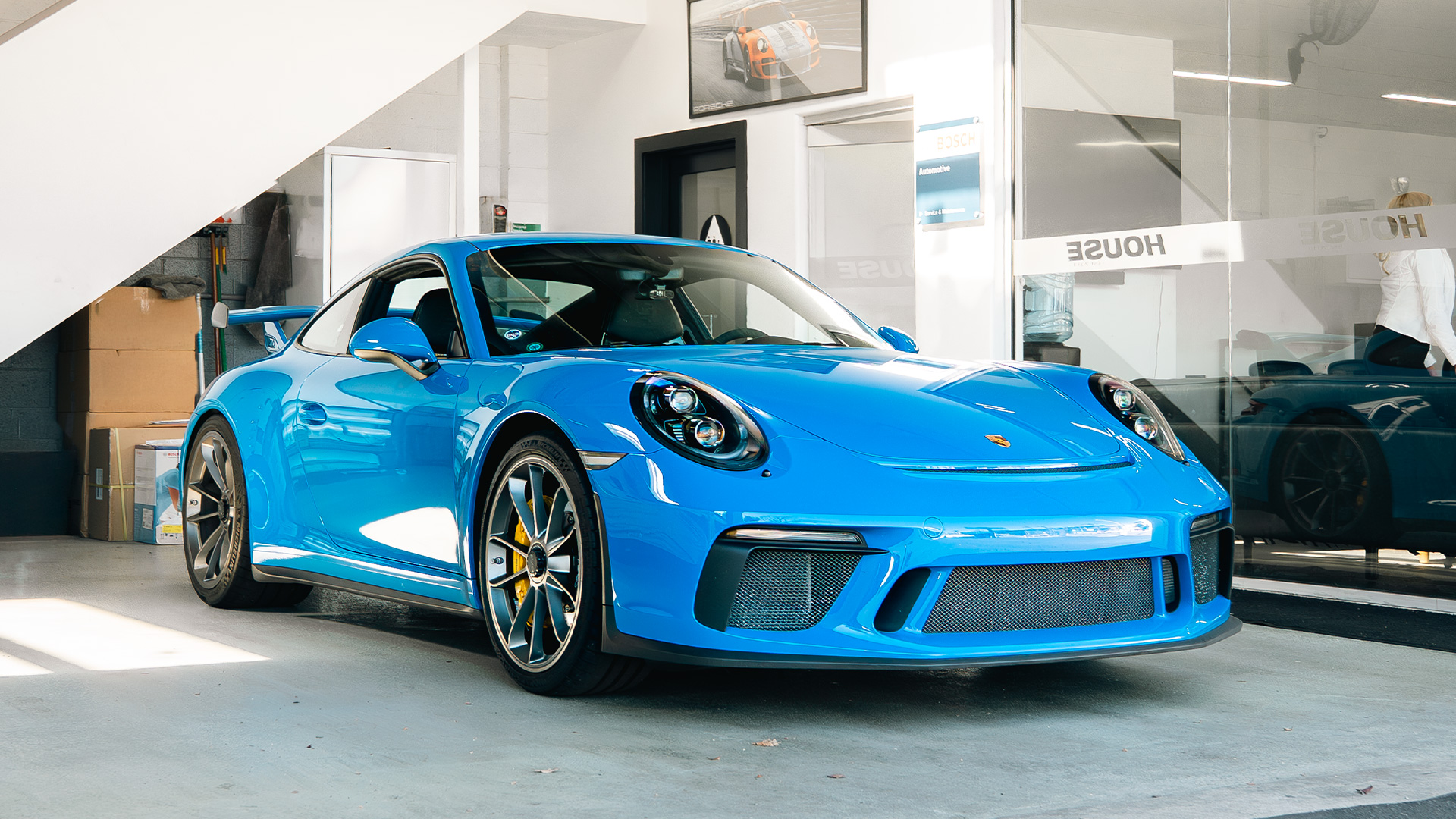
The 718 platform is generally considered among the most cost-effective Porsches to maintain, with average annual repair costs around $952–$1,135; relatively modest for the segment.
| Service | Interval | Notes |
|---|---|---|
| Oil service | 10,000 miles / 1 year | Full synthetic required |
| Brake fluid flush | 20,000 miles / 2 years | — |
| Spark plugs (Base / S — flat-four) | 30,000 miles | Applies to turbocharged 2.0L and 2.5L variants |
| Spark plugs (GTS 4.0 / GT4 / GT4 RS / Spyder — flat-six) | 40,000 miles | Naturally aspirated 4.0L; higher-revving engine spec |
| Tire sealant replacement | 40,000 miles / 4 years | Factory-specified interval |
| Annual average (all-in) | $1,000–$2,000 | Less on routine years |
The 718 rewards disciplined maintenance. Skip intervals and brake fluid degrades, tires wear unevenly, and what would have been a $300 service becomes a $1,500 repair.
Full Service Intervals: Read our in-depth guide on the Porsche Cayman and Boxster maintenance schedules.
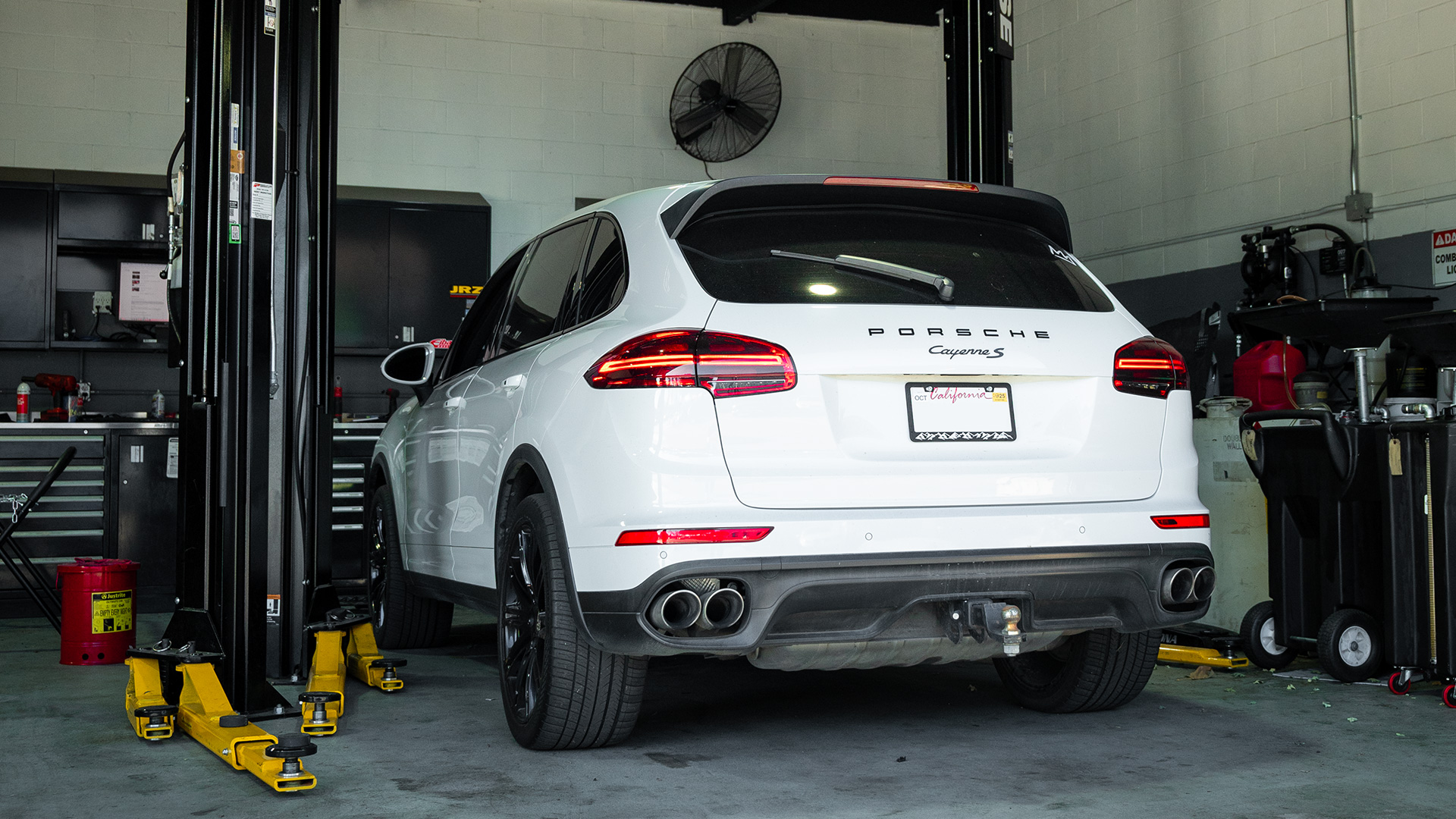
Porsche Cayenne
The Cayenne sits in the mid-range of Porsche ownership costs. Average annual repair and maintenance runs around $1,231, higher than the 718 but lower than the GT models. SUV-specific items like air suspension components and off-road use can push that higher on individual years.
| Service | Market Range (Independent) | Market Range (Dealer) |
|---|---|---|
| Annual oil service | $200–$350 | $300–$450 |
| Brake fluid flush | $150–$250 | $250–$400 |
| Transmission fluid (PDK) | $500–$800 | $800–$1,000 |
| Major service (40K) | $1,500–$3,000 | $2,500–$4,500 |
| Annual average (all-in) | $1,200–$2,500 | $1,500–$3,000 |
For complete service intervals and Cayenne-specific maintenance tips, see the Porsche Cayenne maintenance guide.
Full Service Intervals: Read our in-depth guide on the Porsche Cayenne maintenance schedules.
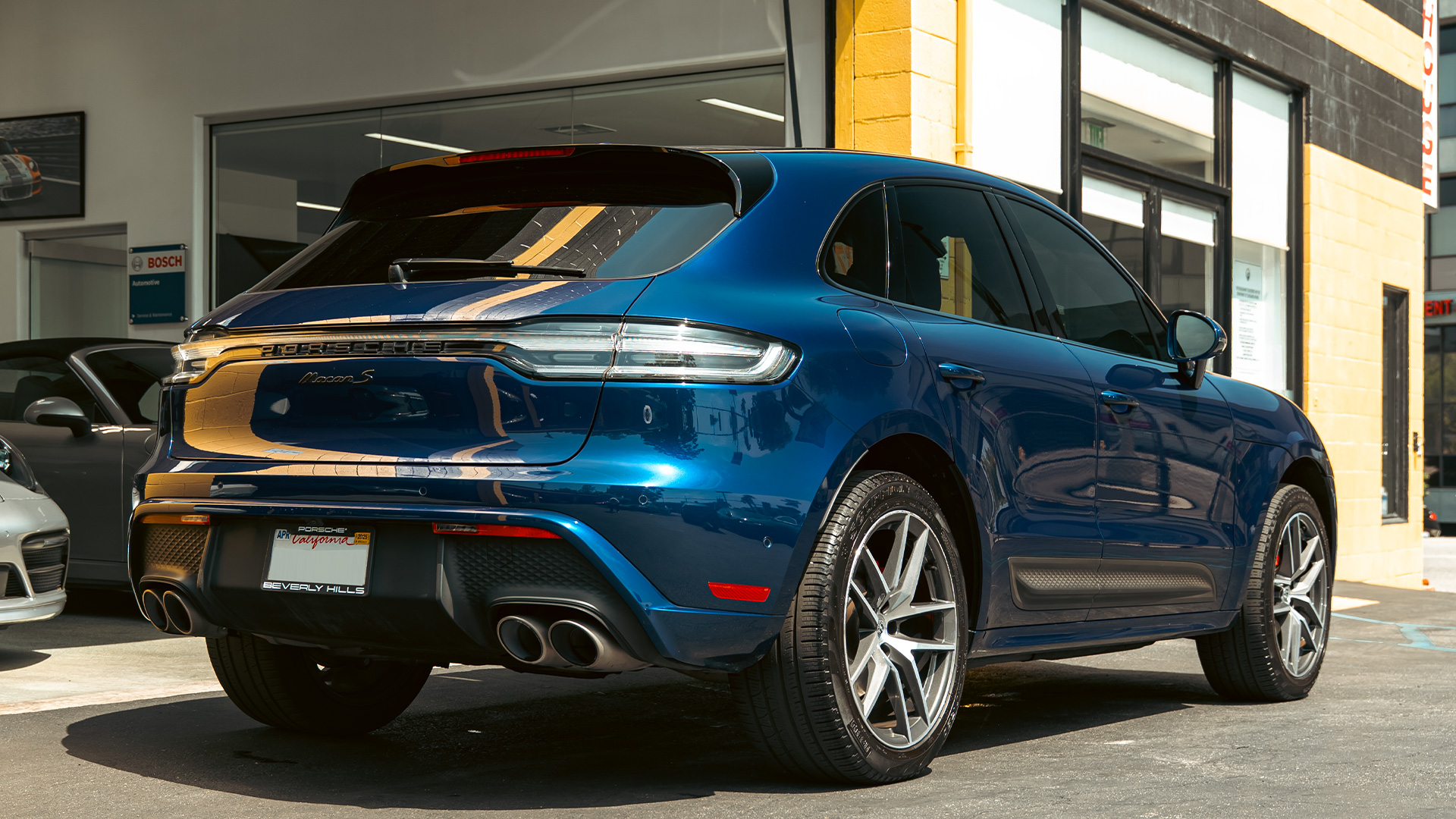
Porsche Macan
The Macan is one of the most accessible Porsches from a maintenance cost perspective, with a dealer-published 4-service scheduled maintenance plan totaling $6,345, the lowest of any model in the Porsche lineup.
| Service | Interval | Notes |
|---|---|---|
| Oil service | 10,000 miles / 1 year | — |
| Electrical system check | 40,000 miles / 4 years | — |
| Spark plug replacement | 40,000 miles / 4 years | — |
| Full inspection | 40,000 miles / 4 years | Exterior, interior, undercarriage |
| Annual average (all-in) | $1,000–$1,800 | Routine years lower end |
Full Service Intervals: Macan ownership often surprises first-time Porsche owners with how manageable the annual costs are, provided maintenance stays on schedule. See the Porsche Macan maintenance guide for a full breakdown.
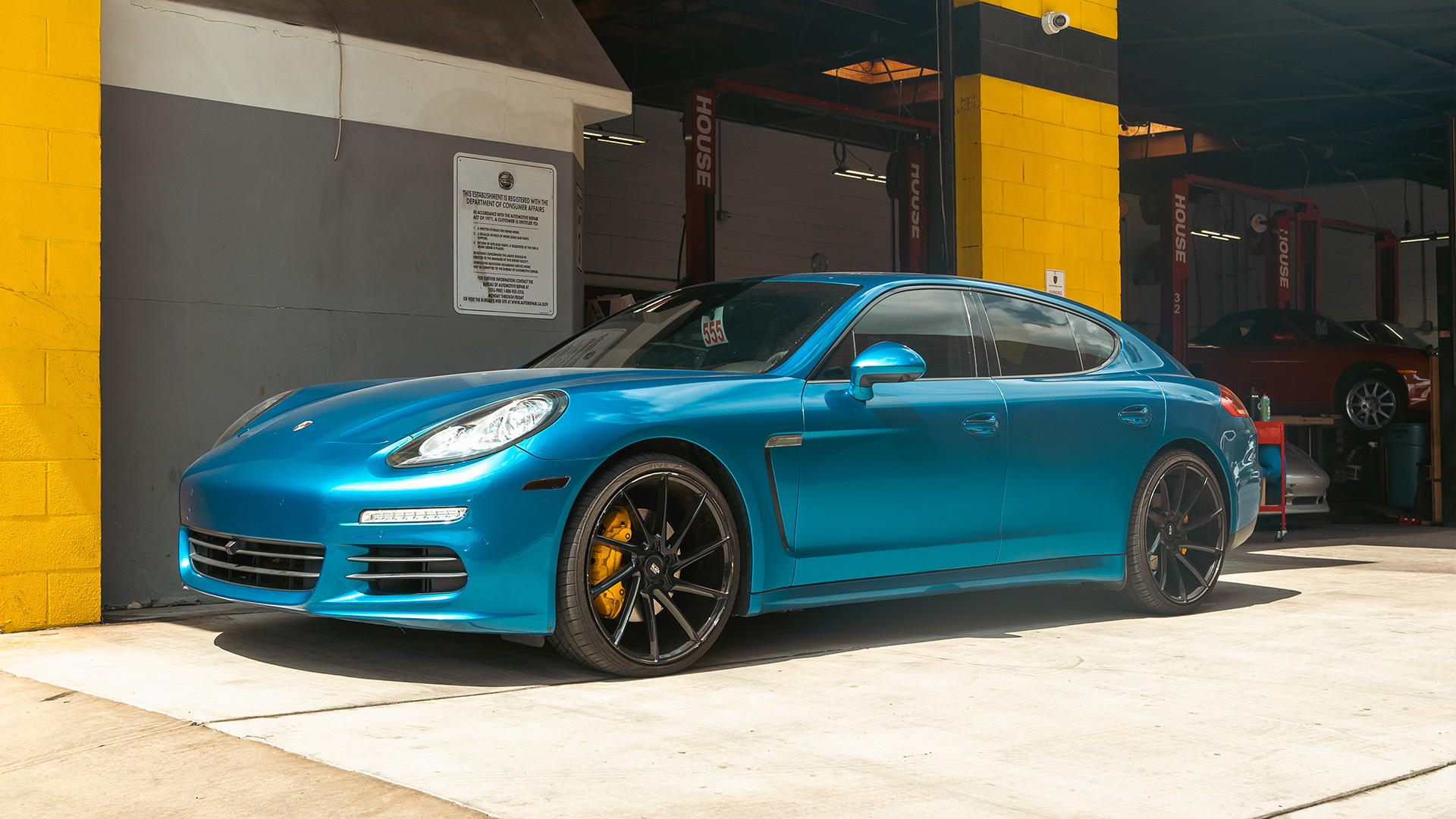
Porsche Panamera
The Panamera occupies the top of the ICE maintenance cost range. As a large V6 or V8 executive car with complex systems like air suspension, PDK, PDCC, optional hybrid components, its service costs reflect that engineering complexity. Average annual repair and maintenance costs around $1,252 per year, with major service years pushing $2,500–$4,500 at the dealer.
| Service | Market Range (Independent) | Market Range (Dealer) |
|---|---|---|
| Annual oil service | $200–$400 | $500–$700 |
| Brake fluid flush | $150–$250 | $250–$400 |
| Transmission fluid (PDK) | $500–$800 | $800–$1,000 |
| Major service (40K) | $1,500–$3,500 | $2,500–$4,500 |
| Annual average (all-in) | $1,200–$2,500 | $2,500–$4,000 |
Full Service Intervals: Dealer-published maintenance plan pricing for the Panamera runs $7,905 across four service intervals; the highest of any ICE Porsche model. The Porsche Panamera maintenance guide covers model-specific intervals by generation (970, 971).
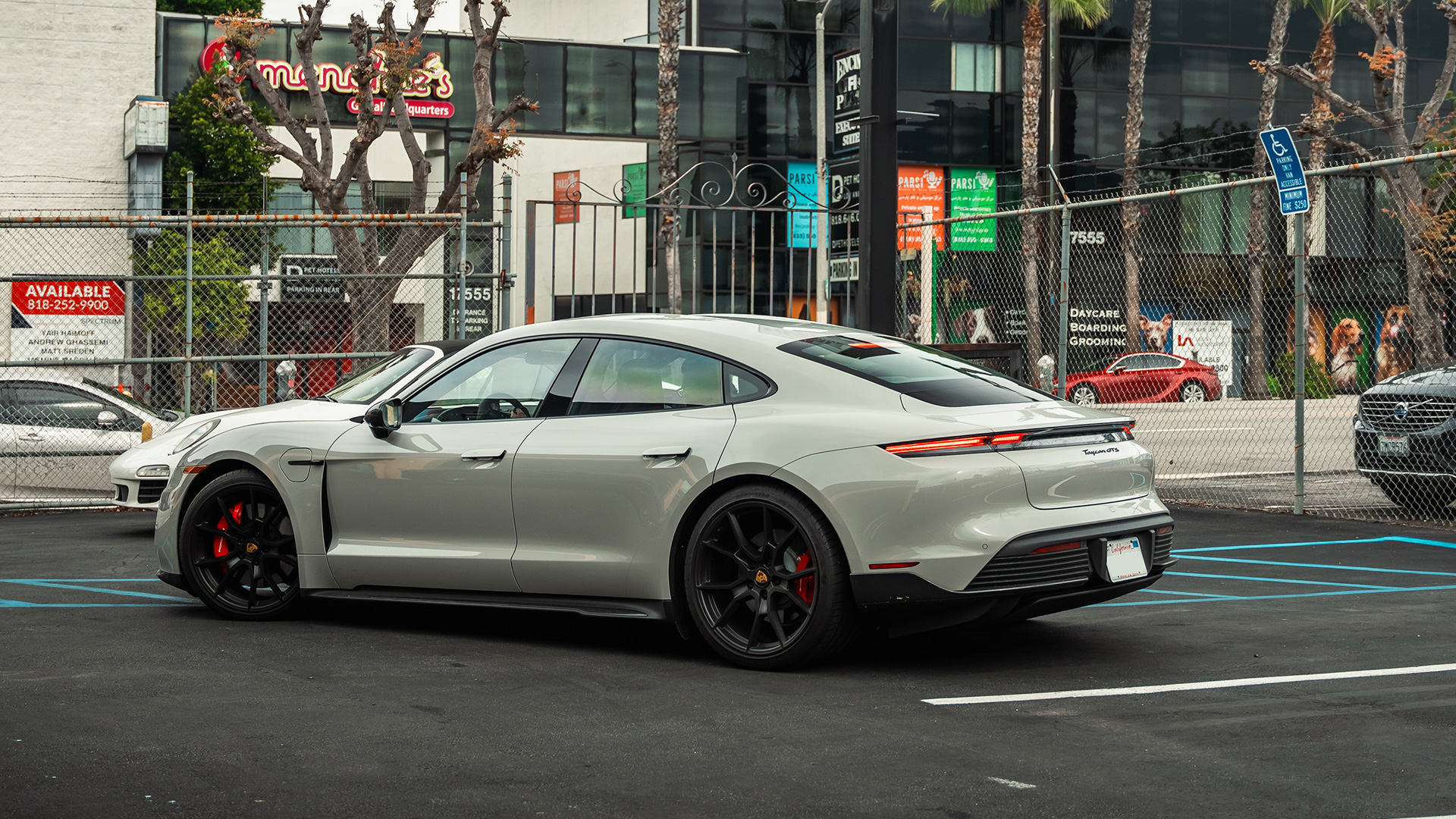
Porsche Taycan
The Taycan is the most cost-efficient Porsche to maintain on an annual basis, primarily because it eliminates engine oil, spark plugs, and multi-speed transmission servicing. KBB data places the average annual maintenance cost at approximately $2,167, though much of that total is back-loaded into years three through five when tire wear and brake work accumulate.
The official Porsche dealer maintenance plan prices the Taycan at $7,550 total across three service intervals, comparable to ICE models over the same period.
| Service | Market Range (Independent) | Market Range (Dealer) |
|---|---|---|
| Biennial service (20K) | $600–$900 | $1,000–$1,600 |
| Brake fluid flush | $150–$250 | $250–$400 |
| Tires (full set) | $1,400–$2,200 | $1,400–$2,200 |
| Brake pads + rotors (axle) | $900–$2,000 | $1,500–$3,000 |
| Annual average (all-in) | $1,500–$2,500 | $2,000–$3,500 |
Tire wear is the Taycan’s real operating cost as the car weighs over 5,200 lbs and transmits enormous torque to the road. Owners should budget for a full tire replacement roughly every 15,000–25,000 miles depending on driving style.
Full Service Intervals: For full service intervals and the Taycan ownership cost breakdown, see the Porsche Taycan service and maintenance guide.
What Drives Porsche Maintenance Costs Up
Routine maintenance is predictable. The expensive surprises come from patterns — and most of them are avoidable.
Deferred oil changes. Porsches run tight engine tolerances and high-performance oil specifications. Pushing beyond 10,000 miles (or 6,000 for GT models) allows oil degradation to accelerate wear on bearings, cam chains, and cylinder walls. The cost difference between a fresh oil service and an engine rebuild isn’t small.
Ignoring brake fluid intervals. Brake fluid is hygroscopic — it absorbs moisture over time, raising the boiling point threshold and reducing braking performance under hard use. A $150–$250 flush every two years is the alternative to dramatically reduced stopping ability and corrosion in the braking system.
Track use without adjusted intervals. GT3 owners and canyon-carvers who track their cars without updating their service frequency are the most at-risk. The factory schedule is written for normal road use. Sustained high-RPM operation burns through oil, pads, fluid, and tires at a meaningfully different rate.
Deferred PDK fluid service. The PDK transmission is one of Porsche’s engineering achievements, but it requires clean, correctly specified fluid. Owners running beyond the service window risk clutch pack wear that can make what would have been an $800 fluid service into a transmission rebuild conversation. See the PDK transmission maintenance guide for service intervals by generation.
Using non-OEM parts. Aftermarket substitutes for Porsche-spec fluids, filters, and components can reduce upfront cost but introduce variables the car’s systems weren’t calibrated for. HOUSE Automotive uses genuine OEM Porsche parts on every service — the same specification the factory sets.
Porsche Maintenance Mistakes That Cost Owners the Most
These are the patterns our technicians see repeatedly. Each one is avoidable with the right habits.
1. Skipping the annual inspection because “nothing feels wrong.”
Porsche’s high-performance components wear in ways that don’t always announce themselves loudly. A PIWIS diagnostic scan picks up fault codes before they become drivability issues. The inspection exists because many problems develop quietly.
2. Using a general European shop instead of a Porsche specialist.
Porsche diagnostics require the PIWIS system — Porsche’s proprietary factory diagnostic tool. A generic OBD scanner reads fault codes. PIWIS reads, clears, calibrates, and programs the full scope of Porsche systems. Shops without PIWIS are operating with limited visibility.
3. Waiting until the maintenance light is overdue.
The service reminder is the upper threshold, not a target. Driving conditions in Los Angeles — stop-and-go traffic, short trips, heat — can shorten effective oil life relative to the 10,000-mile interval. Our technicians can help set the right schedule based on how a car is actually driven.
4. Ignoring model-specific known issues.
Every generation has its specific vulnerabilities. The 996 and early 997 have the IMS bearing. Early 991 GT3s had connecting rod issues. The Cayenne air suspension compressor has failure patterns at high mileage. Knowing your generation’s issues means you can address them proactively — not reactively after failure.
5. Choosing a shop on price alone.
The lowest quote isn’t always the lowest cost. A misdiagnosis, incorrect parts spec, or incomplete service creates comebacks. The 2-year, unlimited-mile warranty HOUSE Automotive backs every service with exists because we stand behind the work — and it means that if something is missed, you’re covered without a second invoice.
How to Keep Porsche Maintenance Costs Under Control
The most cost-effective way to own a Porsche is a straightforward one: follow the schedule, use the right shop, and don’t defer what’s due.
Stay on the factory service schedule. Every skipped interval shifts the cost curve. A $250 oil service deferred becomes degraded engine oil. Degraded oil becomes accelerated wear. Accelerated wear becomes a repair bill that would have bought several years of on-time oil changes. The math is consistent across every model.
Pair services when possible. Items like the IMS bearing replacement, clutch service, and rear main seal replacement all require transmission removal on the 996 and early 997. Doing them together reduces total labor significantly. Our advisors proactively identify opportunities like this so owners aren’t paying duplicate labor on jobs that share teardown time.
Know the difference between consumables and repairs. Tires, brake pads, brake fluid, and oil are wear items — planned, predictable costs. Repairs are reactive. Staying ahead of consumable intervals dramatically reduces the likelihood of reactive repair spend.
Use the Porsche maintenance checklists as a reference. HOUSE has published factory-spec maintenance checklists for every 911 generation from the 964 through the current 992, as well as the Cayenne, Panamera, Macan, 718, and Taycan. Knowing what’s due keeps conversations with your service advisor grounded in the actual schedule.
Dealership vs. Independent Shop: What You Actually Save
Choosing where to service a Porsche is one of the highest-leverage decisions in the total cost of ownership.
The data is consistent: independent Porsche specialists save owners 20–30% on the same services, using the same OEM parts, compared to dealer pricing. Some owners report savings of 40–50% depending on the service and dealership. HOUSE Automotive’s own clients consistently save up to 30% against dealer pricing.
Over five years of ownership — covering oil changes, brake services, a major service interval, and PDK fluid — that differential compounds into thousands of dollars.
A common concern is warranty protection. The answer is straightforward: having a Porsche serviced at a qualified independent shop using OEM parts and proper documentation does not void a factory warranty. The Magnuson-Moss Warranty Act prevents manufacturers from requiring dealer-only service as a warranty condition, provided the service is performed correctly.
What separates a qualified independent from a general garage is equipment and specialization. HOUSE Automotive runs Porsche’s PIWIS diagnostic system — the same factory tool used at Porsche dealerships — which means no capability gap between what the dealer can diagnose and what HOUSE can diagnose. Combined with 120+ years of combined Porsche experience across our team, the result is dealership-quality precision at independent pricing — backed by a 2-year, unlimited-mile warranty on all parts and labor
Frequently Asked Questions
Are Porsches expensive to maintain?
Compared to mainstream vehicles, yes. RepairPal estimates the average annual cost of Porsche ownership at around $1,629 per year — roughly twice the industry average of $891. The actual number varies significantly by model, age, and how the car is driven. Well-maintained examples driven on the street, serviced at a qualified independent shop, consistently come in at $1,000–$2,500 annually on routine years.
How much does it cost to maintain a Porsche annually?
For most ICE models (911, Cayenne, Macan, 718), owners should budget $1,000–$2,500 per year on routine service years, moving to $2,000–$4,500 on major service years. The Taycan, as an EV, can run lower on routine years but the biennial service and tire costs bring the annual average to around $2,167 over five years. GT models carry a higher floor due to more frequent oil intervals and track preparation costs.
How much does a Porsche oil change cost?
Market rates for a Porsche oil change typically run $200–$350 at a qualified independent shop, compared to $300–$450 at a Porsche dealership. GT3-spec oil services run closer to $400 due to engine-specific requirements. Panamera owners at dealerships frequently report $500–$700 for an oil service. At HOUSE Automotive, pricing is based on your specific model, oil spec, and filter — contact us for a direct quote.
How often should a Porsche be serviced?
Most ICE Porsche models follow a 10,000-mile or annual interval (whichever comes first). GT models (GT3, GT3 RS, GT2 RS) use a tighter 6,000-mile or annual schedule. Taycan and Macan EV models follow a 20,000-mile or 2-year interval. Driving conditions — track use, short trips, extreme heat — can justify shortening any of these intervals.
Is it cheaper to service a Porsche at an independent shop?
Yes — typically 20–30% less for the same service with the same OEM parts. The key qualifier is finding a shop with genuine Porsche specialization, PIWIS diagnostic capability, and OEM parts sourcing. A generalist European shop quoting less than a Porsche specialist may not have the same diagnostic capability.
Does taking a Porsche to an independent shop void the warranty?
No. Federal law (Magnuson-Moss Warranty Act) prevents manufacturers from requiring dealer-only service to maintain warranty coverage, provided the work is done correctly with appropriate parts and documentation. HOUSE Automotive documents all services to factory specification.
What is a Porsche PDK service and what does it cost?
A PDK service involves draining and replacing the dual-clutch transmission fluid, which Porsche recommends every 40,000–60,000 miles depending on model and usage. At an independent Porsche specialist, expect to pay in the $500–$800 range; at a dealer, $800–$1,000. Deferred PDK services are one of the more common sources of avoidable transmission wear. See the PDK transmission maintenance guide for full intervals by generation.
What are the most expensive Porsche repairs?
Engine rebuilds (commonly triggered by deferred IMS maintenance on 996/997.1), transmission rebuilds, air suspension compressor replacement on Cayenne, and major brake overhauls on GT models are the largest-ticket items owners encounter. Most are preventable with a diligent service schedule and proactive attention to model-specific known issues.
How much does a Porsche 911 GT3 service cost?
Street-driven GT3 owners typically see $2,000–$5,000 annually at a qualified independent shop, versus $4,000–$8,000 at a dealer. Major service intervals run $3,500–$6,500 independent vs. $6,000–$10,000 at the dealer. Track use significantly increases annual cost due to accelerated consumable wear.
Is the Porsche Taycan expensive to maintain?
Relative to ICE Porsches, the Taycan is less expensive to maintain on a per-year basis — there’s no engine oil, no spark plugs, and a longer service interval of 20,000 miles or 2 years. The primary costs are biennial service visits, brake fluid, and tires — which the Taycan wears relatively quickly given its weight and torque delivery. Budget $1,500–$2,500 annually as a realistic all-in figure.
Service Your Porsche at HOUSE Automotive
Three locations across Los Angeles: Encino, Pasadena, and Thousand Oaks. Eeach staffed by independently certified Porsche technicians with 120+ years of combined Porsche experience. HOUSE Automotive uses Porsche’s own PIWIS diagnostic system, genuine OEM parts, and follows factory service protocols on every vehicle.
Every service is backed by a 2-year, unlimited-mile warranty on all parts and labor and HOUSE clients consistently save up to 30% compared to Porsche dealership pricing.
Free shuttle service, free vehicle pickup and drop-off, and rental car arrangements are available at all three locations.