

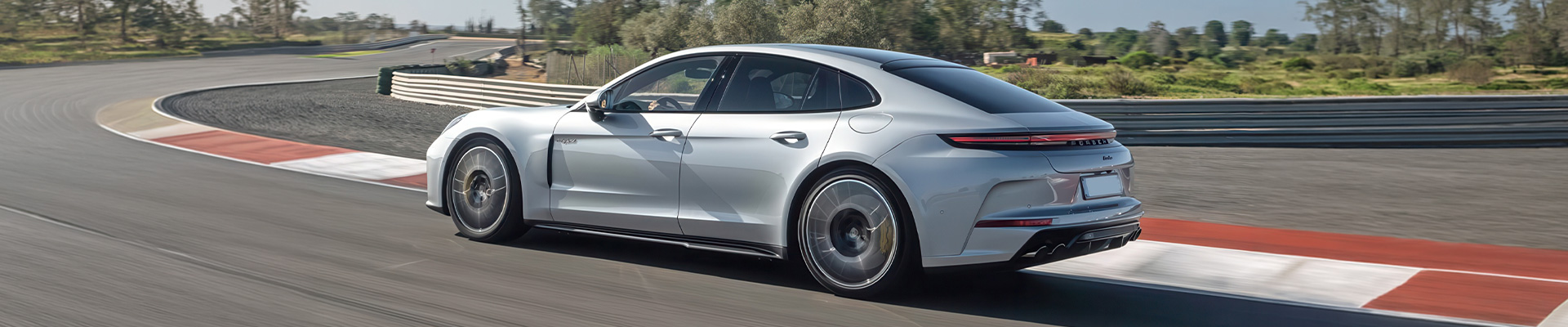
Porsche Panamera Maintenance Guide: Every Generation, Every Model
The Panamera is Porsche’s most complex car. That is not a criticism, it is a statement of fact that every owner should take seriously.
A 4.8L twin-turbocharged V8, four-wheel air suspension, PDCC chassis control, a PDK transmission, and a plug-in hybrid powertrain that requires high-voltage expertise to service properly. The Turbo S E-Hybrid alone makes 700+ horsepower across two systems that operate at fundamentally different thermal and electrical requirements. This is not a premium sedan that happens to go fast. It is a driver’s car in an executive body, and it responds to how well it is maintained.
Most Panamera owners find the car more demanding than they expected. The ones who find it most expensive usually share a common history: deferred maintenance, missed intervals, or service performed at a shop without the specialist knowledge the platform requires. The ones who drive 150,000 trouble-free miles do not.
HOUSE Automotive has serviced every generation of Panamera since the 970 launched in 2010. Every engine variant, every E-Hybrid system, and every generation of air suspension. This guide covers the full service schedule from launch to present day. For a model-by-model breakdown of what Panamera service costs relative to the dealer, see the complete Porsche maintenance costs guide.
Generations at a Glance
| Generation | Code | Years | Body Styles | Engine Variants |
|---|---|---|---|---|
| First Generation | 970 / 970.1 | 2010–2013 | Sedan | 3.6L V6 (300hp), 4.8L V8 S (400hp), 4.8L V8 Turbo (500hp), 4.8L V8 Turbo S (550hp), 4.8L V8 GTS (430hp) |
| First Generation Refresh | 970 / 970.2 | 2014–2016 | Sedan | 3.0L V6TT (310hp), 3.0L V6TT S (420hp), 4.8L V8TT Turbo (520hp), Turbo S (570hp), GTS (440hp), 3.0L V6sc S E-Hybrid (416hp combined) |
| Second Generation | 971 | 2017–2024 | Sedan, Executive (LWB), Sport Turismo | 3.0L V6TT (330hp), 2.9L V6TT 4S (440hp), 4.0L V8TT GTS (460hp), 4.0L V8TT Turbo (550hp), 4.0L V8TT Turbo S (630hp), E-Hybrid (462hp), Turbo S E-Hybrid (700hp) |
| Second Generation Refresh | 971.2 / 976 | 2024–Present | Sedan, Executive, Sport Turismo | 4.0L V8TT T-Hybrid (470hp), 4S T-Hybrid (535hp), Turbo T-Hybrid (630hp), Turbo S T-Hybrid (771hp) |
970 Generation (2010–2016)
The 970 was Porsche’s answer to a question many thought the brand should never have asked: what if a Porsche had four doors? The answer, as it turned out, was compelling enough to become one of Porsche’s best-selling nameplates. But the 970 also introduced levels of mechanical complexity new to Porsche’s lineup — a 4.8L V8 in naturally aspirated, turbocharged, and ultimately hybrid form, plus air suspension as standard on most variants, and a PDK transmission on every car except the six-speed manual Panamera.
The early 970.1 cars (2010–2013) carry the highest known-issue density in the Panamera lineage. The 2014 refresh (970.2) introduced the S E-Hybrid variant and addressed several concerns from early production. Both deserve generation-specific service attention, not a single merged table.
970.1 Service Schedule (2010–2013)
Covers: Panamera, Panamera 4, Panamera S, Panamera 4S, Panamera Turbo, Panamera Turbo S, Panamera GTS
| Service | V6 (3.6L) / V8 S (4.8L) | V8 Turbo / Turbo S (4.8L) | GTS (4.8L) |
|---|---|---|---|
| Oil and filter change | 10,000 miles / 1 year | 10,000 miles / 1 year | 10,000 miles / 1 year |
| Brake fluid replacement | Every 2 years | Every 2 years | Every 2 years |
| Intermediate service | 20,000 miles / 2 years | 20,000 miles / 2 years | 20,000 miles / 2 years |
| Spark plug replacement | 40,000 miles / 4 years | 30,000 miles / 4 years | 30,000 miles / 4 years |
| Major service | 40,000 miles / 4 years | 40,000 miles / 4 years | 40,000 miles / 4 years |
| PDK fluid (HOUSE recommendation) | 40,000 miles / 4 years | 40,000 miles / 4 years | 40,000 miles / 4 years |
| PDCC fluid reservoir | 60,000 miles / 6 years | 60,000 miles / 6 years | 60,000 miles / 6 years |
| Air filter replacement | 80,000 miles / 4 years | 80,000 miles / 4 years | 80,000 miles / 4 years |
| Camshaft adjuster bolt — verify NHTSA recall 17V368 | N/A | Confirm recall completed via VIN before any service | Confirm recall status via VIN |
| Coolant bridge / thermostat housing inspection | At 50,000+ miles on early production | At 50,000+ miles — proactive replacement recommended | At 50,000+ miles |
| Air Oil Separator (AOS) inspection | At 60,000 miles+ | At 60,000 miles+ | At 60,000 miles+ |
| Air suspension inspection | Every service past 70,000 miles | Every service past 70,000 miles | Every service past 70,000 miles |
| AWD front differential oil | 120,000 miles — HOUSE recommends 40,000 | 120,000 miles — HOUSE recommends 40,000 | 120,000 miles — HOUSE recommends 40,000 |
| Tire sealant replacement | Every 4 years | Every 4 years | Every 4 years |
970.2 Service Schedule (2014–2016)
Covers: Panamera, Panamera 4, Panamera S, Panamera 4S, Panamera Turbo, Panamera Turbo S, Panamera GTS
| Service | V6 Turbo (3.0L) | V8 Turbo / Turbo S (4.8L) | GTS (4.8L) |
|---|---|---|---|
| Oil and filter change | 10,000 miles / 1 year | 10,000 miles / 1 year | 10,000 miles / 1 year |
| Brake fluid replacement | Every 2 years | Every 2 years | Every 2 years |
| Intermediate service | 20,000 miles / 2 years | 20,000 miles / 2 years | 20,000 miles / 2 years |
| Spark plug replacement | 40,000 miles / 4 years | 30,000 miles / 4 years | 30,000 miles / 4 years |
| Major service | 40,000 miles / 4 years | 40,000 miles / 4 years | 40,000 miles / 4 years |
| PDK fluid (HOUSE recommendation) | 40,000 miles / 4 years | 40,000 miles / 4 years | 40,000 miles / 4 years |
| PDCC fluid reservoir | 60,000 miles / 4 years | 60,000 miles / 4 years | 60,000 miles / 4 years |
| Air filter replacement | 80,000 miles / 4 years | 80,000 miles / 4 years | 80,000 miles / 4 years |
| AWD front differential oil | 120,000 miles — HOUSE recommends 40,000 | 120,000 miles — HOUSE recommends 40,000 | 120,000 miles — HOUSE recommends 40,000 |
| Air suspension inspection | Every service past 70,000 miles | Every service past 70,000 miles | Every service past 70,000 miles |
| Tire sealant replacement | Every 4 years | Every 4 years | Every 4 years |
970.2 S E-Hybrid Service Schedule (2014–2016)
The 970.2 S E-Hybrid introduced a supercharged 3.0L V6 paired with an electric motor — a different engine architecture from the V8 cars, using an Audi-sourced 3.0T platform rather than Porsche’s own V8. This matters for maintenance: spark plug intervals, supercharger belt service, and hybrid-specific items are on a different schedule from the Turbo cars. ATF and ATF filter service on this platform runs to a 160,000-mile / 16-year interval at the factory spec — but HOUSE recommends addressing it earlier given the age of these vehicles.
| Service | Interval / Notes |
|---|---|
| Oil and filter change (3.0L V6 supercharged) | 10,000 miles / 1 year |
| Brake fluid replacement | Every 2 years |
| Clutch brake fluid (hybrid clutch system) | Every 2 years — separate circuit from main brake fluid; unique to this variant |
| Intermediate service | 20,000 miles / 2 years |
| Spark plug replacement | 40,000 miles / 4 years |
| Supercharger drive belt | 60,000 miles — inspect for cracking or glazing at every service; unique to S E-Hybrid |
| Major service | 60,000 miles / 6 years |
| PDCC fluid reservoir | 60,000 miles / 4 years |
| Air filter replacement | 80,000 miles / 4 years |
| AWD front and rear differential oil | 120,000 miles factory — HOUSE recommends 40,000 miles |
| ATF and ATF filter (automatic transmission) | 160,000 miles factory — given vehicle age, HOUSE recommends inspecting at 80,000 miles |
| Hybrid battery inspection (NiMH) | Annual — PIWIS required; check capacity and charge retention |
| Air suspension inspection | Every service past 70,000 miles |
| 12V auxiliary battery | Inspect at every service; replace at 5 to 6 years or at first sign of weak start |
| Tire sealant replacement | Every 4 years |
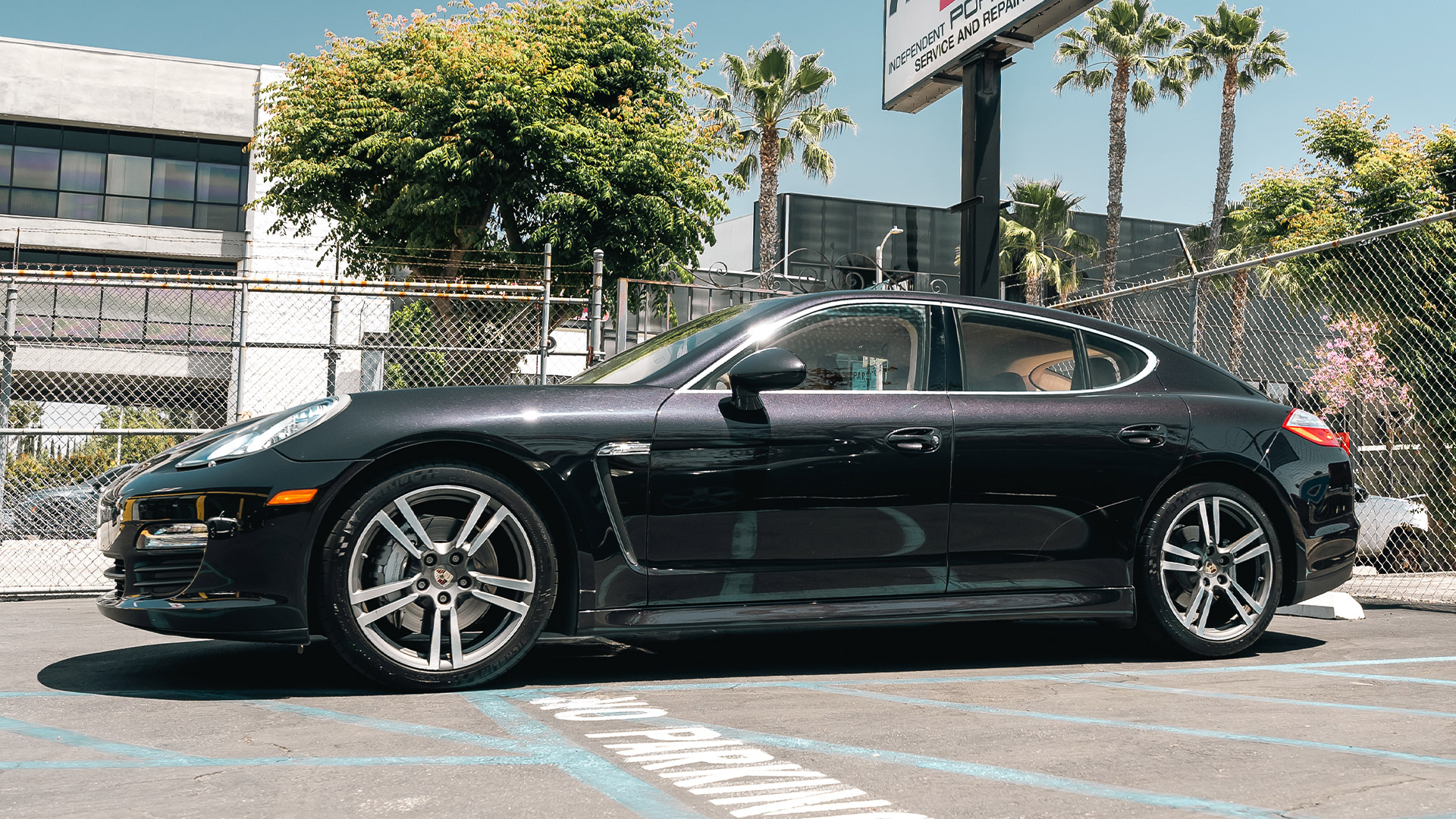
971 Generation (2017–2024)
The 971 is a fundamentally better car than the 970 — a cleaner structure, stronger platform, and meaningfully improved air suspension. Its engines span a 3.0L V6 twin-turbo, a 4.0L V8 twin-turbo in GTS and Turbo spec, and two E-Hybrid variants that represent the most sophisticated electrified Porsche powertrains outside the Taycan. The Sport Turismo wagon launched alongside the 971 and shares all mechanical specifications with the sedan — same service schedule, same intervals, same known issues.
A 971.1 refresh arrived in 2021 with revised PDK calibrations and updated software, but no change to the underlying service architecture.
971 V6 / V8 / GTS / Turbo Service Schedule (2017–2024)
Covers: Panamera, Panamera 4, Panamera 4S, Panamera GTS, Panamera Turbo, Panamera Turbo S; Sedan and Sport Turismo
| Service | V6 Turbo (3.0L) | 4S / GTS (2.9L / 4.0L V8TT) | Turbo / Turbo S (4.0L V8TT) |
|---|---|---|---|
| Oil and filter change | 10,000 miles / 1 year | 10,000 miles / 1 year | 10,000 miles / 1 year |
| Brake fluid replacement | Every 2 years | Every 2 years | Every 2 years |
| Cabin air filter (pollen filter) | 20,000 miles / 2 years | 20,000 miles / 2 years | 20,000 miles / 2 years |
| Intermediate service | 20,000 miles / 2 years | 20,000 miles / 2 years | 20,000 miles / 2 years |
| Spark plug replacement | 40,000 miles / 4 years | 40,000 miles / 4 years | 40,000 miles / 4 years |
| Major service | 40,000 miles / 4 years | 40,000 miles / 4 years | 40,000 miles / 4 years |
| PDK fluid (HOUSE recommendation) | 40,000 miles / 4 years | 40,000 miles / 4 years | 40,000 miles / 4 years |
| Air filter replacement | 40,000 miles / 4 years | 40,000 miles / 4 years | 40,000 miles / 4 years |
| Drive belt inspection / replacement | 60,000 miles / 6 years | 60,000 miles / 6 years | 60,000 miles / 6 years |
| PDCC fluid reservoir (if equipped) | 60,000 miles / 6 years | 60,000 miles / 6 years | 60,000 miles / 6 years |
| Turbo oil feed line inspection | At 60,000 miles+ | At 60,000 miles+ | At 60,000 miles+ — critical on Turbo and Turbo S |
| Water pump inspection (3.0L V6 EA839) | Inspect at 60,000 miles; replace proactively at 80,000 | N/A (V8 engines) | N/A |
| AWD front and rear differential oil | 120,000 miles — HOUSE recommends 40,000 | 120,000 miles — HOUSE recommends 40,000 | 120,000 miles — HOUSE recommends 40,000 |
| Air suspension inspection | Every service past 80,000 miles | Every service past 80,000 miles | Every service past 80,000 miles |
| Tire sealant replacement | Every 4 years | Every 4 years | Every 4 years |
971 E-Hybrid and Turbo S E-Hybrid Service Schedule (2017–2024)
The 971 E-Hybrid platform brings a 2.9L or 4.0L twin-turbo V8 paired with a 136hp electric motor and a 17.9 kWh lithium-ion high-voltage battery. The Turbo S E-Hybrid — 700hp, 626 lb-ft — is the pinnacle of this generation. Both variants share the ICE service schedule of their equivalent non-hybrid counterparts, with significant additions for the hybrid system itself.
Servicing the E-Hybrid system requires high-voltage safety training and PIWIS access for high-voltage battery diagnostics, OBC (on-board charger) programming, and hybrid system calibration. This is not a job for a general shop.
| Service | E-Hybrid (2.9L V6TT + EM) | Turbo S E-Hybrid (4.0L V8TT + EM) |
|---|---|---|
| Oil and filter change | 10,000 miles / 1 year | 10,000 miles / 1 year |
| Brake fluid replacement | Every 2 years | Every 2 years |
| Cabin air filter | 20,000 miles / 2 years | 20,000 miles / 2 years |
| Intermediate service + 12V battery test | 20,000 miles / 2 years — includes hybrid battery health check via PIWIS | 20,000 miles / 2 years — includes full HV system read via PIWIS |
| Spark plug replacement | 40,000 miles / 4 years | 40,000 miles / 4 years |
| Major service | 40,000 miles / 4 years | 40,000 miles / 4 years |
| PDK fluid (HOUSE recommendation) | 40,000 miles / 4 years | 40,000 miles / 4 years |
| Air filter replacement | 40,000 miles / 4 years | 40,000 miles / 4 years |
| Drive belt inspection / replacement | 60,000 miles / 6 years | 60,000 miles / 6 years |
| Hybrid coolant circuit service | 60,000 miles / 6 years | 60,000 miles / 6 years |
| Turbo oil feed line inspection | At 60,000 miles+ | At 60,000 miles+ — mandatory inspection on Turbo S |
| OBC (On-Board Charger) software check | At every service — PIWIS fault memory read required | At every service — PIWIS fault memory read required |
| HV battery capacity check (PIWIS) | Annual — critical past 70,000 miles | Annual — critical past 70,000 miles |
| HV battery water ingress inspection | If car has been in standing water or stored outdoors long-term | If car has been in standing water or stored outdoors long-term |
| AWD front and rear differential oil | 120,000 miles — HOUSE recommends 40,000 | 120,000 miles — HOUSE recommends 40,000 |
| ATF and ATF filter | 120,000 miles factory spec | 120,000 miles factory spec |
| Air suspension inspection | Every service past 80,000 miles | Every service past 80,000 miles |
| Tire sealant replacement | Every 4 years | Every 4 years |
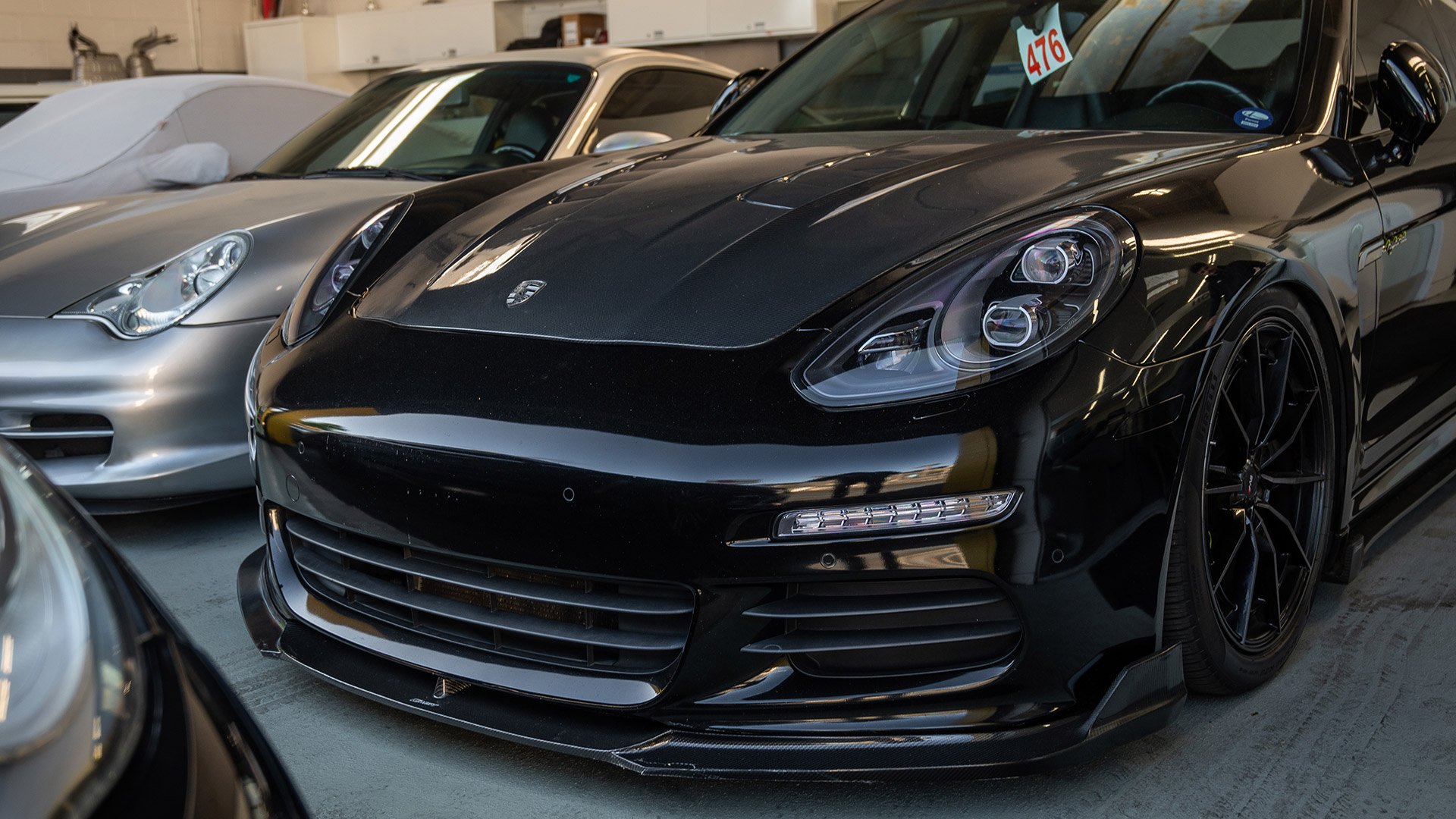
971.2 / 976 Generation (2024–Present)
The 2024 Panamera introduced Porsche’s T-Hybrid system: a 4.0L twin-turbo V8 augmented by an electrically assisted turbocharger (48V e-turbo) and an electric motor integrated into the PDK transmission. Unlike the plug-in 971 E-Hybrid, the T-Hybrid does not charge from a wall outlet — it is purely recuperative. The high-voltage battery is smaller (a 1.9 kWh buffer) and operates at 48V rather than the 400V system in the 971 E-Hybrid.
This changes the service profile significantly. There is no AC charging system to maintain, no OBC, and no large HV battery capacity check. But the 48V system still requires PIWIS for software updates and e-turbo diagnostics, and the integration of the electric motor into the PDK adds a layer of complexity to transmission service that earlier generation cars do not have.
| Service | Panamera / 4S T-Hybrid (4.0L V8) | Turbo / Turbo S T-Hybrid (4.0L V8) |
|---|---|---|
| Oil and filter change | 10,000 miles / 1 year | 10,000 miles / 1 year |
| Brake fluid replacement | Every 2 years | Every 2 years |
| Cabin air filter | 20,000 miles / 2 years | 20,000 miles / 2 years |
| Intermediate service | 20,000 miles / 2 years | 20,000 miles / 2 years |
| Spark plug replacement | 40,000 miles / 4 years | 40,000 miles / 4 years |
| Major service | 40,000 miles / 4 years | 40,000 miles / 4 years |
| PDK fluid (HOUSE recommendation) | 40,000 miles — e-motor integration increases thermal load on PDK | 40,000 miles — mandatory given Turbo S output levels |
| Air filter replacement | 40,000 miles / 4 years | 40,000 miles / 4 years |
| 48V system PIWIS diagnostic | At every service — e-turbo adaptation check and 48V buffer battery health | At every service — e-turbo calibration and PDK e-motor integration check |
| E-turbo oil supply inspection | At 40,000 miles — electric turbocharger bearing lubrication circuit | At 40,000 miles — critical under sustained high-boost conditions |
| Drive belt inspection / replacement | 60,000 miles / 6 years | 60,000 miles / 6 years |
| AWD front and rear differential oil | 120,000 miles — HOUSE recommends 40,000 | 120,000 miles — HOUSE recommends 40,000 |
| Air suspension inspection | Every service past 80,000 miles | Every service past 80,000 miles |
| Tire sealant replacement | Every 4 years | Every 4 years |
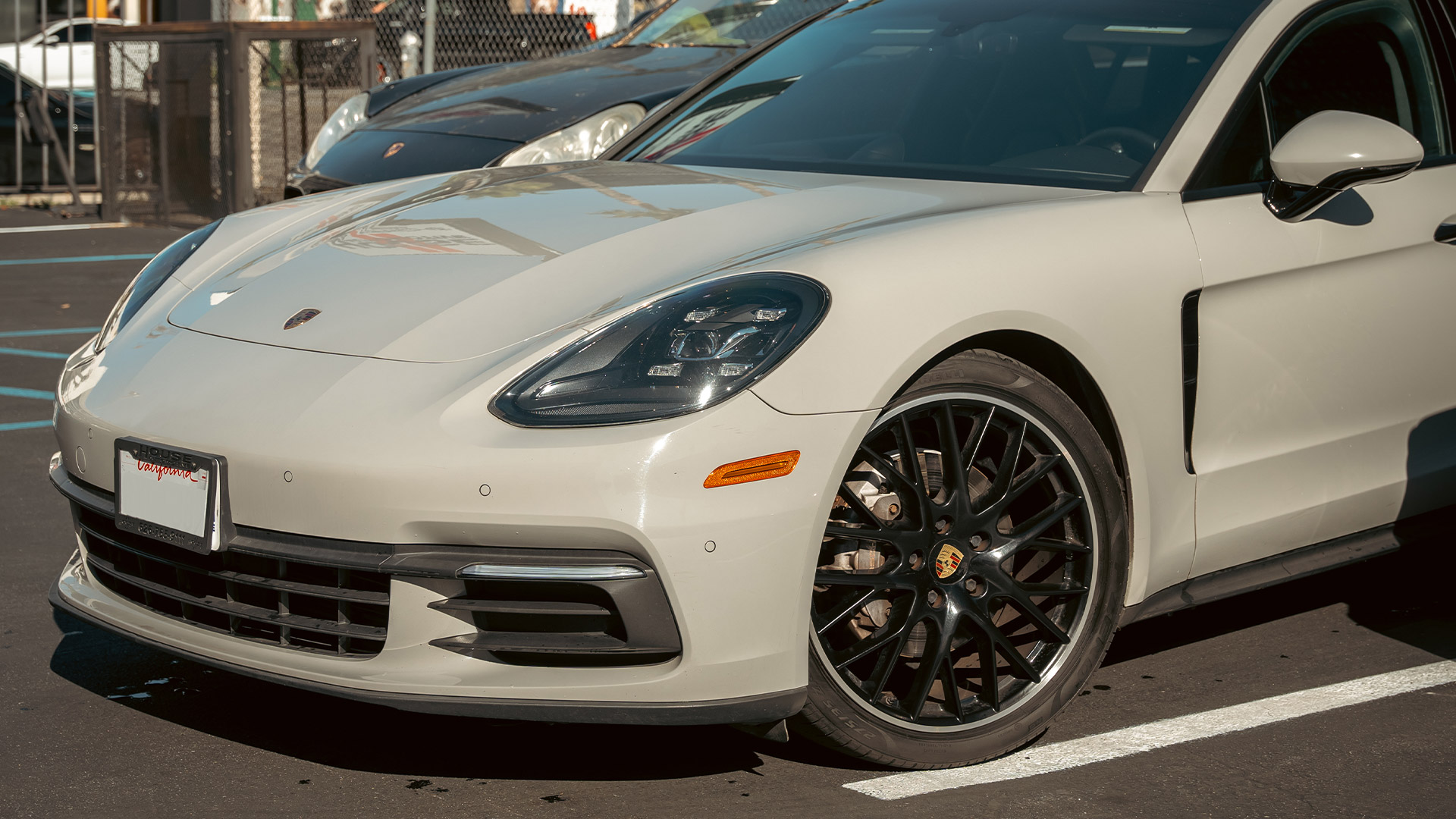
The E-Hybrid Systems: What Actually Needs Servicing
The Panamera has had three distinct electrified powertrains across its lifespan, and they are not interchangeable in how they are maintained.
970.2 S E-Hybrid (2014–2016) uses a supercharged 3.0L V6 and a parallel hybrid system with a 9.4 kWh NiMH battery — not lithium-ion. The supercharger belt is a time-limited wear item unique to this car. Clutch brake fluid (for the hybrid clutch system) requires its own 2-year service, separate from the standard brake fluid. ATF and ATF filter for the automatic transmission runs a very long factory interval — HOUSE strongly recommends not waiting the full factory spec on aging cars.
971 E-Hybrid (2017–2024) runs a lithium-ion HV battery at 400V. Annual hybrid battery health checks via PIWIS are essential — high-voltage battery capacity loss has been documented across higher-mileage cars, and early identification determines whether balancing or replacement is the right course. The OBC (on-board charger) is a known failure point, with Porsche issuing multiple software campaigns to address OBC programming faults.
971 Turbo S E-Hybrid (2017–2024) adds complexity at every level. The 4.0L biturbo V8’s own service requirements, combined with the 400V hybrid system, make this one of the most technically demanding service jobs in Porsche’s current lineup. HOUSE technicians are independently certified on Taycan high-voltage systems — that expertise directly applies to every E-Hybrid Panamera we service.
Water ingress into the high-voltage battery is a documented vulnerability on the 971 E-Hybrid platform. If the car has lived in an area with heavy rainfall or has sat with standing water around the battery enclosure, a PIWIS high-voltage inspection before purchase — or before a long period of inactivity — is worth doing.
The Turbo S E-Hybrid: Flagship Maintenance
Seven hundred horsepower across a 4.0L biturbo V8 and a 400V electric motor. Four-wheel steering. PDCC Sport. Carbon ceramic brake option. Executive wheelbase option.
The Turbo S E-Hybrid is not the car to hand to a shop that services “European makes.” It requires fluency in Porsche’s high-voltage electrical architecture, the biturbo V8’s specific service requirements — including the turbo oil feed line inspection that becomes critical past 60,000 miles — and PIWIS for the full scope of hybrid system calibration and software programming.
HOUSE Automotive technicians hold independent certification on both the 918 Spyder and the Taycan high-voltage systems. The Turbo S E-Hybrid sits squarely within that expertise. Every repair is backed by our 2-year, unlimited-mile warranty on parts and labor — and that warranty covers the hybrid system, not just the ICE components.
Get Expert E-Hybrid System Care
Complex systems need experienced technicians.
Common Issues by Generation
2010-2016 970
Camshaft adjuster bolt failure is the most consequential issue in the early 970 and one of the most widely documented Porsche failures in the V8 Panamera and Cayenne. Aluminum bolts securing the timing chain sprockets to the camshaft adjusters on the 4.8L V8 are prone to shearing. When they go, the timing chain loses tension, the engine goes out of time, and internal damage follows quickly. The 2010–2013 V8 cars (Panamera S, Panamera Turbo) are the most affected. Porsche issued NHTSA recall 17V368 covering the S and Turbo models from those years. If you own or are buying one of these cars, verify the recall has been completed using the VIN.
Coolant bridge failure on the 970 V8 involves a plastic thermostat housing connected to the rear of the engine that is glued rather than bolted on early production cars. Heat cycling over time degrades the adhesive joint, and when it goes, coolant escapes at the back of the engine — an area not easily visible during a routine inspection. The fix involves replacing the housing with the updated bolted version. At $1,000 to $1,500 in parts and labor, it is far less expensive than the overheating damage that follows if it fails undetected.
Air suspension failures on the 970 typically begin between 80,000 and 100,000 miles. Air bags develop leaks, the compressor works harder to compensate, and when the compressor burns out, the repair scope — and cost — expands significantly. A single air strut on the 970 runs over $1,500 in parts alone. Proactive inspection at every service past 70,000 miles is the right call. See the air suspension section below for the full picture.
Air Oil Separator (AOS) failure on the 970 V8 causes increased oil consumption and oil-contaminated intake air. It is a maintenance item, not a catastrophic failure — but an ignored AOS leads to carbon buildup in the intake, accelerated plug wear, and potential issues downstream. Inspect at 60,000 miles and replace proactively before symptom onset.
2017-2024 971
Water pump failure (EA839 engine) affects the 3.0L V6 used in the base and S variants. The EA839’s water pump uses a plastic impeller that is prone to degradation under sustained heat. Symptoms include coolant loss, overheating warnings, and eventually catastrophic cooling system failure. Inspect the water pump at 60,000 miles. Replace proactively at 80,000 miles or at first sign of coolant loss.
Rocker arm roller bearing wear has been documented on the 971 Panamera with the 3.0L V6 (EA839). Premature wear leads to rough idling and irregular valve timing. This issue is tracked under several technical service bulletins. A bore scope inspection and PIWIS fault memory read at the first sign of irregular idle behavior is the right diagnostic approach.
Air suspension improvements on the 971 are real — the platform is more robust than the 970. But the compressor and valve block remain wear items. Expect inspection to become part of the major service cadence past 80,000 miles, and address any soft strut before it cascades.
OBC (On-Board Charger) faults on the 971 E-Hybrid have been addressed through multiple Porsche software campaigns. If the car shows HV charging cancelled, Check Engine warnings related to the charging system, or intermittent charging refusal, a PIWIS read and OBC reprogramming is the starting point — not a parts replacement.
High-voltage battery capacity loss on E-Hybrid variants becomes a real concern past 80,000 miles and on cars that have sat unused for extended periods without conditioning. Annual battery health checks via PIWIS are part of the E-Hybrid service at HOUSE.
Air Suspension: The Most Important Proactive Service
The Panamera’s air suspension is part of what makes the car feel like nothing else in its class. It also has a known failure arc that every owner should understand.
On the 970, air suspension failures typically begin with a single air bag developing a slow leak. The compressor compensates — running more frequently, running hotter — until it fails. At that point, the repair scope includes the failed bag, the burned-out compressor, and frequently the valve block, which has been running under abnormal conditions. What started as a $1,500 repair can become a $10,000 to $25,000 job depending on how long the car was driven in a degraded state.
On the 971, the system is more reliable, but the failure pattern is the same. The rubber air bags are wear items. They seal well when new and degrade over time and temperature cycling.
The proactive approach: inspect the system at every service past 70,000 miles. Listen for the compressor running at startup. Watch for a car that sits uneven overnight. Catch the single air bag before the compressor follows.
HOUSE uses PIWIS to query suspension fault memory and active compressor logs — the system often shows early compressor stress before any physical symptom appears.
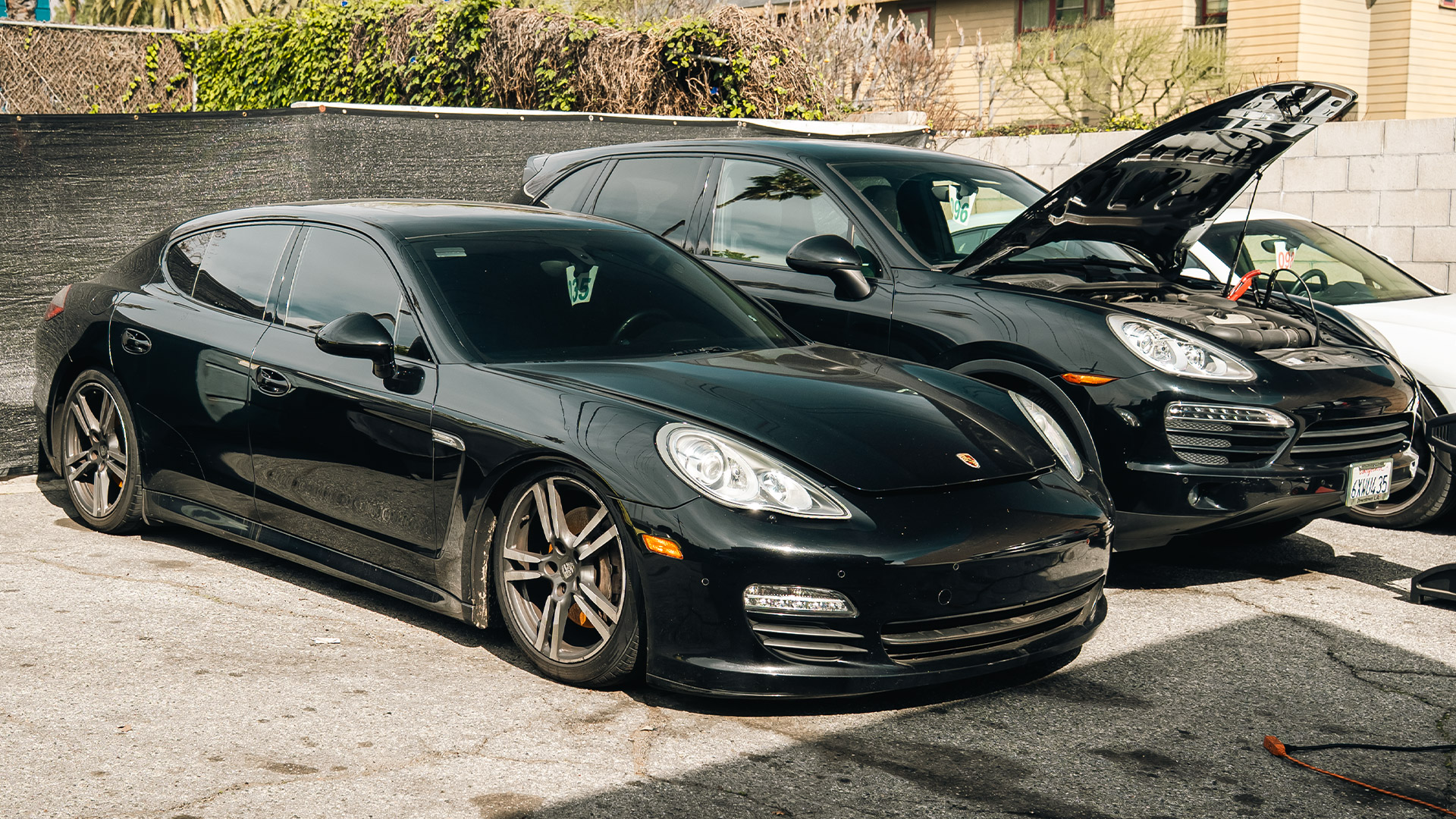
PDK Service on the Panamera
Every Panamera carries a PDK transmission with the exception of the early six-speed manual option on the base 970. The PDK is one of the most capable dual-clutch transmissions ever built, and one of the most expensive to repair when neglected.
Porsche’s factory spec calls for PDK fluid at 120,000 miles or 12 years. HOUSE Automotive recommends 40,000 miles — the same position we hold across the entire Porsche lineup. The reason is practical: the Panamera’s PDK operates under sustained load from a heavy car with a powerful engine, and the thermal demands on the fluid are higher than in a lighter 911 or Cayman. Fluid that has degraded past its service life leaves the mechatronic unit and clutch packs working without adequate lubrication. The cost of a PDK rebuild or replacement — which can run well past $20,000 — makes the cost of an early fluid change easy math.
For a full breakdown of PDK service intervals, symptoms, and what to watch for, see the Porsche PDK maintenance guide.
PIWIS Diagnostics and Why They Matter
PIWIS is Porsche’s factory diagnostic system. It is the only tool that reads the full fault memory across every Panamera control unit — engine, transmission, air suspension, high-voltage battery, OBC, PDCC, and all chassis systems — with factory-level access.
Generic OBD-II scanners read a fraction of the fault codes present in a Panamera. An independent shop without PIWIS is not seeing the full picture. On E-Hybrid variants, PIWIS is required to run the hybrid battery diagnostic, perform OBC programming, calibrate the suspension after component replacement, and reset adaptation values after a PDK service.
HOUSE Automotive operates PIWIS at all three locations. Every Panamera service at HOUSE begins and ends with a PIWIS read — before we touch the car and after we finish. If there are fault codes stored that do not correlate to the job you came in for, we tell you. That transparency is part of how we work.
Porsche Boxster & Cayman Maintenance PDFs
- 2010 970.1 Panamera Intermediate Maintenance Checklist
- 2010 970.1 Panamera Maintenance Checklist
- 2011 970.1 Panamera Intermediate Maintenance Checklist
- 2011 970.1 Panamera Maintenance Checklist
- 2012-2013 970.1 Panamera Intermediate Maintenance Checklist
- 2012-2013 970.1 Panamera Maintenance Checklist
- 2014 970.2 Panamera Intermediate Maintenance Checklist
- 2014 970.2 Panamera Maintenance Checklist
- 2017+ 971 Panamera Maintenance Checklist
- 2017+ 971 Panamera Oil Service Checklist
Service Your Panamera at HOUSE
Three locations across Southern California: Encino, Pasadena, and Thousand Oaks. Every Panamera service includes PIWIS diagnostics, OEM Porsche parts, and a 2-year, unlimited-mile warranty on all parts and labor.
If you prefer, call us directly at (866) HOUSE-11.
Ready to Schedule Your Porsche Panamera Service?
Book online in under 60 seconds.
Frequently Asked Questions
How often should I service my Porsche Panamera?
Every 10,000 miles or once per year, whichever comes first. If the car is used for spirited driving, track events, or driven hard in stop-and-go conditions, the oil service interval should shorten to 7,500 miles. The factory interval is written for normal road use. The Panamera invites more than that, and the schedule should reflect how the car actually gets used.
What is included in a Porsche Panamera major service?
The major service at 40,000 miles covers everything from the annual and intermediate services, plus spark plug replacement, air filter replacement, PDK fluid (at HOUSE’s recommended interval), differential oils, drive belt inspection, and a full brake system and suspension inspection. On 971 cars with PDCC, the fluid reservoir is checked or replaced at 60,000 miles.
How much does it cost to maintain a Porsche Panamera?
The Panamera sits at the higher end of the Porsche maintenance range. Annual average maintenance costs run roughly $1,200 to $2,500 per year across all service types. Major service years push higher. HOUSE Automotive typically runs 25 to 30 percent below dealer pricing on equivalent work using the same OEM parts. For a full model-by-model cost comparison, see the Porsche maintenance costs guide.
What are the most common Porsche Panamera problems?
On the 970: camshaft adjuster bolt failure (V8 S and Turbo, 2010–2013), coolant bridge failure (V8 models, early production), air suspension compressor wear past 80,000 miles, and AOS failure on V8 engines. On the 971: water pump failure on the 3.0L V6 (EA839), air suspension wear at higher mileage, OBC faults on E-Hybrid variants, and rocker arm bearing wear on the V6. Known issues are manageable with proactive maintenance and proper diagnostics — they are not reasons to avoid the car.
Is the Porsche Panamera E-Hybrid expensive to maintain?
More expensive than the base ICE variants, yes. The E-Hybrid system adds hybrid battery health monitoring, OBC service, hybrid coolant circuit service, and high-voltage system inspections that require specialist capability. However, a well-maintained E-Hybrid Panamera is not disproportionately expensive relative to the level of engineering it contains. The cost risk comes from deferred maintenance on the HV system — not from proactive care.
How long do Porsche Panamera air suspension systems last?
With regular inspection and proactive maintenance, the 971 platform can reach 100,000 to 120,000 miles on its original air struts. The 970 is typically 80,000 to 100,000 miles. Driving conditions, load, and service history all affect this. The key is catching the first failing bag before the compressor compensates itself to failure.
What is the PDK service interval on a Panamera?
Porsche’s factory spec is 120,000 miles or 12 years. HOUSE recommends 40,000 miles. The Panamera’s weight and output puts higher thermal demands on the PDK fluid than in lighter Porsche models. Early fluid service is inexpensive insurance against mechatronic and clutch pack wear that can cost five figures to address.
What does PIWIS mean for a Panamera owner?
PIWIS is Porsche’s proprietary factory diagnostic system. It is the only tool capable of reading full fault memory across all Panamera control modules, running the E-Hybrid battery diagnostic, calibrating suspension after component replacement, and programming the OBC on E-Hybrid variants. A shop without PIWIS is working with incomplete information on a Panamera. HOUSE operates PIWIS at all three locations.
Is it cheaper to service a Porsche at an independent shop?
At HOUSE Automotive — yes, by 25 to 30 percent on average using the same OEM Porsche parts, the same PIWIS diagnostic system, and the same factory service procedures. The difference is overhead, not quality. Every job at HOUSE is covered by a 2-year, unlimited-mile warranty on parts and labor.
What year Panamera should I avoid?
The 2010–2013 970.1 V8 cars (S and Turbo) carry the highest risk profile due to the camshaft adjuster bolt issue. Verify the NHTSA recall 17V368 is completed before buying. Cars where the recall has been addressed — and that have documented service histories — are not inherently problematic. A thorough pre-purchase inspection by a Porsche specialist is the right step before any used Panamera purchase, regardless of generation.
How long does a Porsche Panamera engine last?
A well-maintained Panamera V6 or V8 is capable of 200,000+ miles. The cars that fall short of that typically have deferred maintenance histories — missed oil services, ignored coolant system warnings, or PDK fluid run far past its useful life. The engine is not the weak link. The owner’s maintenance habits are.
Does the Panamera Turbo S E-Hybrid need special maintenance?
Yes. The Turbo S E-Hybrid requires high-voltage certified technicians, PIWIS for battery and OBC diagnostics, turbo oil feed line inspection past 60,000 miles, and annual hybrid battery health checks alongside the full ICE service schedule. HOUSE technicians hold independent certification on Porsche high-voltage systems including the 918 Spyder and Taycan — the Turbo S E-Hybrid falls within that expertise.