

Why Porsche Batteries Fail in Winter: Common Cold-Weather Problems Explained
Cold mornings have a way of telling the truth.
Hit the push to start button on a frosty day, and your Porsche will let you know instantly if the battery has been coasting on borrowed time. The starter drags for half a second longer, the lights dip, a module throws a warning it didn’t dare show in summer. Winter exposes weak batteries, and high-performance German machines are far less forgiving than your neighbor’s Toyota.
Modern Porsches demand a level of electrical stability that didn’t exist twenty years ago. Between the electronically controlled throttles, suspension management, PDK, PTM, and a network of modules that all want reliable voltage at startup, a battery is no longer just a brick of stored energy.
It’s the heartbeat of the entire car, and winter is the stress test.
Cold Weather Chemistry: Where the Trouble Starts
Battery chemistry hates the cold. As the temperature drops, the chemical reactions inside an AGM battery slow down, reducing available capacity and cutting cranking power. A battery that felt “fine” in October suddenly has 30 percent less muscle in January. Now place that reduced output in a Porsche that needs higher amperage to spin over a high-compression engine while dozens of modules wake up simultaneously, and you understand why winter creates the perfect storm.
Add the voltage demands of traction systems, steering modules, sensors, and the PDK warming up its control circuits, and a weak battery has nowhere to hide.

The Parasitic Draw Problem
Then there’s the silent killer: parasitic draw. Every modern German vehicle has it. The car never truly “turns off.” Comfort access stays vigilant. Security systems remain alert. Telematics pings the outside world. Module networks check in with one another before settling into sleep cycles. Even when everything is working properly, there’s always a small current flowing.
The problem surfaces when one of those modules refuses to go to sleep. A door control unit that stays half-awake or an aftermarket accessory wired poorly can drain a marginal battery overnight. In summer, you barely notice. In winter, it’s enough to leave you stranded.
Start-Stop Systems: A Tough Workout for Weak Batteries
Start-stop systems are great for fuel efficiency but brutal for aging batteries.
Instead of a handful of starts per day, the battery endures dozens. It discharges, recharges, and cycles constantly. Once the temperatures fall and the oil thickens, those extra cranking demands push a tired battery to the edge.
Plenty of owners think their battery “died overnight.” In reality, it was already fading. Winter just pulled the curtain back.
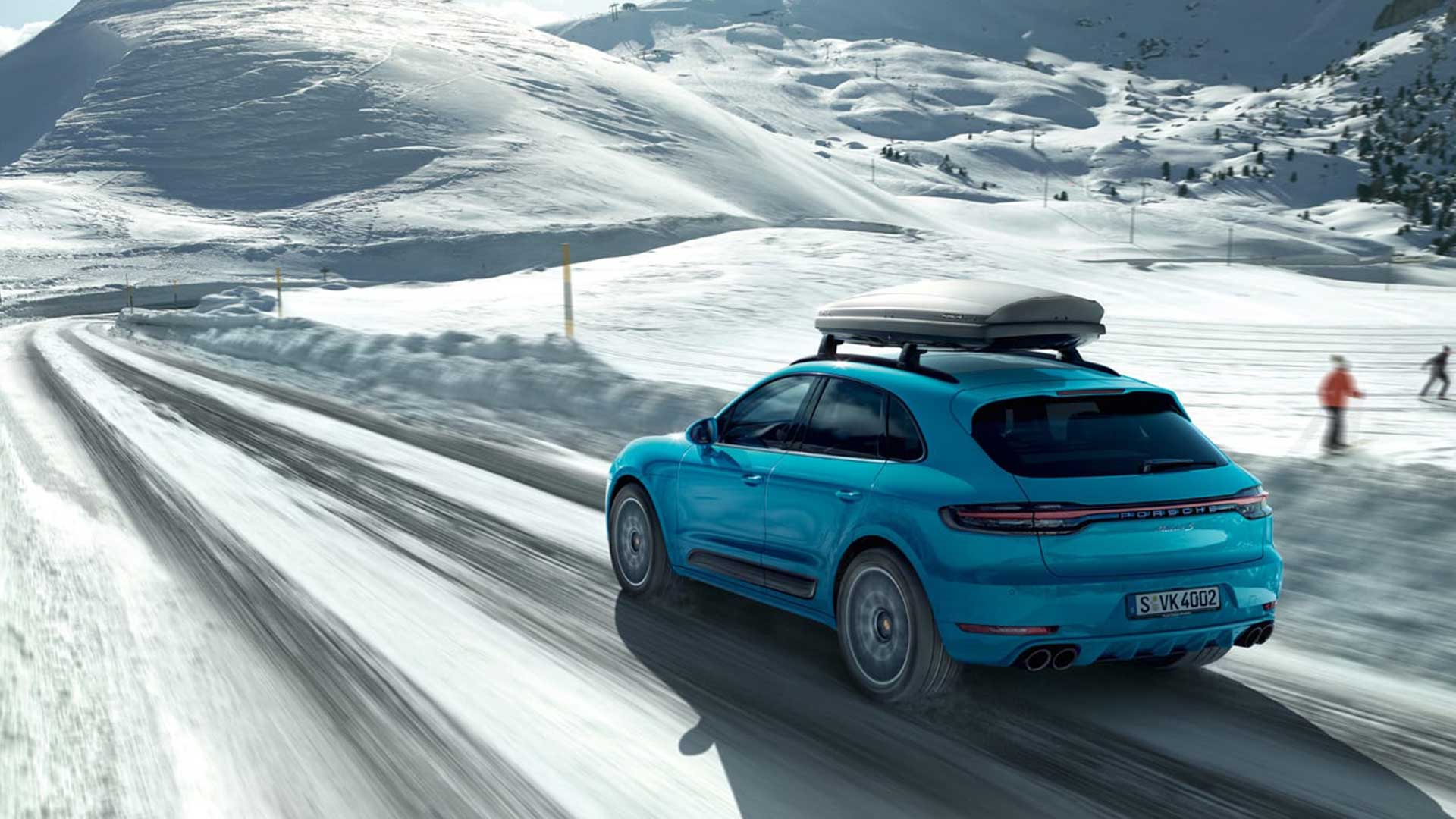
How Porsches Behave When Voltage Drops
A weak battery in a Porsche doesn’t simply fail quietly.
You’ll see odd symptoms long before it gives up completely. Slow cranking is the obvious one, but intermittent faults are where things get interesting.
A few familiar winter companions:
- Random PSM or transmission warnings that disappear as soon as voltage stabilizes
- PCM glitches
- Power windows are losing their one-touch memory
- Charging system is overcompensating to keep the car alive
None of these necessarily mean the car is broken. They mean the battery isn’t delivering the voltage those modules expect.
How to Avoid Winter Battery Trouble
Replacing an older battery before winter is the simplest way to avoid the seasonal scramble.
Most Porsche batteries last four to six years, depending on use, and winter is usually what ends the debate about whether it’s time.
Owners who drive infrequently should keep the car on a smart maintainer. These vehicles have enough onboard electronics to drain a battery just by being there, and a weekly trip to the grocery store won’t replenish the lost charge. Winter only amplifies that.
Longer drives help keep things healthy during the colder months. The car has time to reach full operating temperature and restore charge properly.
What’s the Best Battery for a Porsche?
Porsches aren’t gentle on batteries, so the “best” option isn’t the one with the biggest marketing claim.
It’s the one built to handle high electrical load, fast cycling, and the voltage sensitivity of Porsche control modules. That means sticking with AGM (Absorbent Glass Mat) technology, because standard flooded batteries simply can’t supply the stable amperage modern systems demand.
The electrical load is too high and the voltage sensitivity too tight for anything else. OEM units from Varta or Moll are excellent, and high-quality AGM options from Interstate or Bosch work well as long as the specs match your model’s requirements. Cheap or generic batteries don’t hold up and usually trigger voltage-related warnings.
The critical step isn’t just choosing the right battery. It’s coding it so the charging system knows what’s been installed. Skip the coding, and even the best AGM won’t last.
HOUSE Automotive Is Your Porsche Battery Expert
A strong battery shrugs off cold weather. A tired one folds the moment temperatures dip, especially in a Porsche loaded with electronics.
If your machine is hesitating on cold starts, flashing odd warnings, or acting like the battery is on its last legs, it’s time to let someone who speaks fluent Porsche take a look.
HOUSE Automotive has you covered.
We’ll test it correctly, track down the real problem, and get your Porsche ready for the cold months ahead.