


Porsche 911 Maintenance Guide: Every Generation, Every Interval
The 911 has been in continuous production since 1963. In that time it’s gone from air-cooled to water-cooled, naturally aspirated to turbocharged across the entire lineup, analog to full PIWIS diagnostics. The service requirements have changed just as dramatically, and the internet is full of guides that treat a 1978 930 Turbo the same as a 2023 992 Carrera S.
This guide doesn’t do that.
What follows is a generation-by-generation breakdown of every 911 variant from the 930 Turbo to the current 992.2 with the actual service intervals that matter, the generation-specific failure points worth knowing before they become expensive, and HOUSE’s own recommendations where the factory schedule isn’t conservative enough. Whether you’re running a daily-driven 964 or a low-mileage 992 GT3, it’s all here.
For context on what each service interval actually costs and how HOUSE compares to a Porsche dealership, see our Porsche Maintenance Costs Guide.
911 Generation Overview
The 911 spans more ground than any other sports car in history. Before diving into each generation, it’s important to understand that every generation of the 911 is completely different. For example, the maintenance conversation for an air-cooled 930 is a fundamentally different one than for a turbocharged 992.
| Generation | Internal Code | Years | Engine Type | Key Variants |
|---|---|---|---|---|
| G-Body | G (911/930) | 1974–1989 | Air-cooled flat-six (NA + Turbo) | Carrera 3.0, 3.2; 930 Turbo 3.0, 3.3 |
| 964 | 964 | 1989–1994 | Air-cooled flat-six | Carrera 2, Carrera 4, Turbo 3.3/3.6, RS |
| 993 | 993 | 1994–1998 | Air-cooled flat-six (final) | Carrera, Carrera 4, Turbo, RS, GT2, Targa |
| 996 | 996 | 1997–2005 | Water-cooled M96 flat-six | Carrera, Carrera 4S, Turbo, GT3, GT2 |
| 997.1 | 997 (Phase 1) | 2005–2008 | Water-cooled M96/M97 flat-six | Carrera, Carrera S, Carrera 4S, Turbo, GT3, GT2 |
| 997.2 | 997 (Phase 2) | 2009–2012 | Water-cooled 9A1 flat-six (PDK introduced) | Carrera, Carrera S, Turbo, Turbo S, GT3, GT3 RS, GT2 RS |
| 991.1 | 991 (Phase 1) | 2012–2016 | Water-cooled naturally aspirated flat-six | Carrera 3.4L, Carrera S 3.8L, GT3, GT3 RS, Turbo, Turbo S |
| 991.2 | 991 (Phase 2) | 2016–2019 | Water-cooled turbocharged flat-six (all variants) | Carrera 3.0L TT, Carrera S 3.0L TT, GT3, GT3 RS, Turbo, Turbo S |
| 992.1 | 992 (Phase 1) | 2019–2024 | Water-cooled turbocharged flat-six | Carrera 3.0L TT, Carrera S 3.0L TT, GT3, GT3 RS, GT3 Touring, Turbo S |
| 992.2 / T-Hybrid | 992 (Phase 2) | 2025–Present | 3.6L turbocharged flat-six + 48V electric motor (T-Hybrid) | Carrera GTS T-Hybrid, Carrera 4 GTS, Turbo, Turbo S |
930 Turbo (1975–1989): The One That Demands Respect
The 930 is one of the most unforgiving and rewarding cars in the HOUSE shop. It has no traction control, no fault memory to read, and turbo response that earned it the nickname “widowmaker”. But it also has an engine that, with attentive care, will run indefinitely.
At its core, the 930 is a 3.0L (1975–1977) or 3.3L (1978–1989) air-cooled flat-six with a single KKK turbocharger, developing up to 300hp in its final specification. The same principles that applied to every air-cooled 911 apply here. Tighter oil change intervals than modern cars, mandatory valve clearance adjustment, and a hands-on inspection approach at every service because there’s no computer to flag what’s off.
Two areas specific to the 930 deserve particular attention. The turbo oil feed and return lines harden and develop hairline cracks over time — on a car that’s now 35–50 years old, these lines should be inspected and replaced proactively, not reactively. And the intercooler charge hoses on 3.3L cars are the same age. A burst hose at boost will get your attention in a way that’s much more expensive than replacing the hose at a service.
Oil Specification: Porsche Classic 10W-60 Motoroil is the validated specification for air-cooled 911 engines with displacements from 3.0L upward. High-zinc content (ZDDP) is mandatory — these engines have flat-tappet valve trains that require it. Do not use modern low-ZDDP API SP or SN+ oils on any air-cooled Porsche.
| Service | Carrera 3.0 / 3.2 (NA) | 930 Turbo 3.0 / 3.3 | Notes |
|---|---|---|---|
| Oil and filter change | 3,000–5,000 miles or annually — HOUSE recommendation | 3,000–5,000 miles or annually — HOUSE recommendation | Factory spec was 7,500–15,000 miles; modern practice and high-zinc oil use shortens this significantly |
| Valve adjustment | Every 12,000–15,000 miles or 1 year | Every 12,000–15,000 miles or 1 year | Mechanical (solid) lifters — required service, not optional; tight valves cause misfires and overheating |
| Distributor cap and rotor | Annually or every 12,000 miles | Annually or every 12,000 miles | Inspect at every service; carbon tracking causes misfires and hard starts |
| Spark plug replacement | 15,000–20,000 miles or 2 years | 15,000 miles or 2 years — shorten with track use | Use only Bosch or Porsche-specified plugs; gap to factory spec |
| Air filter replacement | Every 15,000–30,000 miles or 2 years | Every 15,000 miles or annually | 930 runs a higher boost pressure — cleaner filter matters more |
| Brake fluid replacement | Every 2 years regardless of mileage | Every 2 years regardless of mileage | Non-negotiable on an air-cooled car; DOT 4 minimum |
| Fuel filter replacement | Every 30,000 miles or 2–3 years | Every 30,000 miles or 2–3 years | K-Jetronic (CIS) fuel injection is sensitive to contamination |
| Timing chain tensioner inspection | At every major service — inspect for wear and oil seepage | At every major service | Chain tensioner failure is a common G-Body concern; do not defer |
| Manual transmission / G50 gearbox oil | Every 30,000 miles or 3 years | Every 30,000 miles or 3 years | G50 (1987+) is more robust than earlier 915 gearbox; both benefit from fresh gear oil |
| Heat exchanger inspection (930 Turbo) | N/A | Annually — carbon monoxide risk if heat exchangers crack | Critical safety item unique to the 930; cracked exchangers are a known failure mode |
| Coolant (fan thermostat / oil thermostat) | Inspect thermostat function annually | Inspect thermostat function annually | Air-cooled — no liquid coolant; oil thermostat governs engine temp; failure causes overheating |
| Torsion bar / suspension inspection | Every 2 years or at major service | Every 2 years or at major service | Torsion bar rear suspension; check trailing arm bushings and torsion bar mounts for corrosion |
| Head stud inspection | At every major service past 60,000 miles | At every major service past 60,000 miles | Porsche A40-spec high-zinc oil strongly recommended; stud pull-out is catastrophic |
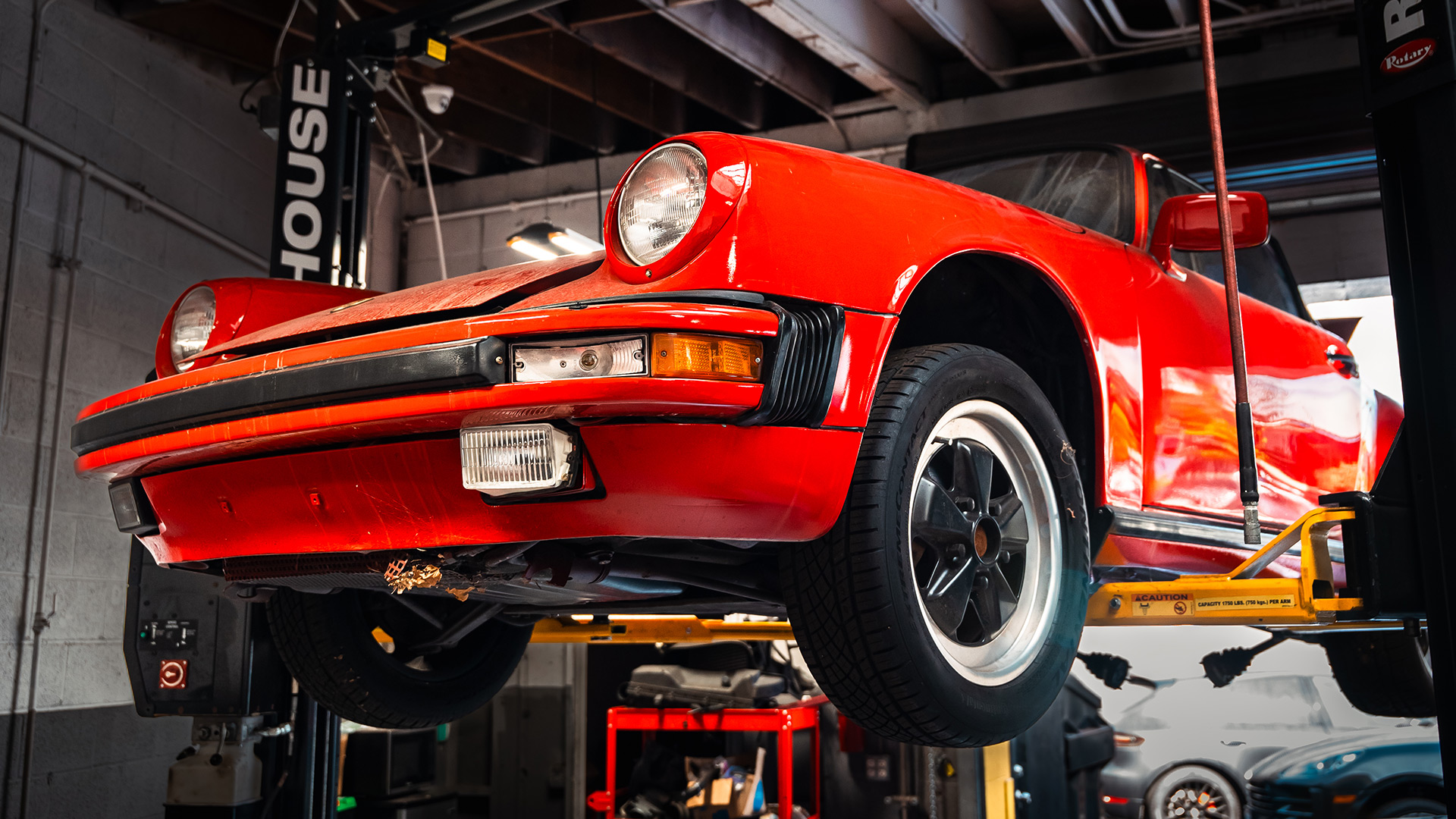
964 (1989–1994): The Most Usable Classic
The 964 brought coil-over suspension, power steering, ABS, and a 3.6L twin-plug flat-six to the 911. It’s the classic-generation car that makes the most sense as a daily driver today — and it remains one of the most sorted-feeling 911s to spend time in.
The maintenance discipline required is identical to the 930 in most respects, with one critical addition unique to the twin-plug 964 and 993: the distributor belt. Porsche never published an official replacement interval for this belt. The factory service manual specifies an ignition system function check at 15,000-mile intervals — but it doesn’t tell you to replace the belt proactively. That’s a problem, because a failed distributor belt on a 964 doesn’t just leave you stranded. It can cause engine damage.
HOUSE recommends annual inspection of both distributor belts and proactive replacement every 30,000–40,000 miles regardless of appearance. On a 30+ year old car that may have unknown service history, address it now if you can’t confirm it’s been done. The distributor bearing condition should be assessed at the same time — a belt in good condition on a bearing that’s developing play is the same problem in slow motion.
Valve clearances require attention every 15,000 miles. The 964’s twin-plug setup means 12 spark plugs — two per cylinder — and double the surface area for clearance drift. Skipping it is a false economy on a turbocharged or high-mileage car.
Oil Specification: High-zinc 20W-50 or 15W-50 full synthetic, or Porsche Classic 10W-60. Same requirement as the 930; no modern low-ZDDP oils
| Service | Carrera 2 / Carrera 4 (3.6L NA) | 964 Turbo 3.3 / 3.6 | Notes |
|---|---|---|---|
| Oil and filter change | 3,000–5,000 miles or annually — HOUSE recommendation | 3,000–5,000 miles or annually — HOUSE recommendation | Factory spec was 7,500–15,000 miles; high-zinc oil required; do not exceed 1 year regardless of mileage |
| Valve adjustment | Every 12,000 miles or 2 years | Every 12,000 miles or 2 years | Mechanical solid lifters — mandatory service; clearance drift causes power loss and increased wear |
| Spark plug replacement | Every 30,000 miles or 4 years | Every 30,000 miles or 4 years | Increase frequency with track use; use Porsche-specified plugs only |
| Distributor cap and rotor | Every 12,000 miles or annually | Every 12,000 miles or annually | Carbon tracking causes hard starts and misfires; inspect at every service |
| Air filter replacement | Every 30,000 miles or 2 years | Every 15,000–20,000 miles or annually | 964 Turbo runs higher boost; inspect filter at every oil change |
| Brake fluid replacement | Every 2 years regardless of mileage | Every 2 years regardless of mileage | ABS system on 964 is sensitive to degraded fluid; non-negotiable |
| Fuel filter replacement | Every 60,000 miles or 4 years | Every 60,000 miles or 4 years | Motronic fuel injection; clogged filter causes lean running and hard starts |
| Timing chain and tensioner inspection | At every major service; replace tensioner proactively at 60,000+ miles | At every major service | Oil-fed chain tensioners; low oil level accelerates wear; do not defer |
| Manual gearbox oil (G50) | Every 30,000 miles or 3 years | Every 30,000 miles or 3 years | G50 used throughout 964 range; Porsche MTF is the recommended fluid |
| Tiptronic ATF (if equipped) | Every 60,000 miles or 4 years | N/A (manual only) | Tiptronic was available on Carrera 2 from 1991; use Porsche-approved ATF only |
| Power steering fluid (C4) | Inspect annually; replace every 3 years | N/A (no power steering) | Carrera 4 only; rack seal leaks are common on aging cars |
| Heat exchanger inspection (Turbo) | N/A | Annually — CO poisoning risk from cracked exchangers | Critical safety inspection; cracked fin-type exchangers are a known 964 Turbo failure point |
| Torsion bar and rear suspension | Every 2 years or at major service | Every 2 years or at major service | Trailing arm bushings and torsion bar boots deteriorate; inspect for corrosion and cracking |
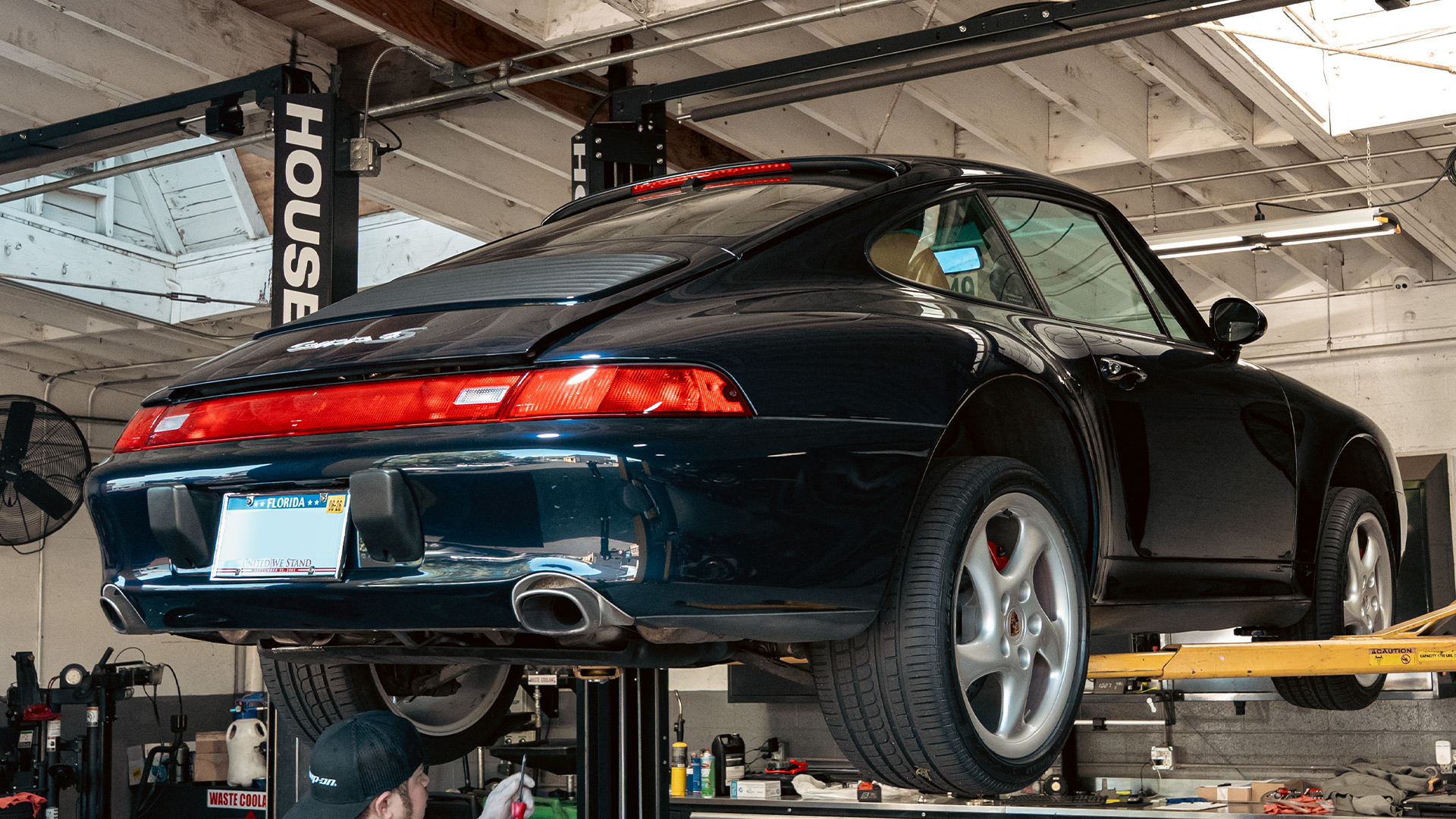
993 (1995–1998): The Last Air-Cooled
The 993 is the most refined air-cooled 911 Porsche ever built, and the Turbo variant — with its twin-turbocharged 3.6L producing 408hp — remains one of the most capable cars from any era. Values have climbed accordingly, which makes keeping one properly serviced not just a mechanical concern but a financial one.
The distributor belt concern carries directly over from the 964 with the same urgency and the same recommendation: inspect annually, replace proactively at 30,000–40,000 miles, and assess distributor bearing health at the same time. The 993 Turbo, given its higher thermal loads, warrants a tighter replacement target of 25,000–30,000 miles.
New to the 993 is the Varioram variable intake system — a resonance flap mechanism that activates above approximately 5,000 rpm to expand the effective intake volume. Check the vacuum lines and confirm the flap operates at every service. A non-functioning Varioram doesn’t set a warning light; it just quietly robs the top end of its character.
Oil change discipline on the 993 Turbo warrants special mention. The twin-turbo heat load is significant, and on a daily-driven car, HOUSE recommends shortening the interval to every 5,000 miles or 6 months rather than the standard 7,500-mile air-cooled schedule. The engine will tell you the difference over time.
Oil Specification: Same as 964. High-zinc 20W-50 or 15W-50, or Porsche Classic 10W-60. The 993 Turbo’s twin-turbo thermal load makes oil quality non-negotiable.
| Service | Carrera / Carrera 4 (3.6L NA) | 993 Turbo (3.6L Twin Turbo) | 993 GT2 (3.6L Biturbo) |
|---|---|---|---|
| Oil and filter change | 5,000–7,500 miles or annually — HOUSE recommendation | 5,000–7,500 miles or annually — HOUSE recommendation | 5,000 miles or annually — HOUSE recommendation |
| Valve adjustment | 993 uses hydraulic lifters — no manual adjustment required; inspect at major service | Hydraulic lifters — inspect at major service | Hydraulic lifters — inspect at major service |
| Spark plug replacement | Every 30,000 miles or 4 years | Every 30,000 miles or 4 years | Every 15,000–20,000 miles or 2 years — shorten with track use |
| Distributor cap and rotor | Annually or every 15,000 miles | Annually or every 15,000 miles | Annually or every 10,000 miles |
| Air filter replacement | Every 30,000 miles or 2 years | Every 20,000 miles or 2 years | Every 15,000 miles or annually |
| Brake fluid replacement | Every 2 years regardless of mileage | Every 2 years regardless of mileage | Every 2 years — annually if tracked |
| Fuel filter replacement | Every 60,000 miles or 4 years | Every 60,000 miles or 4 years | Every 60,000 miles or 4 years |
| Timing chain and tensioner inspection | At major service; replace tensioner proactively at 60,000+ miles | At major service; replace proactively at 60,000+ miles | At every service — higher stress application |
| Manual gearbox oil (G50) | Every 30,000 miles or 3 years | Every 30,000 miles or 3 years | Every 20,000 miles or 2 years |
| Tiptronic ATF (if equipped) | Every 60,000 miles or 4 years | N/A (manual only) | N/A (manual only) |
| Heat exchanger inspection (Turbo / GT2) | N/A | Annually — CO poisoning risk; fins crack with age | Annually — mandatory safety inspection |
| Rear multi-link suspension inspection | Every 2 years or 30,000 miles | Every 2 years or 30,000 miles | Every 2 years or 20,000 miles |
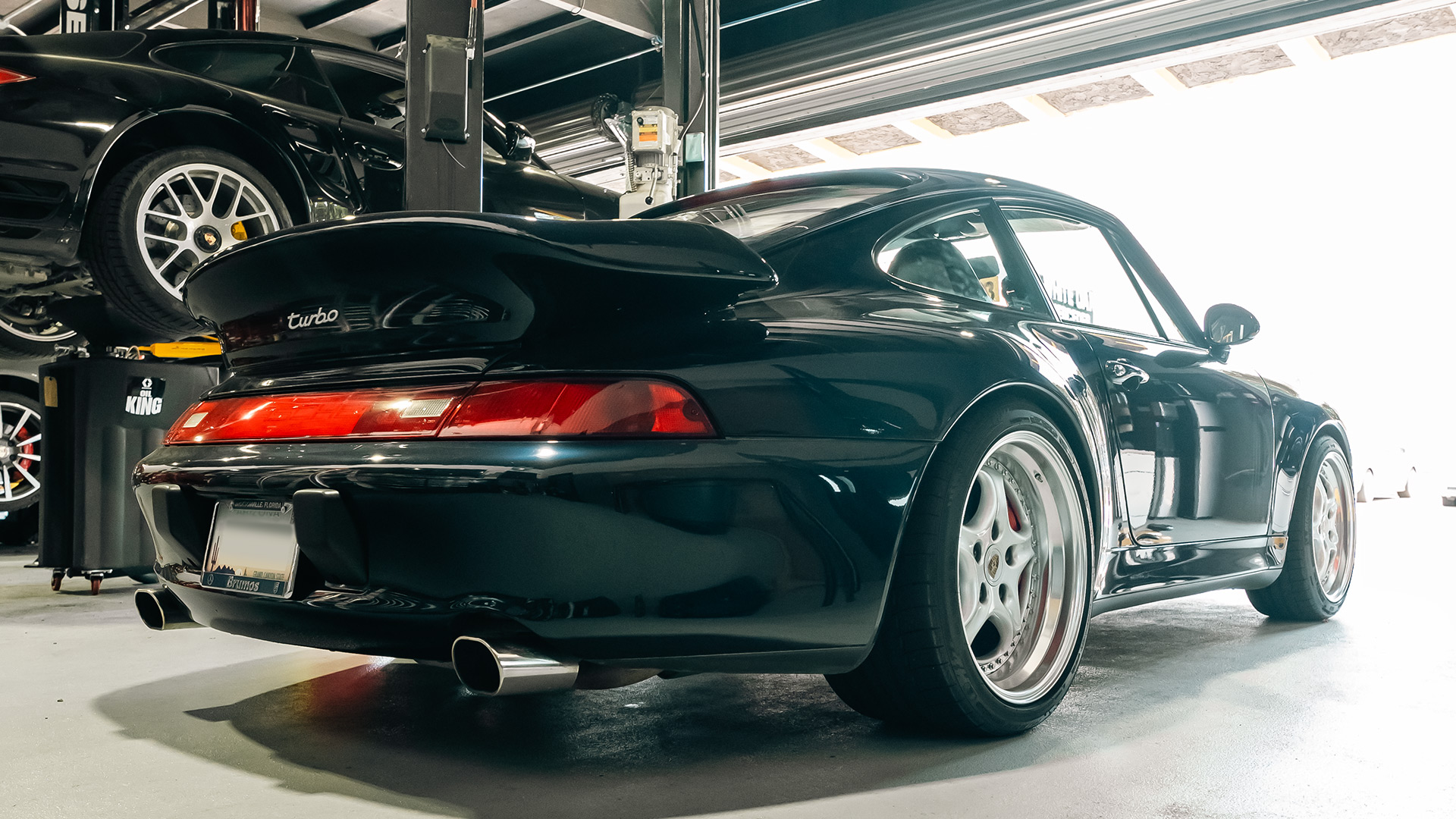
996 (1997–2005): The IMS Generation
The 996 was the most controversial 911 in the model’s history — water-cooled for the first time, with distinctive elliptical headlights that divided the community for a decade. Two decades on, the same cars are being recognized for what they actually are: genuinely fast, beautifully engineered machines that happen to have one well-documented mechanical vulnerability. That’s the IMS bearing, and it needs to be addressed before anything else in a 996 conversation.
Understanding the IMS Bearing (M96 Engine)
The intermediate shaft bearing in the M96 engine is a sealed unit. It doesn’t receive continuous lubrication from the engine oil circuit — it relies on factory grease that degrades over time. When the bearing fails, it fails catastrophically and takes the engine with it.
HOUSE’s position: if you own a 996 Carrera and the IMS bearing hasn’t been addressed, address it. The 3.4L dual-row bearing (1997–1999 model years) carries the highest risk. The 3.6L single-row unit (2000–2005) carries lower but non-zero risk. The right time to do it is at or before 75,000 miles, or at any clutch replacement — the labor overlap makes doing it separately later a much more expensive proposition. The IMS Solution retrofit by LN Engineering is the permanent fix and what HOUSE installs.
The rear main seal (RMS) is addressed simultaneously — it shares the same access and failing to do it at the same time means paying for the labor twice
The Mezger Exception
The 996 Turbo, GT2, and GT3 use the Mezger engine — a motorsport-derived architecture that shares no components with the M96 and carries no IMS bearing concern. The Mezger is one of the most robust Porsche engines ever produced. It requires diligent oil change intervals and attentive inspection of the turbo oil feed lines (on the Turbo and GT2), but it doesn’t carry the M96’s known failure mode. The two cars require entirely different service conversations, which is why they have entirely different service tables.
For a complete breakdown of the IMS bearing including failure stages, symptoms, and replacement options see HOUSE’s 996 IMS Bearing Guide.
996 Carrera / S / Targa / Cab (M96)
| Service | Carrera / Carrera 4S (M96) |
|---|---|
| Oil and filter change | 5,000–7,500 miles or annually — HOUSE recommendation |
| Brake fluid replacement | Every 2 years regardless of mileage |
| Intermediate service | 20,000 miles / 2 years |
| Spark plug replacement | 40,000–50,000 miles or 4 years (pre-facelift M96 shorter) |
| Major service | 40,000 miles / 4 years |
| Drive belt replacement | 60,000 miles or 6 years |
| IMS bearing replacement | Proactive replacement strongly recommended — see HOUSE IMS page |
| RMS (Rear Main Seal) | Address simultaneously with IMS work; do not defer once leaking |
| Air Oil Separator (AOS) inspection | Inspect at 60,000+ miles; replace if oil mist present at intake |
| Coolant tube inspection | At 60,000–80,000 miles — factory plastic tubes fail; aluminum or silicone upgrade recommended |
| Bore scope / oil analysis (M96 3.4L pre-facelift) | Recommended at 60,000+ miles — early M96 susceptible to bore scoring |
| Manual transmission oil | Every 120,000 miles / 12 years factory — HOUSE recommends 60,000 miles on aging cars |
| Tire sealant replacement | Every 4 years |
996 Turbo / GT2 / GT3 (Mezger)
| Service | 996 Turbo / GT2 (Mezger) | 996 GT3 (Mezger) |
|---|---|---|
| Oil and filter change | 5,000 miles or annually — HOUSE recommendation | 5,000–7,500 miles or annually — HOUSE recommendation |
| Brake fluid replacement | Every 2 years regardless of mileage | Every 2 years; annually if tracked |
| Intermediate service | 20,000 miles / 2 years | 20,000 miles / 2 years |
| Spark plug replacement | 30,000 miles or 4 years | 24,000 miles or 4 years (Mezger demands shorter interval) |
| Major service | 40,000 miles / 4 years | 24,000–40,000 miles / 4 years |
| Drive belt replacement | 60,000 miles or 6 years | 48,000 miles or 6 years |
| IMS bearing replacement | Not applicable — Mezger engine; no IMS bearing vulnerability | Not applicable — Mezger engine |
| RMS (Rear Main Seal) | Inspect at major service | Inspect at major service |
| Air Oil Separator (AOS) inspection | Inspect at 60,000+ miles | Inspect at 60,000+ miles |
| Coolant tube inspection | At 60,000 miles — proactive replacement recommended | At 60,000 miles |
| Manual transmission oil | Every 120,000 miles / 12 years factory | Every 120,000 miles / 12 years factory — HOUSE recommends more frequent on track cars |
| Tire sealant replacement | Every 4 years | Every 4 years |
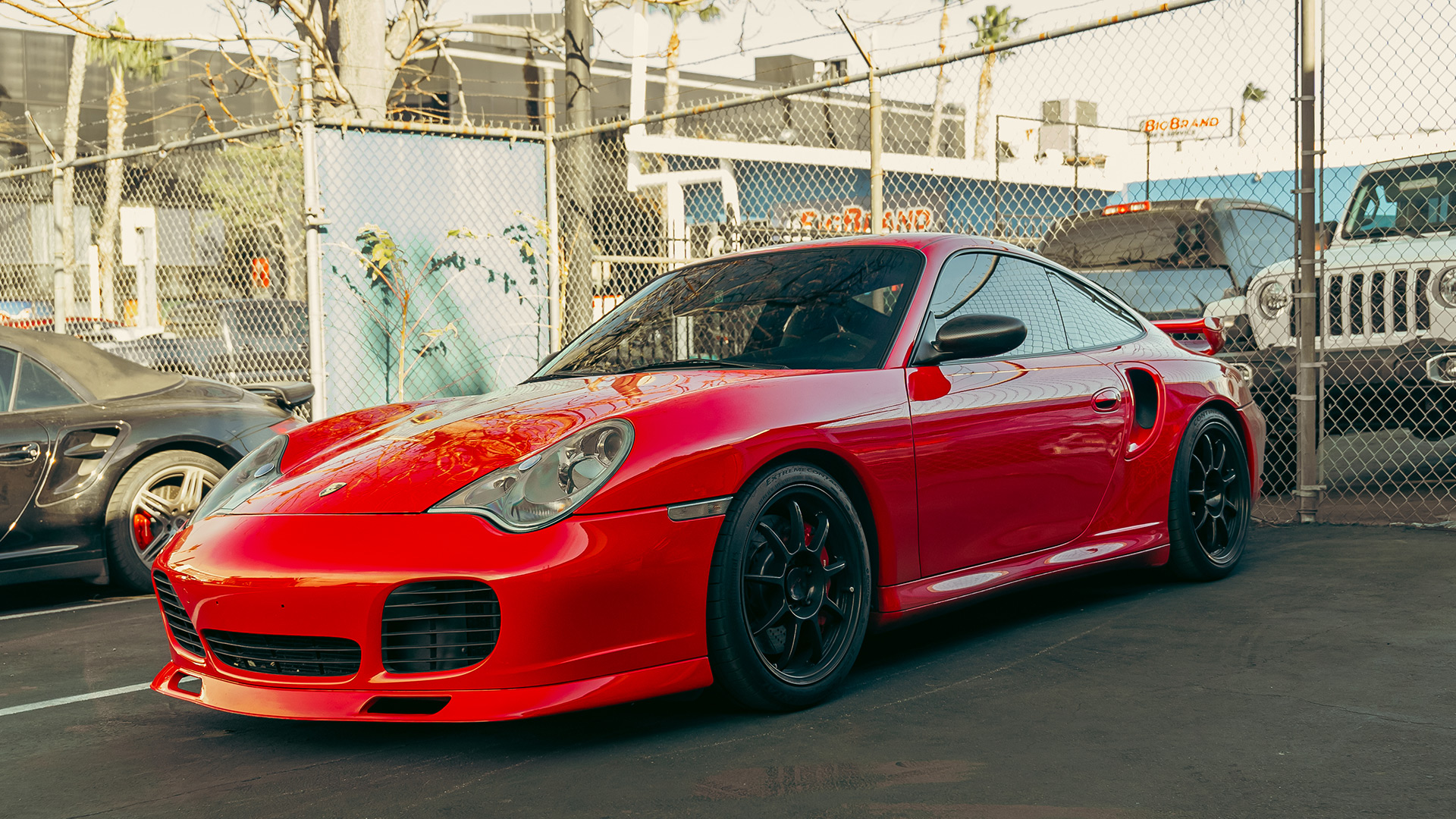
997 (2005–2012): Two Engines, Two Conversations
The 997 improved on the 996 in almost every measurable way — sharper styling, a more resolved interior, and substantially better driving dynamics. But from a maintenance standpoint, the generation split between the 997.1 (2005–2008) and 997.2 (2009–2012) is one of the most consequential in 911 history.
997.1: IMS Concern Remains
The 997.1 uses the M97 engine — an evolution of the M96 with revisions to the IMS bearing design. The 997.1’s single-row bearing carries lower risk than the 996’s, but lower risk is not no risk. Cars with unknown service history, extended oil change intervals, or high mileage without IMS attention should be treated with the same proactive approach: address at or before 75,000 miles, or at any clutch replacement. The same RMS overlap logic applies.
Oil change intervals on the 997.1 deserve more discipline than the factory schedule suggests. HOUSE recommends 5,000–7,500 miles or annually, with both oil and filter changed at every service — not every other one.
997.2: New Engine, Different Concerns
The 997.2’s MA1 engine eliminated the IMS bearing entirely and introduced direct fuel injection. It’s a substantially better engine in almost every way. The bore scoring concern on high-mileage 3.8L Carrera S and 4S examples is worth knowing about — it’s a documented pattern on the MA1 that shows up as cylinder wall wear identifiable by borescope inspection. HOUSE recommends a borescope check at 60,000+ miles on 3.8L 997.2 cars with unknown or aggressive use history.
The water pump is a proactive replacement item on both 997.1 and 997.2. Documented failure patterns on both M97 and MA1 engines make a 80,000-mile proactive replacement the right call.
The Mezger Continues
997 Turbo, Turbo S, GT3, GT3 RS, GT2, and GT2 RS all use Mezger-derived engines. Same principle as the 996: no IMS concern, attentive oil changes, and turbo oil feed line inspection at every service on forced-induction variants. GT models require their own service table — the 997 GT3 factory schedule calls for spark plugs every 24,000 miles and a major service every 24,000 miles, not 40,000.
997.1 / 997.2 Carrera / S / 4S / GTS
| Service | Carrera / Carrera S (M97) |
|---|---|
| Oil and filter change | 10,000 miles / 1 year |
| Brake fluid replacement | Every 2 years |
| Intermediate service | 20,000 miles / 2 years |
| Spark plug replacement | 40,000 miles / 4 years |
| Major service | 40,000 miles / 4 years |
| Drive belt replacement | 60,000 miles / 6 years |
| IMS bearing replacement | Early 997.1 (3.6L up to serial #69507475): proactive replacement recommended — see HOUSE IMS page |
| RMS (Rear Main Seal) | Address simultaneously with IMS work |
| Air Oil Separator (AOS) inspection | Inspect at 60,000+ miles |
| Coolant tube inspection | At 60,000–80,000 miles — factory plastic tubes fail; upgrade recommended |
| Bore scope / oil analysis (M97 3.8L Carrera S) | Recommended at 60,000+ miles — 3.8L M97 susceptible to bore scoring |
| PDK fluid (not yet available on 997.1) | N/A — PDK introduced on 997.2 |
| Manual transmission oil | Every 120,000 miles / 12 years — HOUSE recommends 60,000 miles on aging cars |
| Tire sealant replacement | Every 4 years |
997 Turbo / Turbo S / GT3 / GT3 RS / GT2 / GT2 RS
| Service | 997.1 Turbo (Mezger) | 997.1 GT3 / GT3 RS (Mezger) |
|---|---|---|
| Oil and filter change | 10,000 miles / 1 year | 10,000 miles / 1 year; shorten to 5,000 miles post-track |
| Brake fluid replacement | Every 2 years | Every 2 years; annually if tracked |
| Intermediate service | 20,000 miles / 2 years | 12,000 miles / 2 years (GT3-specific minor service cadence) |
| Spark plug replacement | 30,000 miles / 4 years | 24,000 miles / 4 years |
| Major service | 40,000 miles / 4 years | 24,000 miles / 4 years |
| Drive belt replacement | 60,000 miles / 6 years | 48,000 miles / 6 years |
| IMS bearing replacement | Not applicable — Mezger engine | Not applicable — Mezger engine |
| RMS (Rear Main Seal) | Inspect at major service | Inspect at major service |
| Air Oil Separator (AOS) inspection | Inspect at 60,000+ miles | Inspect at 60,000+ miles |
| Coolant tube inspection | At 60,000 miles | At 60,000 miles |
| Bore scope / oil analysis | N/A — Mezger engine not susceptible | N/A — Mezger engine not susceptible |
| PDK fluid (not yet available on 997.1) | N/A | N/A — manual only |
| Manual transmission oil | Every 120,000 miles / 12 years | Every 120,000 miles / 12 years — shorten on track cars |
| Tire sealant replacement | Every 4 years | Every 4 years |
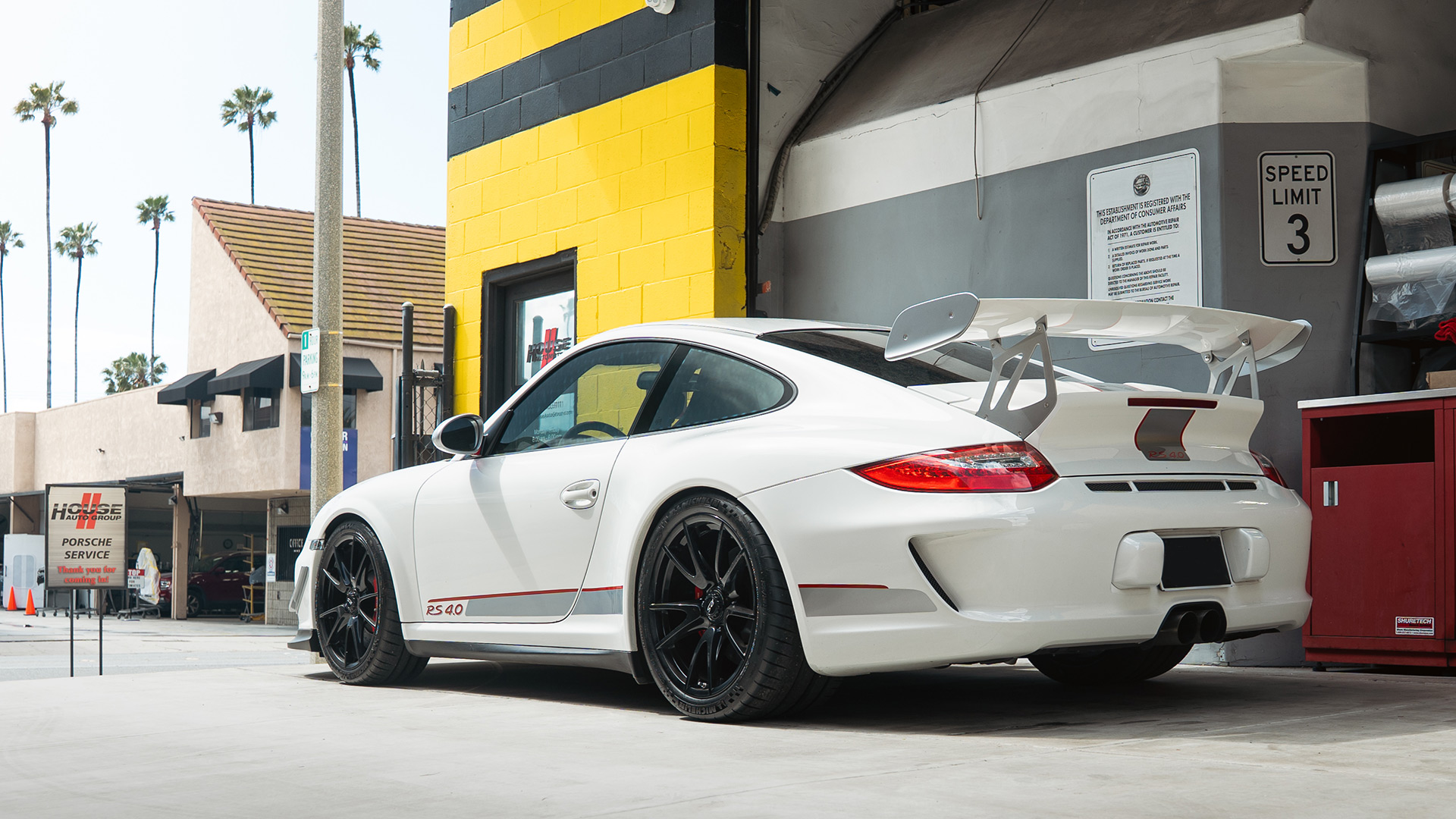
991 (2012–2019): The Modern 911
The 991 brought the 911 fully into the modern era: electric power steering, a seven-speed manual, PDK with launch control, and eventually — with the 991.2 in 2016 — turbocharged engines across the entire Carrera lineup for the first time. It’s the generation most likely to be used as a daily driver today among current 911 owners, and its service profile reflects that.
991.1 (2012–2016): Water Pump and MA1/MA2
The 991.1 carries forward the water pump concern from the 997.2. HOUSE recommends inspecting at 60,000 miles and replacing proactively at 80,000+ miles. The MA1 and MA2 engines are mechanically reliable in the context of regular maintenance, but the factory recommendation on PDK fluid — a “lifetime fill” that doesn’t acknowledge the thermal reality of spirited driving — is something HOUSE overrides. PDK fluid at 40,000 miles on any 991.
991.2 (2016–2019): Turbocharging the Carrera
The 991.2’s MA3 3.0L turbocharged engine changed the character of the base Carrera and dramatically improved real-world performance. It also added new maintenance considerations: the turbo oil feed lines warrant inspection at 60,000 miles, and intercooler hose condition becomes a watchpoint under sustained boost. The water pump concern is present on the MA3 as well — documented pattern, proactive replacement at 80,000+ miles is the right approach.
HOUSE recommends shortening the oil change interval on 991.2 Carrera models under regular use to 7,500 miles rather than the 10,000-mile factory spec. The turbochargers generate sustained heat that degrades oil more quickly than Porsche’s conservative mileage-based interval accounts for.
991 GT Models: A Different Car Entirely
The 991 GT3, GT3 RS, 911 R, and GT2 RS share a factory body with the Carrera but almost nothing under the hood in terms of service logic. The 9A1 naturally aspirated flat-six — producing 475hp in the GT3 and 500hp in the RS — is a touring-car-derived unit that revs to 9,000 rpm. It demands:
Oil and filter every 5,000 miles or 6 months, no exceptions
Brake fluid annually, regardless of mileage
Spark plugs every 12,000 miles or 1 year
Major service every 24,000 miles
The PDK in the GT3 operates at significantly higher thermal loads than the Carrera PDK. HOUSE recommends 30,000-mile fluid changes on GT3 PDK cars regardless of driving style.
991.1 Service Schedules
| Service | Carrera / Carrera S (3.4L / 3.8L NA) | 991.1 Turbo / Turbo S (3.8L TT) | 991.1 GT3 / GT3 RS (3.8L) |
|---|---|---|---|
| Oil and filter change | 10,000 miles / 1 year | 10,000 miles / 1 year | 10,000 miles / 1 year; 5,000 miles post-track |
| Brake fluid replacement | Every 2 years | Every 2 years | Every 2 years; annually if tracked |
| Cabin pollen filter | 20,000 miles / 2 years | 20,000 miles / 2 years | 20,000 miles / 2 years |
| Intermediate service | 20,000 miles / 2 years | 20,000 miles / 2 years | 20,000 miles / 2 years |
| Spark plug replacement | 40,000 miles / 4 years (NA engine) | 30,000 miles / 4 years | 40,000 miles / 4 years factory; 20,000 miles HOUSE recommendation with track use |
| Major service | 40,000 miles / 4 years | 40,000 miles / 4 years | 40,000 miles / 4 years |
| PDK fluid (HOUSE recommendation) | 40,000 miles / 4 years | 40,000 miles / 4 years | N/A — manual only (GT3 manual RS available from 2015) |
| Drive belt replacement | 60,000 miles / 6 years | 60,000 miles / 6 years | 60,000 miles / 6 years |
| Bore scope inspection (9A1) | Recommended at 60,000+ miles — 991.1 9A1 block shares bore scoring susceptibility with 997.2 | Lower risk — inspect if oil consumption noted | At 60,000+ miles — high-revving GT3 engine benefits from inspection |
| AWD front diff oil (4 models) | 60,000 miles / 6 years | 60,000 miles / 6 years | N/A (RWD) |
| Carbon buildup inspection / walnut blast (NA 3.4L / 3.8L) | At 50,000–60,000 miles — direct injection leads to intake valve deposits | At 50,000–60,000 miles | At 50,000–60,000 miles |
| Transmission oil (manual / PDK) | 120,000 miles / 12 years factory spec | 120,000 miles / 12 years factory spec | 120,000 miles / 12 years — shorten on track cars |
| Tire sealant replacement | Every 4 years | Every 4 years | Every 4 years |
991.2 Service Schedules
| Service | Carrera / Carrera S (3.0L TT) | 991.2 Turbo / Turbo S (3.8L TT) | 991.2 GT3 / GT3 RS (4.0L NA) |
|---|---|---|---|
| Oil and filter change | 10,000 miles / 1 year | 10,000 miles / 1 year | 10,000 miles / 1 year; 5,000 miles post-track |
| Brake fluid replacement | Every 2 years | Every 2 years | Every 2 years; annually if tracked |
| Cabin pollen filter | 20,000 miles / 2 years | 20,000 miles / 2 years | 20,000 miles / 2 years |
| Intermediate service | 20,000 miles / 2 years | 20,000 miles / 2 years | 20,000 miles / 2 years |
| Spark plug replacement | 30,000 miles / 3 years (MA1.75 3.0L TT) | 30,000 miles / 4 years | 40,000 miles / 4 years factory; 20,000 miles HOUSE recommendation with track use |
| Major service | 40,000 miles / 4 years | 40,000 miles / 4 years | 40,000 miles / 4 years |
| PDK fluid (HOUSE recommendation) | 40,000 miles / 4 years | 40,000 miles / 4 years | N/A — manual only |
| Drive belt replacement | 60,000 miles / 6 years | 60,000 miles / 6 years | 60,000 miles / 6 years |
| Carbon buildup / walnut blast (3.0L TT) | At 50,000–60,000 miles — turbo direct injection accelerates intake valve deposits | At 50,000–60,000 miles | Lower risk on GT3 — inspect at 60,000+ miles |
| Water pump inspection (MA1.75 3.0L TT) | Inspect at 60,000 miles; proactive replacement recommended at 80,000 miles | Inspect at 60,000 miles | N/A (different cooling system) |
| AWD front diff oil (4 models) | 60,000 miles / 6 years | 60,000 miles / 6 years | N/A (RWD) |
| Transmission oil (manual / PDK) | 120,000 miles / 12 years factory spec | 120,000 miles / 12 years factory spec | 120,000 miles / 12 years — shorten on track cars |
| Tire sealant replacement | Every 4 years | Every 4 years | Every 4 years |
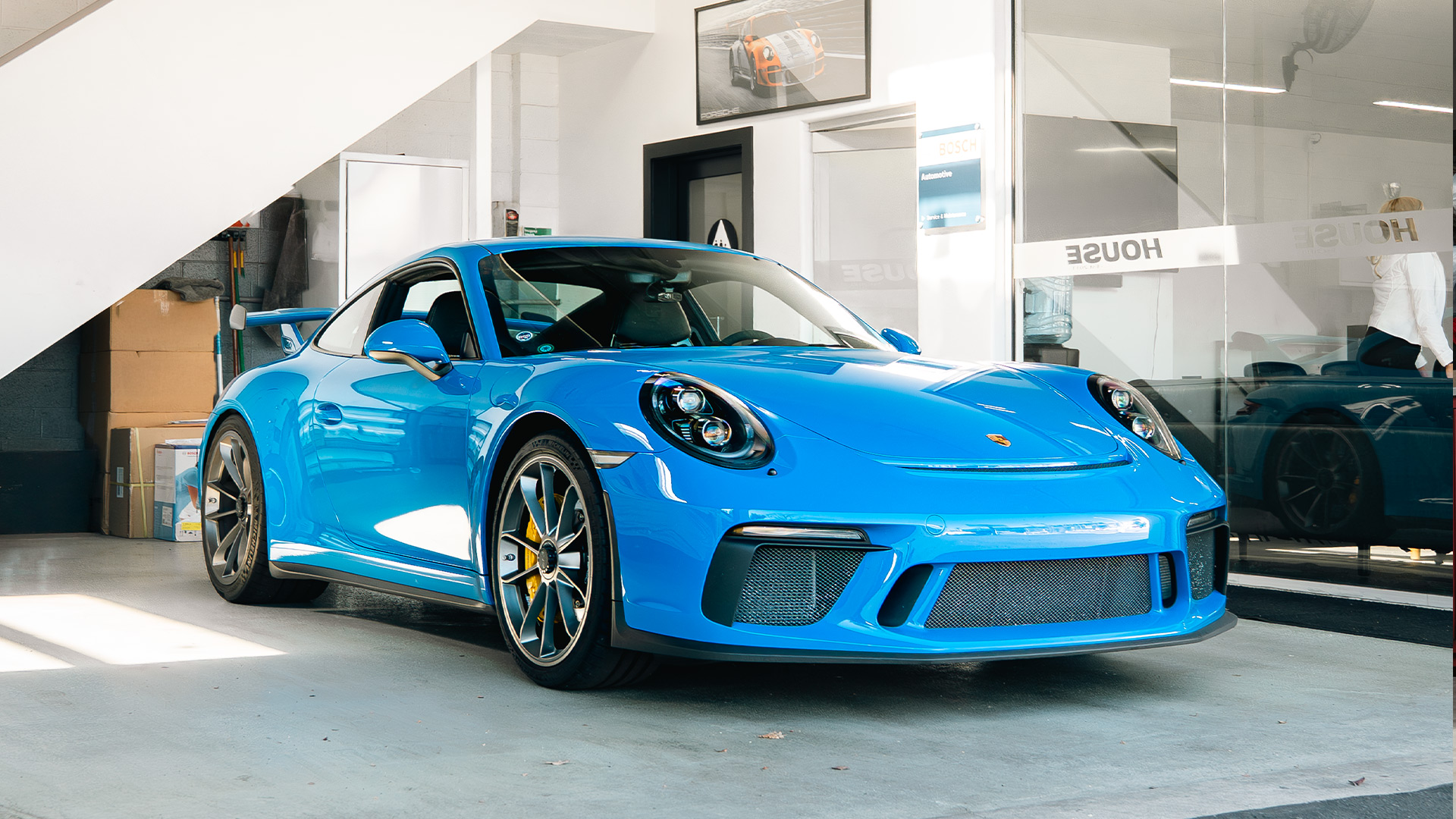
992 (2019–Present): The Most Capable 911
The 992 is the sharpest, fastest, and most technically sophisticated 911 to date. Its 3.0L twin-turbocharged flat-six makes 379hp in base Carrera spec and 443hp in Carrera S, with the GTS arriving at 473hp in the 992.1. The factory service schedule is modern, well-engineered, and — with a few HOUSE additions — genuinely adequate for most owners.
The one area where HOUSE diverges from the factory on 992 Carrera models: PDK fluid. Porsche specifies PDK service at 120,000 miles under normal use. HOUSE performs it at 40,000. The thermal loads a PDK clutch pack sees in spirited driving — let alone a canyon run in a GTS — warrant more frequent attention than the factory interval suggests.
992.2 and the T-Hybrid (2024–Present)
The 992.2 introduced Porsche’s T-Hybrid system to the 911 for the first time: a 48V belt-integrated starter-generator and an electrified turbocharger, available across the Carrera, 4S, GTS, and Turbo lineup. Service intervals at the engine level remain similar to the 992.1, but two new items are non-negotiable additions to every service:
48V buffer battery health check — PIWIS diagnostic required. The 48V system cannot be assessed accurately with a standard OBD-II scanner. This is a PIWIS-only item.
E-turbo oil supply inspection — at 40,000 miles, the electric turbocharger bearing lubrication circuit should be inspected. It’s a new failure point with no long-term field data yet, and staying ahead of it is the right approach on a technology this new.
This is why PIWIS matters on the 992.2. You cannot properly service one without it.
992 GT3 and GT3 RS: The 9A2 Evo
The 992 GT3 and GT3 RS use the 9A2 Evo naturally aspirated flat-six — a development of the 991-era 9A1 making 502hp in standard GT3 form and 525hp in RS spec. The service profile is consistent with prior GT3 generations: 5,000-mile oil changes, annual brake fluid, 12,000-mile spark plugs. The GT3 RS’s additional aero loads and track-optimized geometry make brake and suspension inspection at every oil change mandatory, not optional.
992.1 / 992.2 Carrera / S / 4S / GTS
| Service | 992.1 Carrera / S / 4 / 4S / GTS (2019–2023, 3.0L TT) | 992.2 Carrera / GTS / T-Hybrid (2024–Present) |
|---|---|---|
| Oil and filter change | 10,000 miles / 1 year — HOUSE recommends 7,500 miles under regular driving | 10,000 miles / 1 year — e-turbo thermal load increases; HOUSE recommends 7,500 miles |
| Brake fluid replacement | Every 2 years | Every 2 years |
| Cabin air filter (pollen filter) | 20,000 miles / 2 years | 20,000 miles / 2 years |
| Intermediate service | 20,000 miles / 2 years | 20,000 miles / 2 years |
| Spark plug replacement | 40,000 miles / 4 years — consult your service booklet for GTS-specific interval | 40,000 miles / 4 years |
| Major service | 40,000 miles / 4 years | 40,000 miles / 4 years |
| PDK fluid (HOUSE recommendation) | 40,000 miles — factory spec is 120,000 miles; HOUSE overrides for real-world thermal loads | 40,000 miles — e-motor integration adds thermal load to PDK clutch pack |
| Air filter replacement | 40,000 miles / 4 years | 40,000 miles / 4 years |
| 48V buffer battery health check (992.2 only) | N/A | At every service — PIWIS required; confirm interval via VIN-specific service data |
| E-turbo oil supply inspection (992.2 only) | N/A | At 40,000 miles — electric turbocharger bearing lubrication circuit inspection; confirm via PIWIS service data |
| Turbo oil feed line inspection | At 60,000 miles+ | At 60,000 miles+ |
| Intercooler hose inspection | At every service past 60,000 miles | At every service past 60,000 miles |
| Drive belt replacement | 60,000 miles / 6 years | 60,000 miles / 6 years |
| PDCC fluid reservoir (if equipped) | 60,000 miles / 6 years | 60,000 miles / 6 years |
| AWD controller oil (4 / 4S / Targa 4) | 60,000 miles | 60,000 miles |
| Water pump inspection | Inspect at 60,000 miles; proactive replacement recommended at 80,000+ miles | Inspect at 60,000 miles |
| Manual transmission oil (if equipped) | 120,000 miles factory — HOUSE recommends 40,000 miles | 120,000 miles factory — HOUSE recommends 40,000 miles |
| Tire sealant replacement | Every 4 years | Every 4 years |
| Airbag system check | After 4 years, then every 2 years | After 4 years, then every 2 years |
992 GT3 / GT3 RS / GT3 Touring
| Service | 992 GT3 / GT3 Touring (9A2 Evo 4.0L NA, 502hp) | 992 GT3 RS (9A2 Evo 4.0L NA, 525hp) |
|---|---|---|
| Oil and filter change | 12,000 miles / 1 year (factory) — HOUSE recommends 5,000–7,500 miles for any car that has seen track use | 12,000 miles / 1 year (factory) — HOUSE recommends 5,000–7,500 miles; RS track use requires shorter intervals |
| Brake fluid replacement | Every 2 years (factory) — HOUSE recommends annually for any car with track use | Every 2 years (factory) — HOUSE recommends annually given RS track-use profile |
| Spark plug replacement | Every 12,000 miles / 1 year | Every 12,000 miles / 1 year |
| Major service | Every 24,000 miles | Every 24,000 miles |
| Drive belt replacement | Every 48,000 miles | Every 48,000 miles |
| PDK fluid (HOUSE recommendation) | HOUSE recommends 40,000 miles street use / 30,000 miles if tracked — GT3 PDK operates at higher thermal load than Carrera PDK | HOUSE recommends 40,000 miles street use / 30,000 miles if tracked |
| Manual transmission oil (GT3 Touring) | HOUSE recommends 30,000 miles street use / 10,000–15,000 miles if tracked | N/A — PDK only |
| LSD oil (limited slip differential) | HOUSE recommends every 15,000–20,000 miles — no official Porsche published interval; mechanical LSD requires regular fresh fluid | HOUSE recommends every 15,000 miles — RS cornering loads accelerate fluid degradation |
| Rear axle steering fluid inspection | At every service | At every service |
| Brake pad, disc, and caliper inspection | At every oil change service — visual inspection mandatory given GT3 duty cycle | At every oil change service — PCCB ceramic composite brakes require specialist inspection |
| Suspension inspection (arms, bushings, toe links) | At every service past 30,000 miles | At every service — RS aero and stiffened geometry increases suspension component load |
| Air filter replacement | Every 24,000 miles | Every 24,000 miles |
| Tire sealant replacement | Every 4 years, then every 2 years | Every 4 years, then every 2 years |
| PIWIS diagnostic check | At every major service — PDK calibration, fault memory read, adaptation values | At every major service — RS DRS actuator function check required via PIWIS |
How Often Does a Porsche 911 Need Service?
For modern water-cooled 911s (996 through 992), the answer is every 10,000 miles or once a year, whichever comes first — for the standard oil and filter change. The intermediate service lands at 20,000 miles or 2 years, and the major service at 40,000 miles or 4 years.
For air-cooled 911s (930 through 993), the interval shortens: every 7,500 miles or 1 year for oil changes, with valve clearance adjustments every 12,000–15,000 miles that have no equivalent on water-cooled cars.
For GT models — GT3, GT3 RS, GT2 RS, and R variants across all generations — the interval is every 5,000 miles or 6 months. The factory schedules confirm this, and the duty cycle of these engines demands it.
Time matters as much as mileage. A low-mileage 993 sitting in a garage for 12 months still needs an oil and filter change. Moisture accumulates in engine oil regardless of use. Brake fluid absorbs moisture on a 2-year calendar regardless of how much the pedal has been pressed. If your car is a seasonal driver, service it by time — not by the odometer.
What Does Porsche 911 Service Cost?
Porsche 911 service at a dealership carries a premium that doesn’t always reflect the quality of the work — it reflects overhead. HOUSE Automotive consistently performs the same Porsche-standard service at 20–30% below dealership pricing, using the same genuine OEM parts, the same factory-specified fluids, and the same PIWIS diagnostic system Porsche dealerships use.
The service quality is identical. The price is not.
For a full breakdown of what each service interval costs by model — 911 included — see our Porsche Maintenance Costs Guide.
Book Your 911 Service
Book online in under 60 seconds.
Porsche 911 Maintenance PDFs
- 1989-1994 964 Classic Maintenance Schedule
- 1999-2004 996 Maintenance Schedule
- 1995-1998 993 Maintenance Checklist
- 2005-2007 997.1 Minor Maintenance Checklist
- 2005-2007 997.1 Major Maintenance Checklist
- 2007-2008 997.1 GT3 Minor Maintenance Checklist
- 2007-2008 997.1 GT3 Major Maintenance Checklist
- 2008 997.1 Minor Maintenance Checklist
- 2008 997.1 Major Maintenance Checklist
- 2009 997.2 Turbo Intermediate Maintenance Checklist
- 2009 997.2 Turbo Maintenance Checklist
- 2009+ 997.2 Intermediate Maintenance Checklist
- 2009+ 997.2 Maintenance Checklist
- 2010 997.2 GT3 Intermediate Maintenance Checklist
- 2010 997.2 GT3 Maintenance Checklist
- 2010+ 997.2 Turbo Maintenance Checklist
- 2010+ 997.2 Turbo Intermediate Maintenance Checklist
- 2012-2014 991.1 Intermediate Maintenance Checklist
- 2012-2014 991.1 Maintenance Checklist
- 2014 991.1 GT3 Maintenance Checklist
- 2014-2016 991.1 Intermediate Maintenance Checklist
- 2014-2016 991.1 Maintenance Checklist
- 2015-2016 991.1 GT3 Intermediate Maintenance Checklist
- 2015-2016 991.1 GT3 Maintenance Checklist
- 2016 911 R Maintenance Checklist (C Markets)
- 2017+ 991.2 Inspection Sheet (B-Markets)
- 2017+ 991.2 Oil Service Checklist
- 2018+ 991.2 GT3 Inspection Sheet
- 2018+ 991.2 Inspection Sheet (B-Markets)
- 2018+ 991.2 Inspection Sheet
- 2020+ 992 Inspection Sheet
- 2020+ 992 Oil Service Checklist
Why 911 Owners Choose HOUSE
A 911 is not a car you hand to someone who services it occasionally. These are engines that rev to 9,000 rpm, run turbos under sustained track loads, and carry IMS bearings that punish neglect catastrophically. HOUSE was built specifically for this.
PIWIS diagnostics — Porsche’s own factory diagnostic system. Required for 992.2 T-Hybrid service, GT3 PDK calibration, and proper fault memory reads on any 996 or later car.
Genuine OEM Porsche parts only — not aftermarket alternatives. Every part that goes into a HOUSE-serviced 911 meets Porsche’s factory spec.
2-year, unlimited-mileage warranty on all parts and labor — covering everything from an oil service to an IMS bearing retrofit.
120+ years of combined Porsche experience across the team — including technicians certified on the Carrera GT, 918 Spyder, and Taycan.
Free vehicle pickup and drop-off — because your time matters as much as your car.
Three Southern California locations: Pasadena, Encino and Thousand Oaks.
Don’t Just Trust Any Shop
Fast, easy and expert Porsche 911 service in Los Angeles, CA.
Frequently Asked Questions
How often should a Porsche 911 be serviced?
Modern 911s (996 through 992) follow a 10,000-mile or annual oil service, with intermediate service at 20,000 miles and major service at 40,000 miles. Air-cooled 911s (930, 964, 993) require oil changes every 7,500 miles or annually, with mandatory valve adjustments every 12,000–15,000 miles. GT models (GT3, GT3 RS, GT2 RS) require oil service every 5,000 miles or every 6 months.
What is the IMS bearing on a Porsche 996 and do I need to worry about it?
The IMS (intermediate shaft) bearing is a sealed unit in the 996’s M96 engine that doesn’t receive continuous oil lubrication and can fail catastrophically without warning. The 3.4L dual-row bearing (1997–1999) carries the highest risk; the 3.6L single-row (2000–2005) carries lower but non-zero risk. If the bearing hasn’t been addressed, HOUSE recommends the IMS Solution retrofit — ideally at or before 75,000 miles, or at any clutch replacement to share the labor cost.
Does the Porsche 997.1 have the same IMS problem as the 996?
The 997.1 M97 engine uses a revised IMS bearing with lower risk than the 996’s M96, but the failure mode isn’t eliminated — it’s reduced. HOUSE still recommends proactive IMS attention on unaddressed 997.1 cars, particularly those with higher mileage or extended oil change history.
What oil does a classic air-cooled Porsche 911 need?
Air-cooled 911s from the 930 through the 993 require high-zinc (ZDDP) oil — typically 20W-50 or 15W-50 full synthetic, or Porsche Classic 10W-60. Never use modern API SP or SN+ oils on air-cooled Porsche engines. These ratings indicate low-zinc formulations that do not protect the flat-tappet valve train correctly.
What is the distributor belt on a 964 and 993 and why does it matter?
The 964 and 993 use a distributor belt to drive the ignition distributors — two per engine in twin-plug configuration. Porsche never published a replacement interval for this belt. If it fails, it can cause engine damage. HOUSE inspects it annually and recommends proactive replacement every 30,000–40,000 miles. On a 993 Turbo, the interval shortens to 25,000–30,000 miles due to higher heat cycles.
When should I change PDK fluid on my 911?
Porsche specifies PDK fluid at 120,000 miles under normal use, but this factory figure does not reflect real-world thermal loads. HOUSE recommends PDK fluid service at 40,000 miles across all 911 generations equipped with PDK. On GT3 PDK variants, 30,000 miles is the right target — GT3 clutch packs operate at higher sustained temperatures than standard Carrera PDK units.
How is servicing a 992 T-Hybrid different from a standard 992?
The 992.2 T-Hybrid requires two additional service items not present on the standard 992.1: a 48V buffer battery health check (PIWIS-only) at every service, and an electric turbocharger oil supply circuit inspection at 40,000 miles. Neither item can be performed accurately without Porsche’s PIWIS diagnostic system. Otherwise, the core oil, filter, and fluid schedule is consistent with the 992.1.
Does HOUSE service classic air-cooled 911s?
Yes. HOUSE technicians service 930, 964, and 993 generation cars at all three locations — including valve adjustments, distributor belt replacement, and air-cooled engine diagnostics. These cars are actively daily-driven and deserving of the same attentiveness as any current 992.
How does HOUSE compare to a Porsche dealership on service cost?
HOUSE consistently performs Porsche-standard service at 20–30% below dealership pricing using genuine OEM parts, Porsche-spec fluids, and the same PIWIS diagnostic system. The 2-year, unlimited-mileage warranty on all parts and labor goes beyond what most dealerships offer. For model-specific cost comparisons, see the Porsche Maintenance Costs Guide.
Should I service my 911 annually even if I don't drive it much?
Yes. Engine oil absorbs moisture and degrades chemically regardless of mileage. Brake fluid absorbs water over time and should be flushed every 2 years on the calendar — not by the odometer. On air-cooled cars in particular, long storage intervals without an oil change accelerate internal corrosion. Annual service applies to every 911, regardless of how many miles it drives each year.