

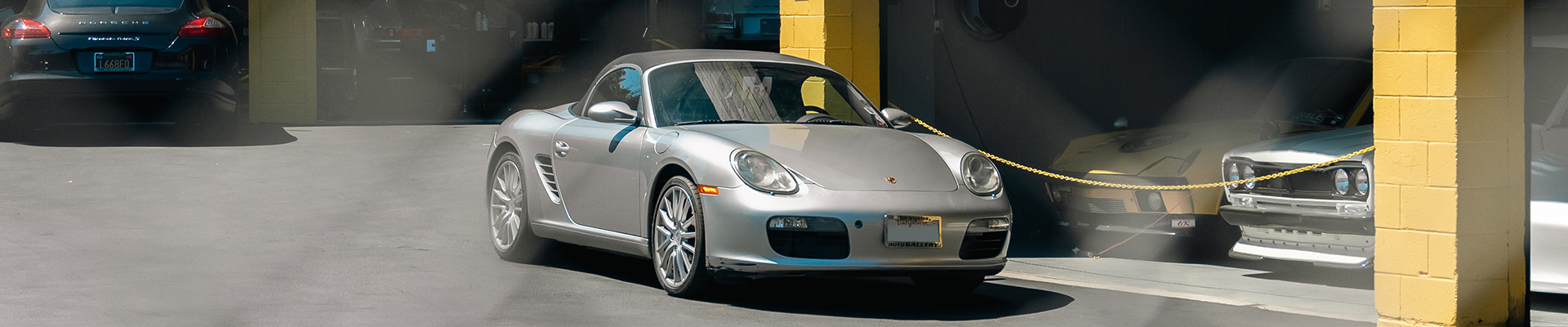
Porsche Boxster & Cayman Maintenance Guide: From 986 to GT4 RS
Here is the honest case for the Boxster and Cayman: on a properly maintained example, they are among the most rewarding Porsches ever made, and genuinely reasonable to own. The catch is that the used market is full of cars that weren’t maintained properly. Skipped IMS work on a 986. Two PDK fluid cycles ignored on a 987.2. A GT4 that’s been tracked hard without the oil changes the engine demands. The platform isn’t the problem. The history behind each specific car often is.
This guide covers every generation from the original 986 through the current 718 GT4 RS: service schedules, variant-specific requirements, known failure patterns, and the two issues (IMS bearing and RMS seal) that every prospective buyer of a 986 or 987 needs to understand before any money moves. For cost context across the full Porsche lineup, our Porsche Maintenance Costs Guide covers the model-by-model picture.
Four Generations. One Bloodline.
The mid-engine layout has been the foundation of the Boxster and Cayman since 1997. Underneath the shared philosophy, each generation is a different car with a different maintenance profile.
| Generation | Years | Code | Body Styles | Engines |
|---|---|---|---|---|
| First Generation | 1997–2004 | 986 | Boxster (roadster) | 2.5L flat-6 (204hp), 2.7L flat-6 (217hp), 3.2L S (252hp) |
| Second Generation | 2005–2012 | 987 | Boxster (roadster), Cayman (coupe) | 987.1: 2.7L–3.2L flat-6 | 987.2: 2.9L–3.4L flat-6; Cayman R, Boxster Spyder |
| Third Generation | 2012–2016 | 981 | Boxster (roadster), Cayman (coupe) | 2.7L (265hp), 3.4L S (315hp), Boxster Spyder 3.8L, Cayman GT4 3.8L (385hp) |
| Fourth Generation | 2016–Present | 718 / 982 | Boxster (roadster), Cayman (coupe) | 2.0T (300hp), 2.5T S (350hp), GTS 4.0L (394hp), GT4 / Spyder 4.0L (420hp), GT4 RS 4.0L (500hp) |
Generation 986 Boxster (1997–2004)
The 986 launched the modern Boxster and delivered a water-cooled flat-six that redefined what an entry Porsche could be. It’s a brilliant car. It’s also the generation with the highest-stakes maintenance item in the mid-engine catalog, and there’s no productive way to talk about the 986 without leading with it.
The IMS bearing is discussed in detail further down this page. Before the service table: any 986 without documented IMS bearing replacement should be treated as an open maintenance item, not a question mark. This doesn’t make the 986 a bad car, it makes it a car with a known issue that has a known solution. The rest of the platform is fundamentally solid, and a properly addressed 986 is one of the most engaging drivers’ cars of its era.
986 Service Schedule
| Service | Interval |
|---|---|
| Oil and filter change | 10,000 miles / 1 year |
| Brake fluid replacement | Every 2 years |
| Intermediate service | 20,000 miles / 2 years |
| Spark plug replacement | 30,000 miles / 3 years |
| Air filter replacement | 30,000 miles / 3 years |
| Major service | 40,000 miles / 4 years |
| Coolant tube inspection / replacement | At 60,000–80,000 miles — aluminum or silicone upgrade recommended |
| Air Oil Separator (AOS) inspection | At 60,000 miles+ |
| Water pump and thermostat | At 80,000 miles or at first symptom |
| IMS bearing replacement | Proactive — before 60,000 miles on unaddressed cars; combine with clutch job |
| RMS (Rear Main Seal) | Address simultaneously with IMS replacement |
986 Boxster Common Issues
Three additional items are consistent enough across the 986 fleet to earn their own mention:
- Air Oil Separator (AOS) failure. The AOS manages crankcase pressure. When it fails, oil mist enters the intake, idle quality degrades, and oil consumption climbs. It’s a predictable wear item at moderate mileage — not an emergency when caught, but a compounding problem when ignored.
- Coolant tube failure. The plastic coolant tubes routing coolant to the cylinders degrade with heat cycling and age. On any 986 approaching or past 80,000 miles, proactive replacement with aluminum or silicone alternatives is standard practice among informed owners. This is a case of paying a manageable amount now versus a very unmanageable amount later.
- Water pump and thermostat. These are typically addressed together on higher-mileage examples and are often bundled with other major service work. Neither is dramatic when caught on schedule; both become expensive when they fail unexpectedly.
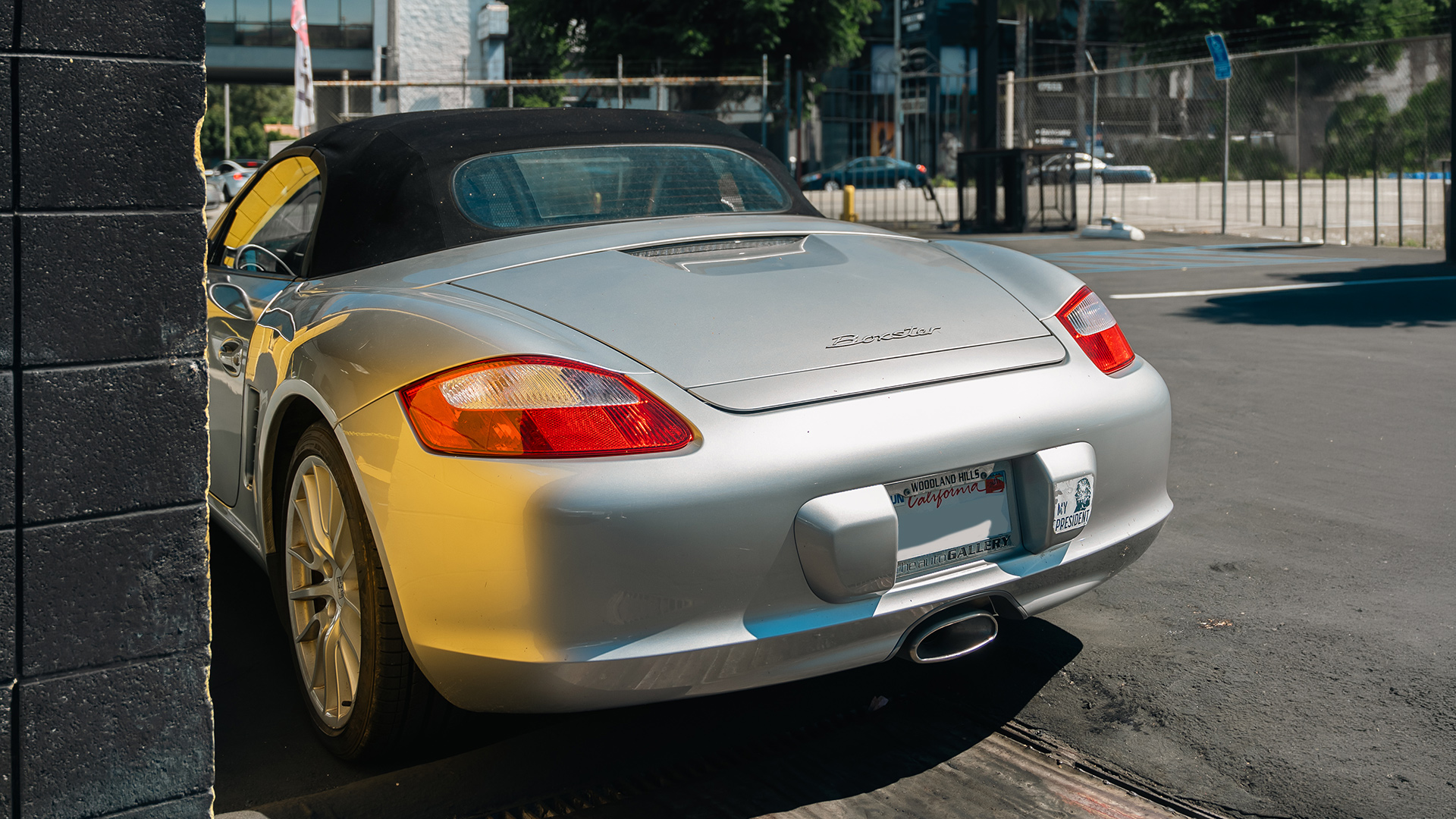
Generation 987 Boxster & Cayman (2005–2012)
The 987 generation brought the Cayman into the lineup alongside the Boxster — and gave the world what many still consider the purest driver’s Porsche of the era. It also split itself into two meaningfully different cars under one name: the 987.1 (2005–2008) and the 987.2 (2009–2012).
The 987.1 carried forward the M96 engine with IMS exposure reduced compared to the 986, but not eliminated. The 987.2 introduced the M97 engine, which effectively resolved the IMS concern, but introduced bore scoring on some 3.4-liter engines as a different risk. These are not the same car from a maintenance standpoint, and the distinction matters when buying used.
987.1 + 987.2 Service Schedule
| Service | 987.1 (2005–2008) | 987.2 (2009–2012) |
|---|---|---|
| Oil and filter change | 10,000 miles / 1 year | 10,000 miles / 1 year |
| Brake fluid replacement | Every 2 years | Every 2 years |
| Intermediate service | 20,000 miles / 2 years | 20,000 miles / 2 years |
| Spark plug replacement | 40,000 miles / 4 years | 40,000 miles / 4 years |
| Major service | 40,000 miles / 4 years | 40,000 miles / 4 years |
| PDK fluid (if equipped) | HOUSE recommends 40,000 miles | HOUSE recommends 40,000 miles |
| Air Oil Separator (AOS) | Inspect at 60,000+ miles | Inspect at 60,000+ miles |
| IMS bearing replacement | Proactive replacement recommended on unaddressed cars | Low risk — monitor via oil analysis |
| RMS (Rear Main Seal) | Address simultaneously with IMS work | Inspect at major service |
| Bore scope / oil analysis (3.4L) | N/A | Recommended at 60,000+ miles |
987.1 vs. 987.2: What's Different
On 987.1 cars, IMS bearing status is still the first question. The failure rate is lower than the 986, but proactive replacement before a symptom appears is the correct approach on any unaddressed example. See the dedicated IMS section below for the full picture.
On 987.2 cars, the IMS story largely ends but bore scoring on the 3.4-liter engine is the concern that replaced it. The failure mode is different: metal particles in the oil, accelerating wear on the cylinder walls, eventual catastrophic engine damage. It’s less common than the IMS issue was, but the consequences are similar. A bore scope inspection and fresh oil analysis are the diagnostic tools of choice, not listening for a knock.
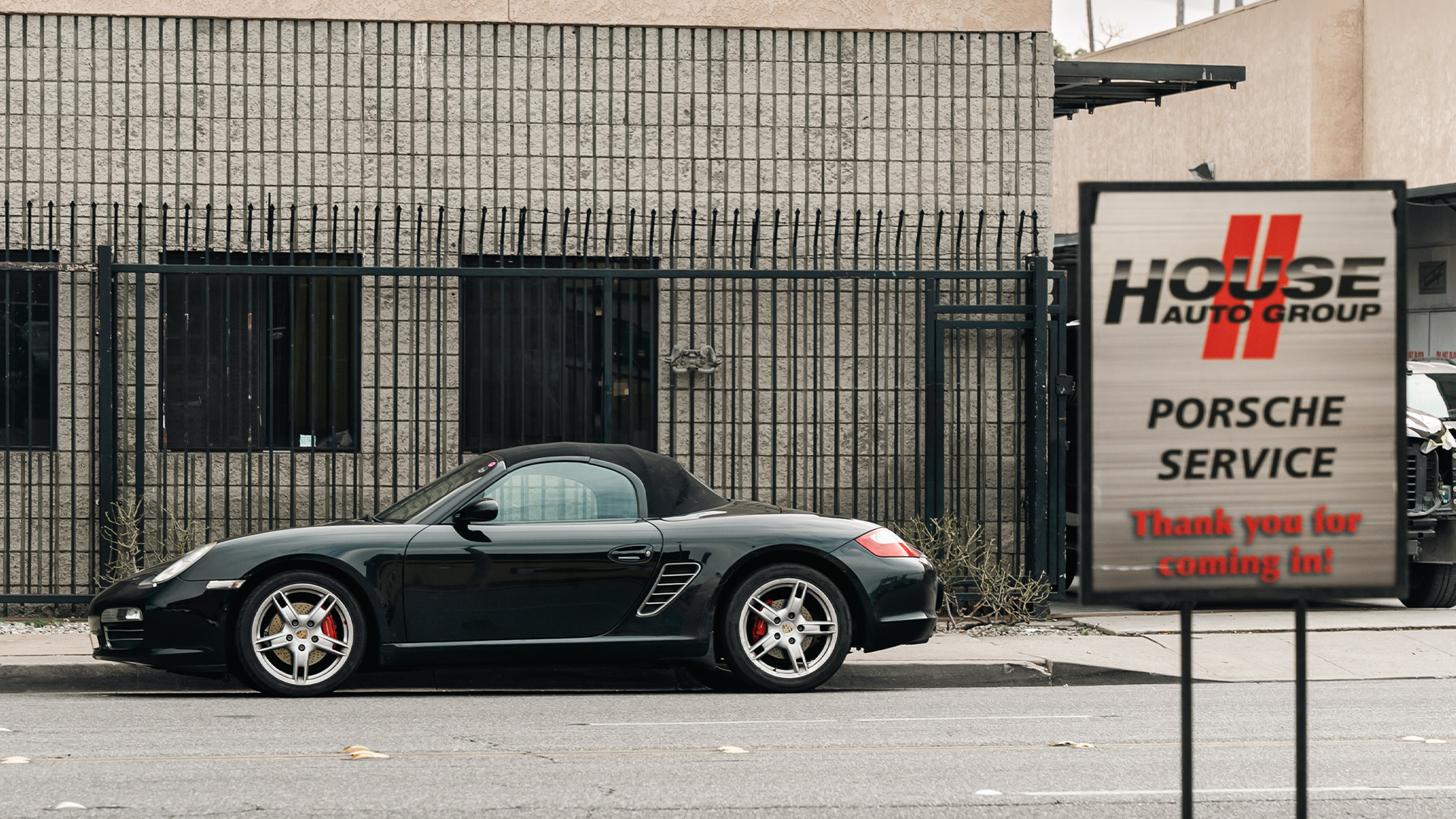
Generation 981 Boxster & Cayman (2012–2016)
The 981 is where the anxiety lifts. The IMS bearing was behind it entirely. The bore scoring risk of early 987.2 cars had largely been resolved. Porsche refined the chassis, standardized PDK as a genuine performance option, and added the Cayman GT4 at the top of the range — the first mid-engine Porsche to carry the GT badge.
From a maintenance standpoint, the 981 is the most straightforward of the classic flat-six generations. The engines are robust when properly serviced, the PDK is the same proven unit found across the Porsche lineup, and the platform is well-understood after years of ownership data. The GT4’s 3.8-liter borrowed from the 911 Carrera S runs harder and warmer than the standard engines. It earns its tighter service intervals.
981 Service Schedule
| Service | Boxster / Cayman (2.7L / 3.4L S) | Cayman GT4 (3.8L) / Boxster Spyder |
|---|---|---|
| Oil and filter change | 10,000 miles / 1 year | 7,500 miles / 1 year — shorten post-track |
| Brake fluid replacement | Every 2 years | Every 2 years; annually if tracked |
| Intermediate service | 20,000 miles / 2 years | 20,000 miles / 2 years |
| Spark plug replacement | 40,000 miles / 4 years | 30,000 miles / 3 years |
| Major service | 40,000 miles / 4 years | 40,000 miles / 4 years |
| PDK fluid (if equipped) | HOUSE recommends 40,000 miles | HOUSE recommends 30,000 miles |
| Air filter replacement | 40,000 miles / 4 years | 30,000 miles / 3 years |
| Bore scope inspection (2012–2013 3.4L) | At 60,000 miles on early production | N/A |
One 981-specific item worth noting: some early 2012–2013 Boxster and Cayman models with the 3.4-liter showed bore scoring similar to the 987.2. Not widespread, but worth a dedicated bore scope inspection and oil analysis on pre-purchase of those specific production years.
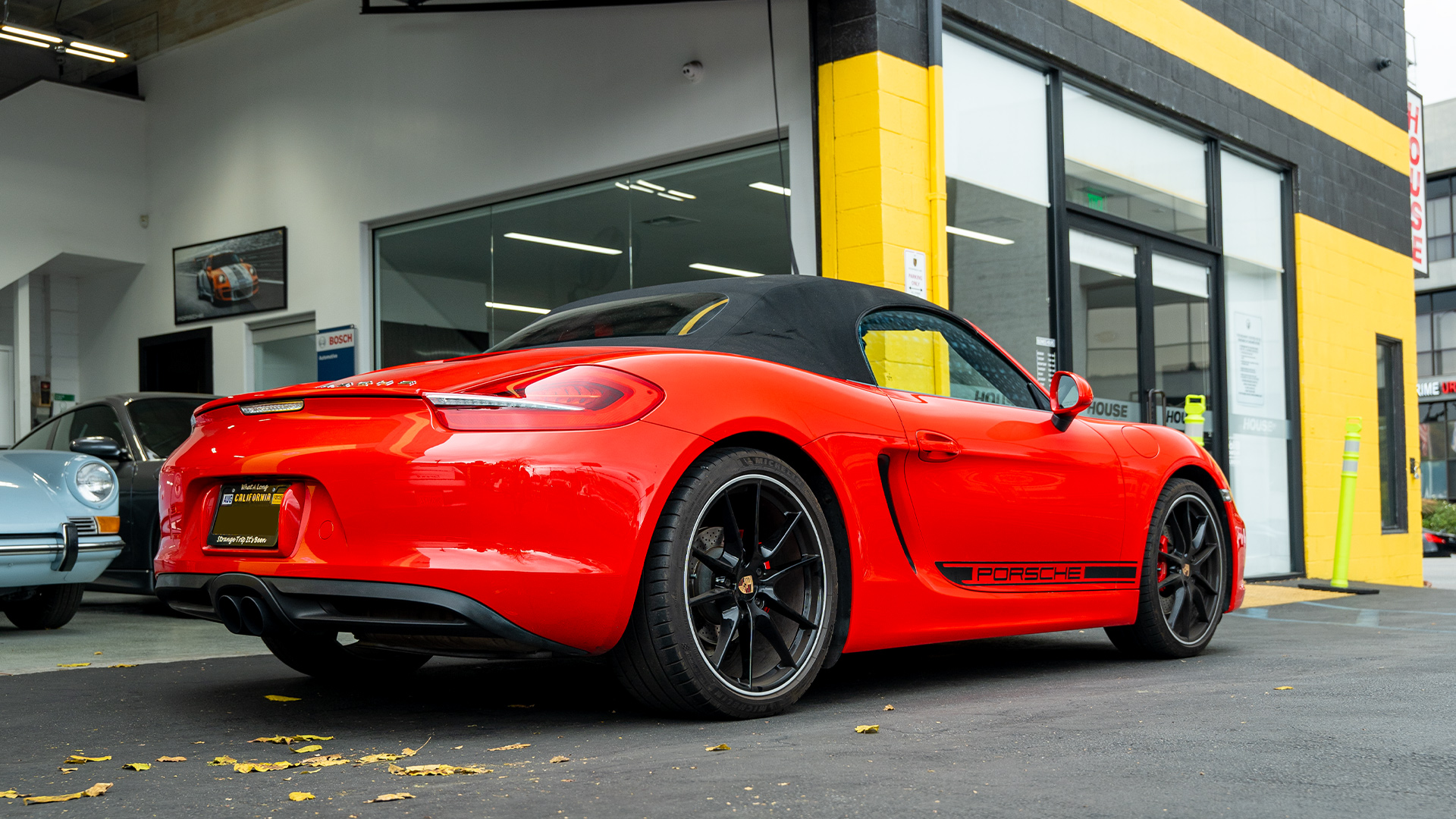
Generation 718 Boxster & Cayman (2016–Present)
The 718 arrived with a turbocharged flat-four and immediate controversy. Enthusiasts mourned the flat-six. Lap times improved. Fuel consumption dropped. The debate continues, but from a maintenance perspective, the transition made the base and S variants more predictable and less expensive to service than the outgoing six-cylinder models.
Porsche brought the flat-six back for the variants that needed it: GTS 4.0, GT4, GT4 RS, and Spyder all run naturally aspirated 4.0-liter engines with a character the four-cylinder never matched. The service profiles diverge significantly by variant, particularly at the GT4 RS level.
| Service | Base / S (2.0T / 2.5T) | GTS 4.0 | GT4 / Spyder (4.0L NA) | GT4 RS (4.0L NA) |
|---|---|---|---|---|
| Oil and filter change | 10,000 miles / 1 year | 10,000 miles / 1 year | 7,500 miles — shorten post-track | 5,000–7,500 miles — mandatory post-track |
| Brake fluid replacement | Every 2 years | Every 2 years | Every 2 years; annually if tracked | Annually — or after each track event |
| Intermediate service | 20,000 miles / 2 years | 20,000 miles / 2 years | 20,000 miles / 2 years | 20,000 miles / 2 years |
| Spark plug replacement | 40,000 miles / 4 years | 30,000 miles / 3 years | 30,000 miles / 3 years | 20,000 miles / 2 years |
| Major service | 40,000 miles / 4 years | 40,000 miles / 4 years | 40,000 miles / 4 years | 40,000 miles / 4 years |
| PDK fluid (if equipped) | HOUSE recommends 40,000 miles | HOUSE recommends 40,000 miles | HOUSE recommends 30,000 miles | HOUSE recommends 30,000 miles |
| Carbon buildup inspection (2.0T / 2.5T) | At 50,000–60,000 miles | N/A | N/A | N/A |
| Turbo oil feed line inspection | At 60,000 miles+ | N/A | N/A | N/A |
| Valve clearance check | N/A | N/A | Every 60,000 miles | Every 40,000 miles |
| Post-track inspection | N/A | Recommended | Required | Mandatory |
On the 2.0T and 2.5T models specifically: carbon buildup on the intake valves is a real-world consequence of direct injection technology. The engine sprays fuel directly into the cylinder, bypassing the intake valves — which means no fuel washing to keep carbon from accumulating. At 50,000–60,000 miles, a walnut blast of the intake valves is a proactive measure most owners skip and most generic shops don’t raise. It matters more than it sounds.
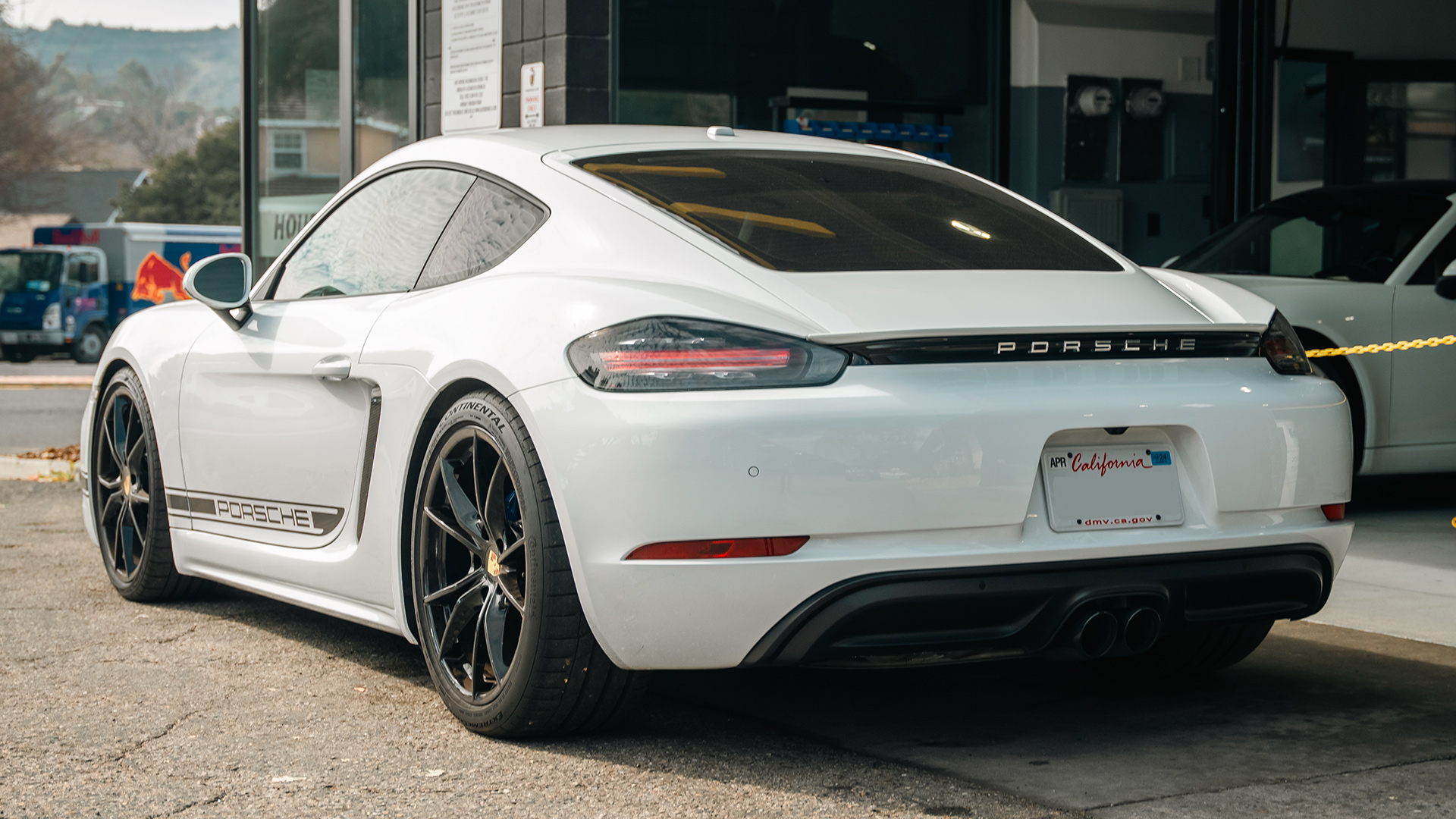
GT4, GT4 RS, and the Spyder Variants: A Different Standard of Care
This is where the Boxster and Cayman conversation changes register entirely.
The GT4 (981 and 718 generations) is a track-capable machine that most buyers drive primarily on public roads. Its 3.8-liter (981) and 4.0-liter (718) engines are high-revving, naturally aspirated, and intolerant of extended oil change intervals under hard use. Post-track day oil changes aren’t optional on these cars — they’re part of the usage cost. The PDK on GT4 variants also runs warmer and warrants shorter fluid service intervals than the standard cars.
The GT4 RS is something else entirely. Its 4.0-liter naturally aspirated engine produces 500 horsepower at 9,000 RPM, uses titanium connecting rods, and shares its direct developmental lineage with the 911 GT3 RS. That engine traces its architecture back to the Carrera GT.
HOUSE technicians certified on the Carrera GT bring that specific expertise to GT4 RS service — not as a marketing claim, but as a functional reality. The Carrera GT and the GT4 RS share engine architecture, valve train principles, and the high-tolerance assembly standards that separate them from every other car in the Porsche lineup. A GT4 RS brought to HOUSE isn’t being handed to a technician who’s figuring it out. It’s being handled by someone who has worked on the car it was derived from.
No other independent shop in Los Angeles makes that claim with documentation behind it.
Need 718 GT4 or GT4 RS Service?
Book online in under 60 seconds.
The IMS and RMS: The Full Picture
This section exists because every Boxster and Cayman buyer eventually encounters these two acronyms, and the internet has done an inconsistent job of explaining them clearly.
What is the IMS bearing?
The Intermediate Shaft (IMS) bearing supports the intermediate shaft that drives the camshafts in the M96 and M97 flat-six engines. Bearing failure generates metal debris that moves through the engine at oil pressure. The result is almost always catastrophic engine damage — not repairable, requiring full replacement.
Which generations are affected?
- 986 Boxster (1997–2004): Highest failure risk — dual-row bearing design with the most documented failures
- 987.1 Boxster/Cayman (2005–2008): Reduced but real risk — single-row bearing design
- 987.2 Boxster/Cayman (2009–2012): Low risk — significantly revised design
- 981 and 718: Not affected — different engine architecture entirely
What’s the correct approach?
On any unaddressed 986 or 987.1, proactive IMS bearing replacement is the standard recommendation — not because failure is certain, but because the cost of the bearing replacement is a fraction of engine replacement cost. When timed with a clutch job (which requires similar disassembly), the labor overlap makes the economics straightforward. A pre-purchase inspection for any 986 or 987.1 should include a documented review of IMS service history. Our pre-purchase inspection covers this as a dedicated line item.
The RMS (Rear Main Seal):
The Rear Main Seal is almost always addressed at the same time as IMS work — the disassembly required for IMS replacement exposes the RMS directly. On older 986 and 987.1 examples, a weeping RMS is common. Economically, leaving it unaddressed when the car is already apart doesn’t make sense. HOUSE addresses IMS and RMS together as a combined service, the same way every informed Porsche specialist does.
For the complete IMS bearing resource — including LN Engineering retrofit options and HOUSE’s process — see our dedicated Porsche IMS Bearing Guide.
Porsche Boxster & Cayman Maintenance PDFs
- 1997-2004 986 Boxster Maintenance Schedule
- 2005-2007 987.1 Boxster Minor Maintenance Checklist
- 2005-2007 987.1 Boxster Major Maintenance Checklist
- 2008 987.1 Boxster Minor Maintenance Checklist
- 2008 987.1 Boxster Major Maintenance Checklist
- 2009+ 987.2 Boxster Intermediate Maintenance Checklist
- 2009+ 987.2 Boxster Maintenance Checklist
- 2013-2016 981 Boxster Intermediate Maintenance Checklist
- 2013-2016 981 Boxster Maintenance Checklist
- 2017+ 718 Boxster Inspection Sheet (B-Markets)
- 2018+ 718 Boxster Inspection Sheet (B-Markets)
- 2018+ 718 Boxster Inspection Sheet
Serving the Boxster and Cayman in Los Angeles
Mid-engine Porsche owners in LA tend to know their cars. They’ve read the forums, they’re familiar with the IMS story, and they’re not looking for a shop that treats every Boxster like a generic import. HOUSE Automotive in Encino, Pasadena, and Thousand Oaks was built for exactly that owner.
Factory PIWIS diagnostic access across all generations. Genuine OEM Porsche parts and fluids. Over 120 combined years of Porsche-specific experience on staff. A 2-year, unlimited-mile warranty on all parts and labor. And for GT4 and GT4 RS owners, Carrera GT-certified technicians — a capability that simply doesn’t exist elsewhere at the independent level in Los Angeles.
Service runs roughly 30% below dealer rates. The experience runs deeper.
Ready to Schedule Your Porsche Boxster or Cayman Service?
Book online in under 60 seconds.
Frequently Asked Questions
Is the Porsche Boxster expensive to maintain?
Within the Porsche lineup, the Boxster and Cayman sit toward the accessible end — particularly the 981 and 718 generations. The cost equation shifts on 986 and 987.1 cars with unknown IMS history, where a single deferred repair can redefine the ownership experience entirely. A well-documented example with complete service records is genuinely reasonable to own annually. See the Porsche Maintenance Costs Guide for a full model-by-model breakdown.
What is the IMS bearing and why does it matter?
The Intermediate Shaft bearing supports the camshaft-drive shaft in M96 and M97 flat-six engines (986 and 987 generations). When it fails — usually without warning — it generates metal debris through the engine and causes catastrophic damage. Proactive replacement on unaddressed 986 and 987.1 cars is the standard of care. Our dedicated IMS Bearing Guide covers the full picture, including retrofit options.
Does the 718 have the IMS bearing problem?
No. The 718 (and the 981 before it) uses a completely different engine architecture. The IMS concern is specific to M96 and early M97 engines — the 986 and early 987 generations only.
How often does a Porsche Boxster or Cayman need service?
Oil changes and annual inspections at 10,000-mile intervals. Intermediate service (brake fluid, cabin filter, suspension check) at 20,000 miles or 2 years. Major service at 40,000 miles or 4 years. GT4 and GT4 RS variants require shorter intervals — 7,500 miles for standard GT4 use, 5,000–7,500 miles for the GT4 RS under any performance driving.
Is there a difference between maintaining a Boxster and a Cayman?
Mechanically, the service schedule is identical across both body styles. The Cayman’s enclosed engine bay retains slightly more heat at sustained high speeds — some technicians run marginally shorter oil change intervals on Cayman S and GT4 models under track use for this reason. Otherwise, the platforms share the same service requirements entirely.
Is the GT4 RS significantly more expensive to maintain than a GT4?
Yes. The GT4 RS requires shorter oil change intervals, mandatory post-track inspections, more frequent valve clearance checks, and specialist familiarity with its titanium-component engine architecture. It’s effectively a race car with license plates, and its maintenance cost reflects that. HOUSE’s Carrera GT-certified technicians handle GT4 RS service as a direct application of their highest-level platform training.
Can I take my Boxster or Cayman to an independent shop?
Yes — and for 986 and 987 owners especially, the right independent shop will have deeper hands-on experience with the known failure modes than most dealerships, where older platforms see less frequent attention. HOUSE has serviced hundreds of Boxster and Cayman examples across all four generations, including IMS and RMS work on 986/987.1 cars and GT4 RS service on the current 718 platform.
How long does a Porsche Boxster or Cayman last?
Properly maintained examples regularly reach 150,000–200,000 miles. The platform itself is mechanically sound; longevity is almost entirely a function of maintenance history. On 986 and 987.1 cars, IMS bearing status is the single biggest variable in that equation.