

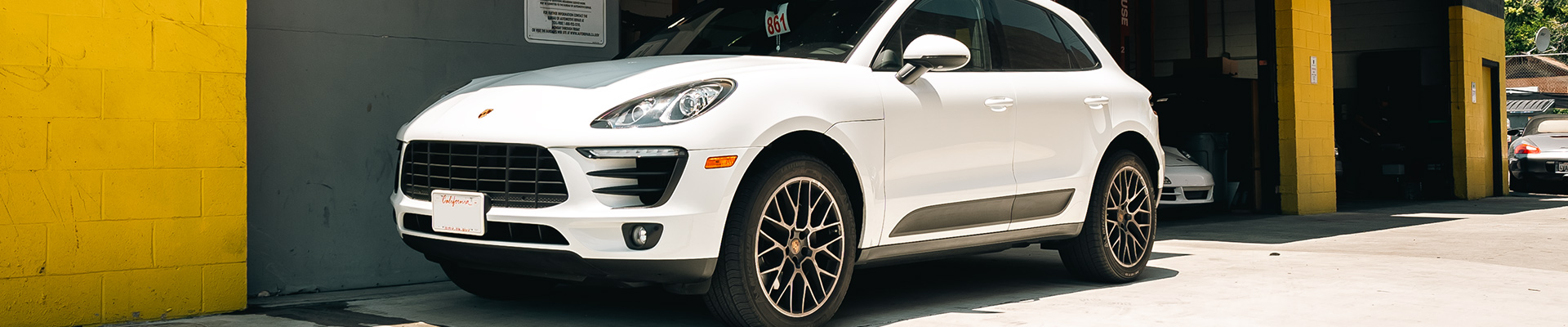
Porsche Macan Maintenance Guide: Every Generation, Every Trim
Most compact luxury SUVs fit into one category: premium daily drivers. The Macan belongs in another. Its PDK transmission was designed for performance before it was designed for commuting. Its all-wheel drive system is rear-biased, not just torque-splitting. And depending on which Macan you have, you might be looking at a turbocharged four-cylinder, a single-turbo V6, or a twin-turbo V6 that shares its architecture with the Cayenne S. The J1 Electric runs on 800-volt architecture with a 100-kWh battery and makes 630 horsepower in Turbo trim.
That range of hardware — across three generations and eight distinct variants — means maintenance isn’t one-size-fits-all. This guide breaks it down by generation and trim, with specific service tables, documented issues to watch for, and what each platform actually requires to stay healthy. For cost context across all Porsche models, see our Porsche Maintenance Costs Guide.
First, Know Your Generation
The name hasn’t changed in over a decade. The car underneath it has; significantly. Before researching an issue or booking a service, confirming your generation and trim determines what applies to your car and what doesn’t.
| Generation | Years | Code | Trims | Engine(s) |
|---|---|---|---|---|
| First Generation | 2014–2018 | 95B.1 | Macan, Macan S, Macan GTS, Macan Turbo | 2.0T (252hp), 3.0T V6 S (340hp), 3.0T V6 GTS (360hp), 3.6TT Turbo (400hp) |
| Second Generation | 2019–2021 | 95B.2 | Macan, Macan S, Macan GTS, Macan Turbo | 2.0T (248hp), 2.9TT S (354hp), 2.9TT GTS (375hp), 2.9TT Turbo (440hp) |
| Third Generation | 2024–Present | J1 | Macan 4 Electric, Macan Turbo Electric | Dual-motor EV — 408hp (Macan 4) / 630hp (Turbo), 100-kWh battery, 800V architecture |
Generation 1 (95B.1): 2014–2018
The original Macan arrived on a platform shared with the Audi Q5 but carrying Porsche and Audi-derived engines from a 252-horsepower four-cylinder up to a 400-horsepower twin-turbo V6. The platform was fundamentally sound. Some early engineering decisions, particularly around the transfer case and V6 cooling, were less so.
Four variants defined this generation, each with a distinct service profile. The 2.0T is the most forgiving: a relatively simple engine, a manageable cooling system, and a transmission that behaves reliably when serviced on schedule. The S (3.0T V6, 340hp) and GTS (same engine, 360hp) raise both the performance ceiling and the maintenance expectations. The Turbo (3.6TT V6, 400hp) sits at the top; the most capable and the most demanding, with turbo system care that makes skipping oil changes genuinely risky.
95B.1 Service Schedule
| Service | 2.0T Interval | S / GTS (3.0T) Interval | Turbo (3.6TT) Interval |
|---|---|---|---|
| Oil and filter change | 10,000 miles / 1 year | 10,000 miles / 1 year | 10,000 miles / 1 year — shorten to 7,500 mi under spirited use |
| Brake fluid replacement | Every 2 years | Every 2 years | Every 2 years |
| Intermediate service | 20,000 miles / 2 years | 20,000 miles / 2 years | 20,000 miles / 2 years |
| Spark plug replacement | 40,000 miles / 4 years | 40,000 miles / 4 years | 30,000 miles / 3 years |
| Major service | 40,000 miles / 4 years | 40,000 miles / 4 years | 40,000 miles / 4 years |
| PDK fluid service | Factory: 60,000 mi — HOUSE recommends 40,000 mi | Factory: 60,000 mi — HOUSE recommends 40,000 mi | 40,000 miles — no exceptions |
| Transfer case fluid | Every 30,000 miles (proactive) | Every 30,000 miles (proactive) | Every 30,000 miles (proactive) |
| Air filter replacement | 80,000 miles / 4 years | 80,000 miles / 4 years | 80,000 miles / 4 years |
| Timing chain cover inspection | N/A | At 80,000+ miles | At 80,000+ miles |
| Water pump inspection | At 60,000+ miles | N/A | N/A |
Three Things Every 95B.1 Owner Needs to Know
These aren’t rare edge cases, they’re documented patterns across a large fleet of first-gen Macans, and knowing them changes how you approach ownership:
- Transfer case shudder. The most pervasive 95B.1 issue. A jerk or lurch during low-speed turns or light acceleration is the signature symptom, most noticeable in parking lots. It primarily affects 2015–2018 cars; Porsche extended the warranty on affected units, but plenty of cars have aged out of coverage. Proactive transfer case fluid changes every 30,000 miles are the most effective preventive measure available. If you’re buying a used 95B.1, a pre-purchase inspection should include a dedicated transfer case evaluation before any money changes hands.
- Timing chain cover oil leaks on V6 models. Affects the S, GTS, and Turbo — typically at 80,000–100,000 miles. The bolts holding the timing chain cover loosen over time, allowing oil to seep from the front of the engine. It starts subtle and gets dismissed. Left long enough, it becomes an engine-out repair. On any used V6 Macan with significant mileage, this area deserves a dedicated inspection.
- Water pump bearing failure on the 2.0T. The bearing supporting the water pump shaft wears prematurely on some four-cylinder examples. The early sign is a gradual, persistent rise in engine temperature at idle that normalizes at driving speeds — easy to overlook. Eventually it becomes a knock and a coolant leak. It’s a well-documented item and the repair is reasonable when caught early.
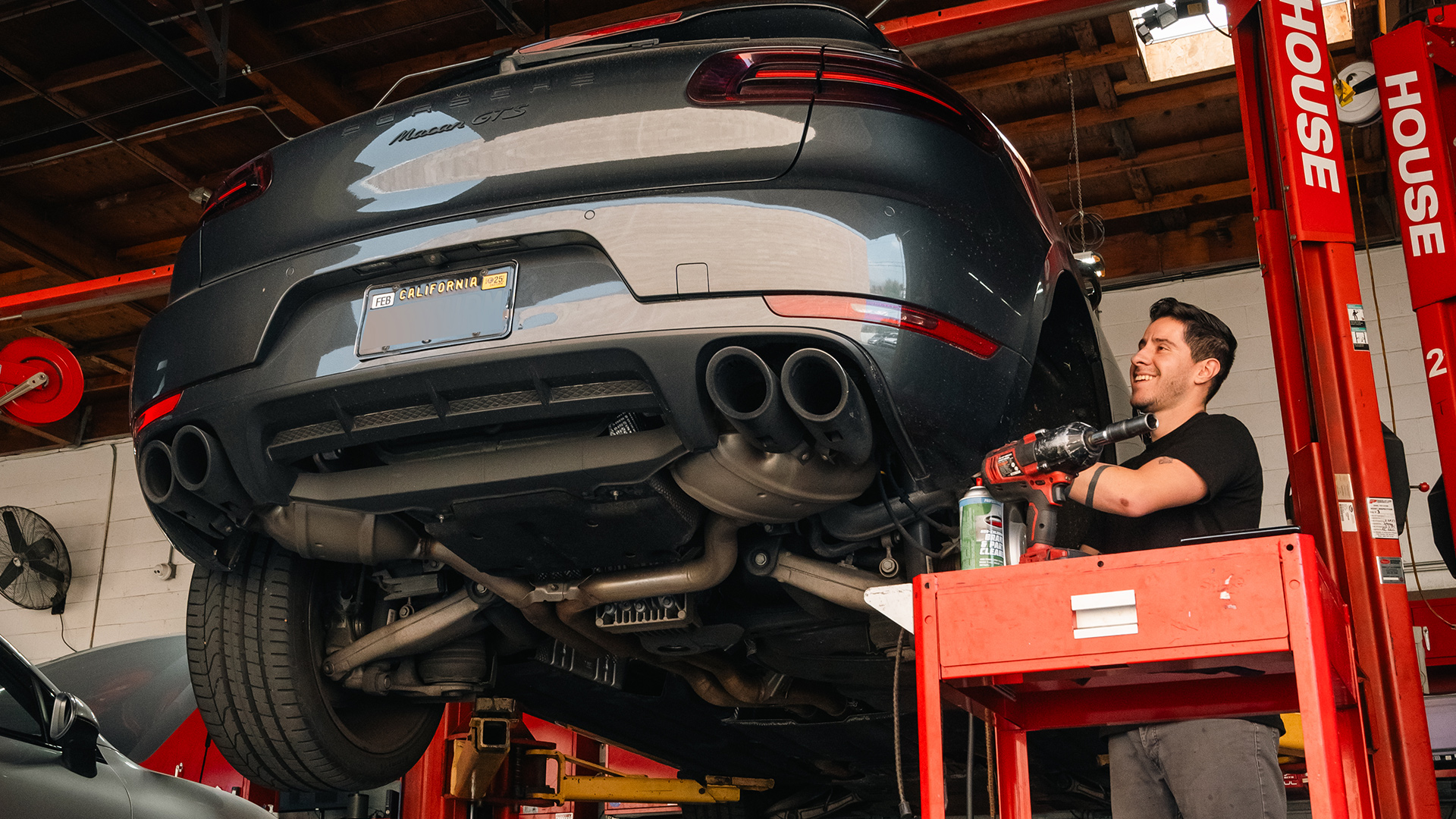
Generation 2 (95B.2): 2019–2021
The 2019 refresh was more than a facelift. Porsche replaced the S, GTS, and Turbo engines entirely, moving to the 2.9-liter twin-turbo V6, the same engine family used in the Cayenne S and Panamera. The updated architecture is stronger and better thermally managed, and the transfer case issues that defined the 95B.1 largely resolved with the redesign.
What the 95B.2 demands is disciplined PDK attention. The 2.9TT runs warmer under load than the outgoing 3.0T, and that heat cycles through the PDK fluid accordingly. Porsche’s published interval is conservative; spirited driving which, on any road in Los Angeles worth driving, is the point, shortens the effective life of that fluid. Treat it as a 40,000-mile item regardless of what the service indicator reads.
95B.2 Service Schedule
| Service | 2.0T Interval | S / GTS / Turbo (2.9TT) Interval |
|---|---|---|
| Oil and filter change | 10,000 miles / 1 year | 10,000 miles / 1 year — shorten to 7,500 mi for Turbo under load |
| Brake fluid replacement | Every 2 years | Every 2 years |
| Intermediate service | 20,000 miles / 2 years | 20,000 miles / 2 years |
| Spark plug replacement | 40,000 miles / 4 years | S / GTS: 40,000 mi / 4 years — Turbo: 30,000 mi / 3 years |
| Major service | 40,000 miles / 4 years | 40,000 miles / 4 years |
| PDK fluid service | HOUSE recommends 40,000 miles | 40,000 miles — critical on 2.9TT Turbo |
| Transfer case fluid | Every 40,000 miles | Every 40,000 miles |
| Air filter replacement | 80,000 miles / 4 years | 80,000 miles / 4 years |
| Turbo oil feed line inspection | N/A | At 60,000+ miles — inspect O-rings proactively |
| Sunroof drain clearing | Clear at every service | Clear at every service |
Watch List for 95B.2 Models
The generation is more mature, but three items earn consistent attention:
- Turbo oil feed lines. The 2.9TT’s turbo oil feed and return line O-rings harden with heat cycling. On higher-mileage examples, they develop slow oil weeps that are easy to miss until there’s a smell or a stain under the car. Caught early, it’s an O-ring replacement. Ignored, it becomes a turbo conversation.
- Sunroof drain clogs. Carried over from the 95B.1 and just as consequential. Blocked drains push water toward the A-pillar and into cavities where electronics live. Clearing the drains takes a few minutes at every service and prevents a disproportionate repair bill.
- PDK mechatronic unit wear. The mechatronic unit is the hydraulic control module of the PDK. Under normal conditions, it’s not a wear item. With degraded fluid history, it is. A replacement is a significant cost — and, on properly maintained cars, an entirely preventable one.
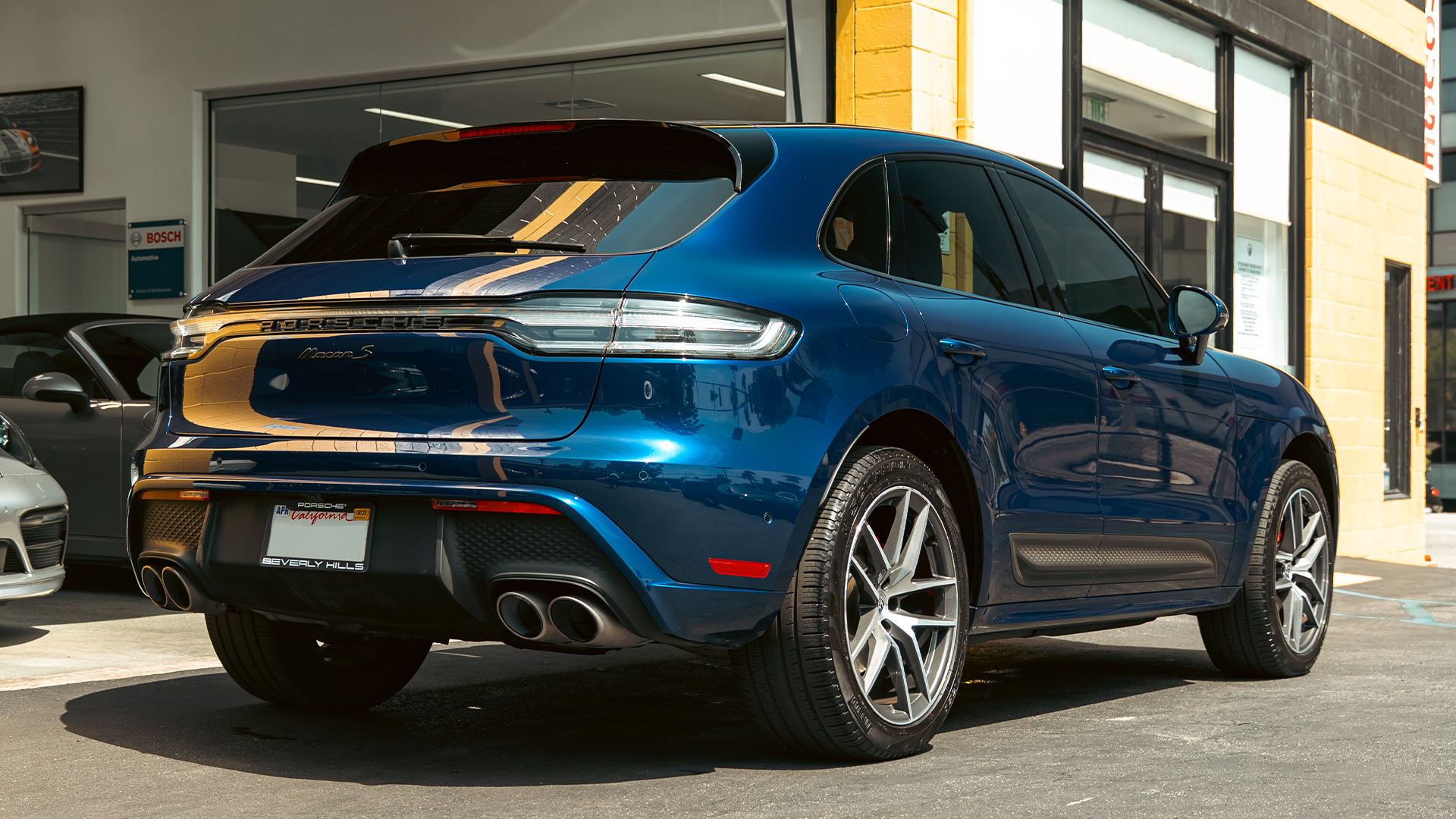
J1 Electric: 2024–Present
The J1 is a clean break from everything above. No engine oil, no spark plugs, no PDK fluid. But characterizing the J1 as low-maintenance misses the point — it’s differently maintained, and the consequences of cutting corners have nothing to do with a seal leak. They involve an 800-volt battery that depreciates faster without proper care, and a thermal management system that requires factory diagnostic tools to assess properly.
PIWIS is the baseline requirement here, not an upgrade. A standard OBD scanner will read surface-level codes, but it won’t evaluate high-voltage cell balance, cooling circuit efficiency, or charging behavior. Every J1 service should include a full PIWIS diagnostic session — not as an add-on, but as the minimum standard of care the car was engineered to receive.
J1 Electric Service Schedule
| Service | Macan 4 Electric / Turbo Electric |
|---|---|
| Multi-point inspection + tire rotation | 10,000 miles / 1 year |
| Cabin air filter replacement | 20,000 miles / 2 years |
| Brake fluid replacement | 20,000 miles / 2 years |
| HV battery system inspection (PIWIS) | 20,000 miles / 2 years — every service |
| HV battery cooling circuit check | 20,000 miles / 2 years |
| Suspension and steering inspection | 20,000 miles / 2 years |
| Full brake system inspection | 40,000 miles / 4 years |
| Key fob battery replacement | Every 4 years |
| Battery coolant circuit flush | 100,000 miles |
| Suspension gas strut inspection | 100,000 miles |
| Software updates | As released — full adaptation requires PIWIS |
What the J1 Still Requires (and Why It Matters)
Three service areas define J1 ownership, and none of them disappear just because there’s no engine oil involved:
Brake fluid. Regenerative braking dramatically reduces physical pad and rotor wear, but it doesn’t stop brake fluid from absorbing atmospheric moisture. Moisture raises the fluid’s boiling point threshold in the wrong direction — downward. Two-year replacement intervals still apply, and on a car with 630 horsepower and a heavy EV curb weight, those intervals matter.
High-voltage battery health. A PIWIS-led thermal and cell balance inspection every two years is the core of J1 maintenance. The battery cooling circuit, charged through a liquid-cooled loop, needs inspection at every 20,000-mile service. At 100,000 miles, a coolant circuit flush is scheduled. The battery’s long-term health directly affects range, charging behavior, and resale value — it’s the single most consequential component on the car.
Suspension. The J1 carries significantly more weight than the 95B. That mass accelerates front control arm bushing and shock absorber wear in a predictable pattern. Annual suspension inspections aren’t just a box-check on the J1 — they’re load-bearing maintenance.
For a full cost breakdown of Macan Electric service alongside other Porsche models, our Porsche Maintenance Costs Guide has the detail.
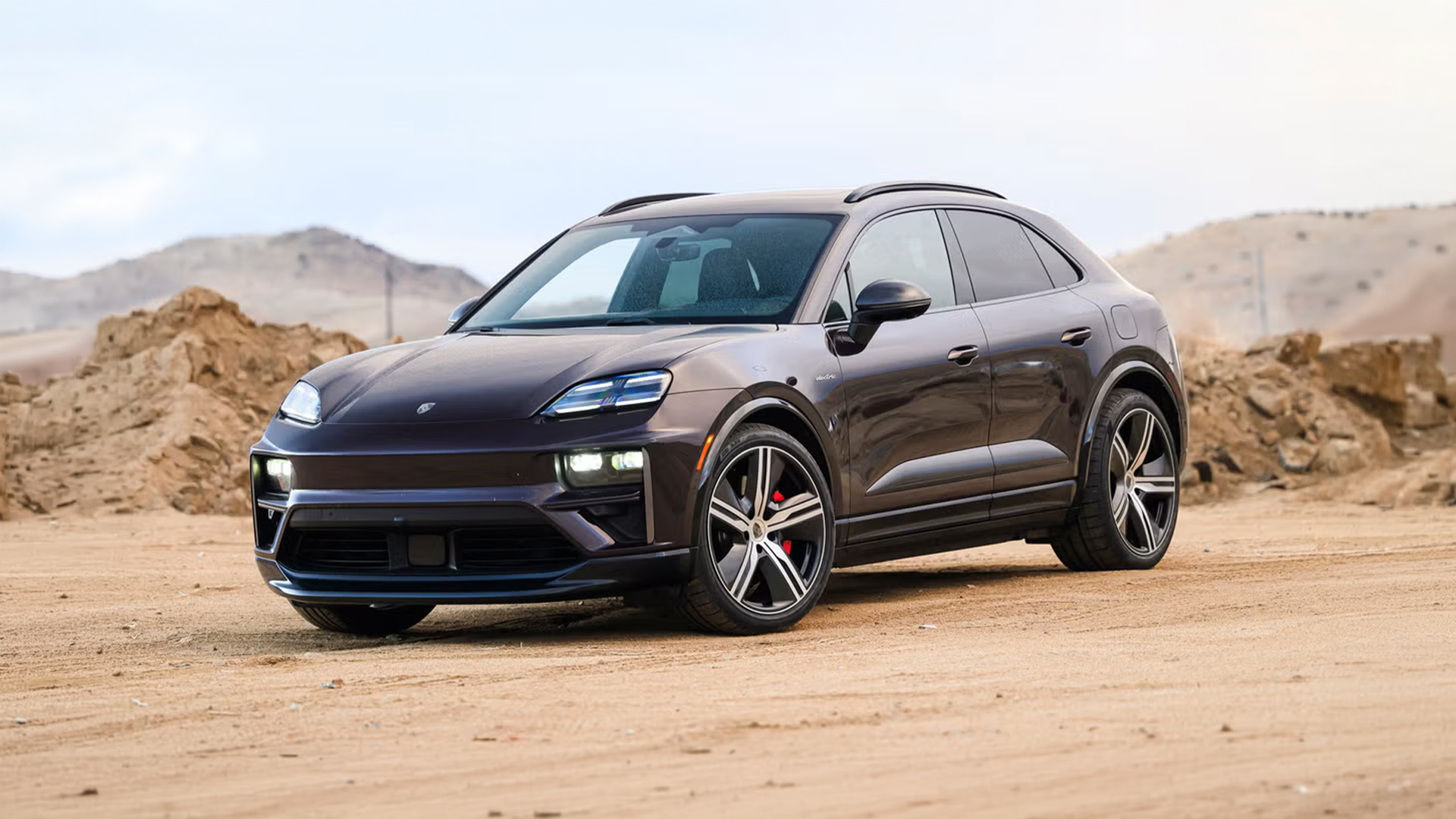
Porsche Macan Maintenance PDFs
What HOUSE Brings to Your Macan
The Macan is one of the most frequently serviced cars across all three HOUSE locations — Encino, Pasadena, and Thousand Oaks. From pre-purchase inspections on high-mileage 95B.1 V6 models to 800V battery diagnostics on early J1 deliveries, we work on every variant with the tooling and expertise each one requires.
That means factory PIWIS diagnostics, genuine OEM Porsche parts and fluids, and technicians trained across both ICE and EV Porsche platforms. It also means a 2-year, unlimited-mile warranty on all parts and labor — coverage that applies whether the job is a transfer case fluid change or a high-voltage system inspection.
Service across most categories runs roughly 30% below dealer rates. The quality doesn’t.
Ready to Schedule Your Porsche Macan Service?
Book online in under 60 seconds.
Frequently Asked Questions
How often does a Porsche Macan need to be serviced?
Annual oil changes and inspections at 10,000-mile intervals on ICE models. Intermediate service — brake fluid, cabin filter, suspension check — at 20,000 miles or 2 years. Major service (spark plugs, transmission fluid, air filter, full inspection) at 40,000 miles or 4 years. The J1 Electric follows a 20,000-mile or 2-year primary interval, skipping the oil and spark plug work but adding high-voltage battery and cooling system inspection.
Is the Porsche Macan expensive to maintain?
Relative to the Porsche lineup, the Macan sits at the accessible end. Porsche’s own scheduled maintenance plan prices the first four Macan services at approximately $6,345 — the lowest across their current models. Annual costs vary by trim: a 2.0T runs lean and predictably; a 3.6TT Turbo carries more complexity and a higher per-service cost. The number compounds when maintenance is deferred — a transfer case that was never proactively serviced, a PDK that missed two fluid cycles, a timing cover leak that ran too long. See our Porsche Maintenance Costs Guide for a model-by-model breakdown.
What are the most common Porsche Macan problems?
On 95B.1 (2014–2018): transfer case shudder (warranty-extended on affected years), timing chain cover oil leaks on V6 models at higher mileage, and water pump bearing failure on the 2.0T. On 95B.2 (2019–2021): turbo oil feed line O-ring hardening on the 2.9TT and PDK mechatronic wear on cars with missed fluid service history. On J1 Electric: early software glitches and 12V lithium battery issues in the first model year — most addressed through software updates and a covered replacement campaign.
Does the Porsche Macan Electric need oil changes?
No. The J1 Electric has no combustion engine and no engine oil. Spark plugs and transmission fluid don’t apply either. Service builds around brake fluid replacement, cabin air filtration, high-voltage battery diagnostics, cooling system inspection, and software updates — on a 20,000-mile or 2-year primary interval.
What happens if you skip PDK service on a Macan?
PDK fluid degrades over time, losing its hydraulic and lubricating properties. Running degraded fluid causes mechatronic unit wear — the transmission’s hydraulic control module. When the mechatronic unit fails, you’re looking at a significant repair. The failure is directly traceable to fluid service history in the vast majority of cases, and equally preventable with proper interval maintenance.
Can I take my Macan to an independent shop?
Yes. The right independent shop will deliver equal or better results than a dealer at a lower price. The requirements are non-negotiable: factory PIWIS diagnostic access (an OBD scanner won’t suffice for Porsche-level diagnostics), Porsche-trained technicians, and genuine OEM parts. HOUSE Automotive meets all three at each of its three LA locations.
How long does a Porsche Macan last?
200,000+ miles is a realistic expectation for well-maintained 95B models on either the 2.0T or V6. First-generation cars from 2014 and 2015 are still in active, regular use. The J1 Electric’s long-term story is still developing, but the 800V architecture and Porsche’s thermal management system are engineered for longevity — with the PIWIS-led care that longevity requires.
Is there a difference in servicing a Macan S versus a Macan Turbo?
Yes, meaningfully so. The Turbo variants — both the 3.6TT on 95B.1 and the 2.9TT Turbo on 95B.2 — carry earlier spark plug replacement schedules, tighter recommended oil change intervals under performance use, and turbo system inspections that the base and S models don’t require to the same degree. The service tables above break these differences out by variant within each generation.